Loading...
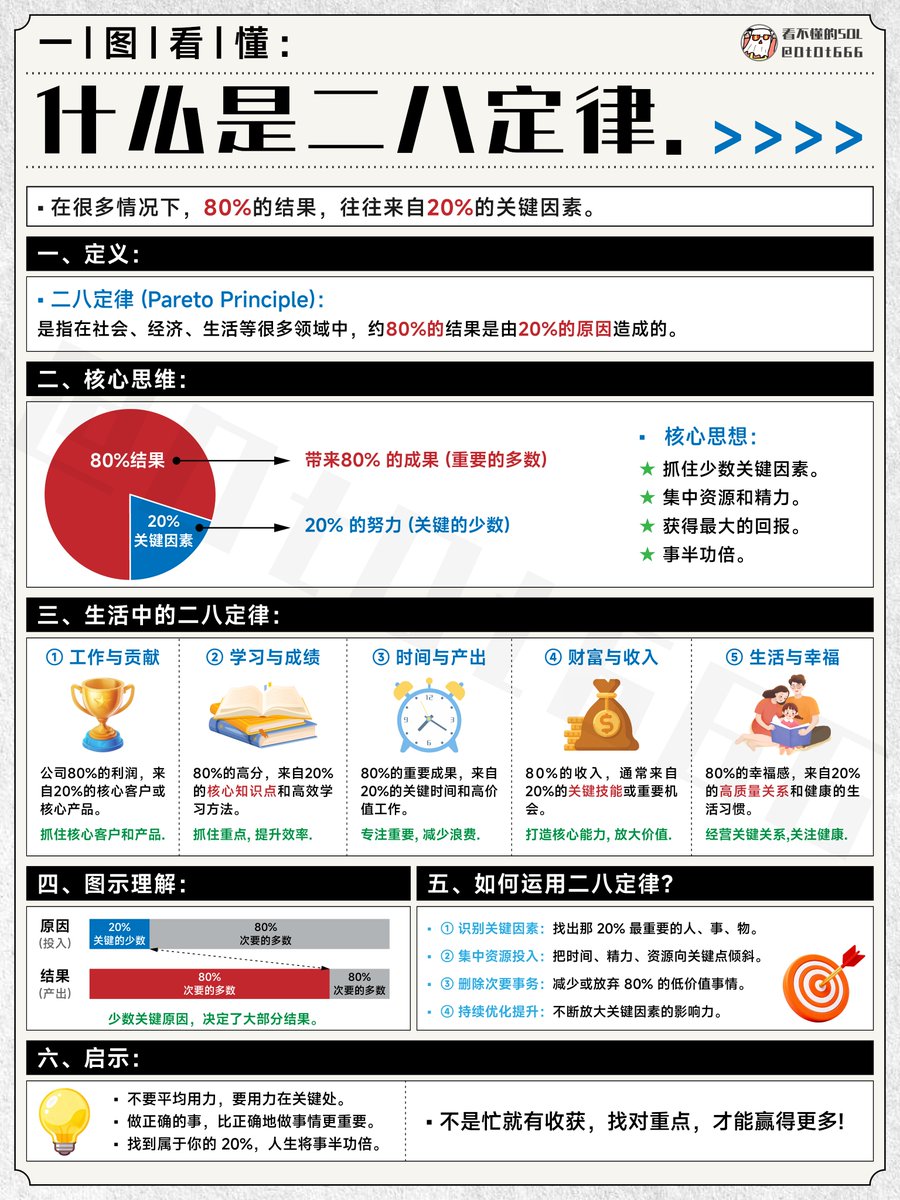
Many people aren’t lacking effort; they’re just spreading their energy evenly across everything. The 80/20 rule puts it plainly: most of the time, 80% of the results come from 20% of the key factors. At work, the real value might come from just a few core clients, products, or tasks. In learning, your results are often determined by a small amount of core knowledge and efficient methods. In life, your happiness isn’t about how many people you know, but about a few meaningful relationships and stable health. The same goes for investing. Long-term returns often don’t come from watching the market every day or frequent trading, but from a few truly important decisions: What assets to choose, at what price to buy, how much to allocate, and whether you can hold on for the long term. Many people spend 80% of their time analyzing short-term price movements but rarely take the time to seriously consider their asset allocation, risk tolerance, and long-term goals. It might look like they’re busy every day, but their portfolio doesn’t actually improve because of it. I’m increasingly convinced that the most important skill in investing isn’t knowing the most, but identifying what matters most. For the average person, there aren’t many things truly worth investing energy into: Improving your primary income, building an emergency fund, consistently investing in quality indices and $BTC over the long term, controlling leverage, and taking care of your health and family. The rest—endless news, predictions, and short-term fluctuations—is mostly just noise. The 80/20 rule isn’t about being lazy; it’s a reminder that resources are limited, so don’t spread yourself too thin. Do fewer low-value things and focus your time and money on the truly important 20%. Being busier doesn’t make success easier—finding the right priorities does. That’s how effort compounds.