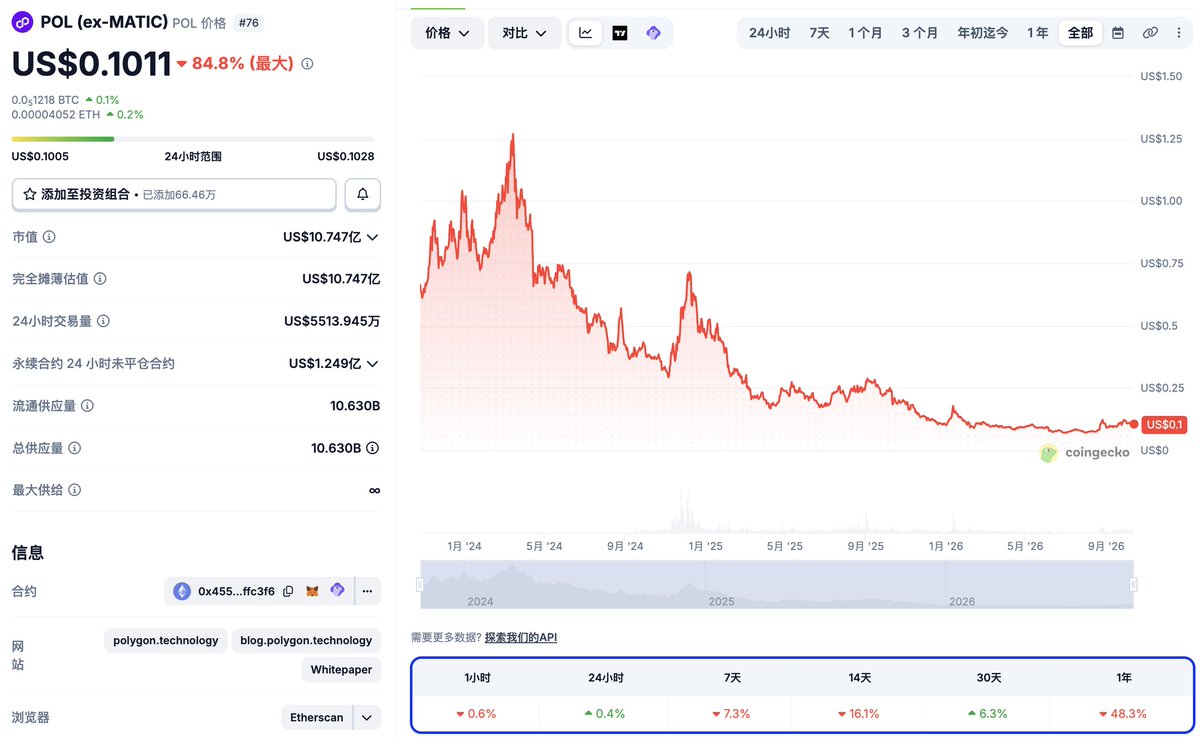
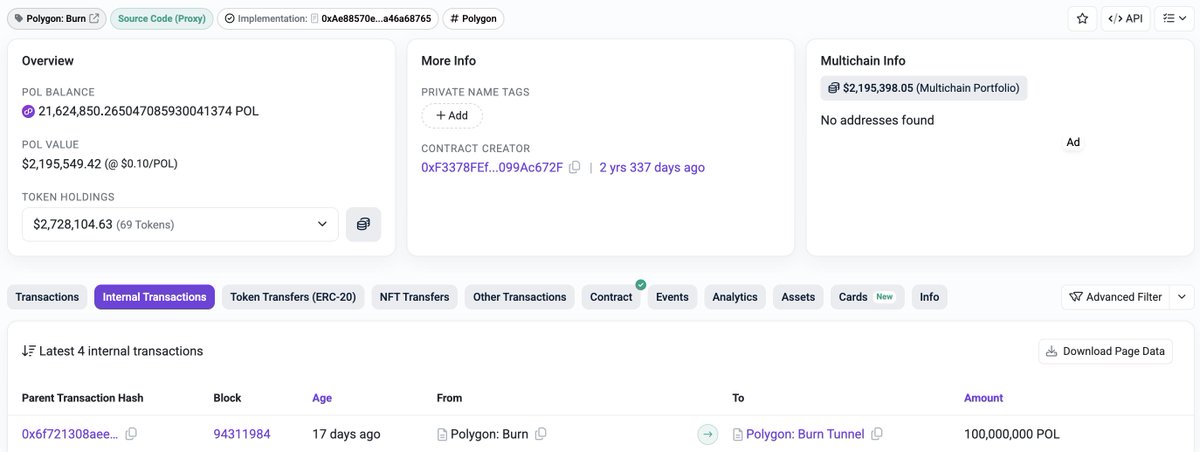
17 days ago, the Polygon team burned 100 million POL tokens, which accounted for 1% of the total supply. But the token price didn’t even make a ripple—didn’t go up, and even dropped instead. So, what went wrong? Let me break it down (with some sarcasm). Polygon is a sidechain, not an Ethereum L2 chain. It doesn’t have the role of a sequencer, and chain revenue doesn’t come from sequencers. Therefore, the funds for buybacks and burns don’t come from sequencer revenue but rather from the gas fees paid by users on-chain—specifically the base fee portion. The base fee is denominated in POL, and this portion of the base fee goes into a contract called the burn collector. The POL in the burn collector is theoretically non-circulating, unless a governance proposal upgrades the contract, which means the risk of it turning into circulating tokens is extremely low. Now, here’s the flashy move Polygon has been hyping: they transferred the 100 million non-circulating POL in the burn collector to a dead address, making it permanently unusable. Of course, Polygon chose a more diplomatic way to phrase it: ‘We have permanently burned 100 million POL. It’s verifiable on-chain, and the evidence is clear as day.’ But what completely caught the Polygon team off guard is that retail investors don’t seem to be buying it.