
Author: Snapfingers DAO
Preface
Full Chain Game is an important development direction for blockchain games. By combining blockchain technology with the gaming industry, Full Chain Game brings new experiences and opportunities for players and developers. Full Chain Game not only changes the operation and transaction methods of traditional games, but also gives players greater rights and participation.
Full Chain Game has the following characteristics:
- Real asset ownership: In Full Chain Game, game assets in the virtual world can achieve real ownership through blockchain technology. Players can freely buy, sell, and trade game assets, no longer limited by the closed economic system within the game.
- Unique verifiable digital assets: The game assets in Full Chain Game are represented by Non-Fungible Tokens (NFT), each asset is unique and has uniqueness. This allows players to verify the authenticity and scarcity of assets based on data on the blockchain.
- Decentralized trading market: Full Chain Game provides players with an open, fair, and efficient trading environment through smart contracts and decentralized trading platforms. Players can directly buy and sell with other players, eliminating the need for intermediaries and third-party platforms in traditional games.
- Participation and community governance: Full Chain Game encourages players to actively participate in game operation decisions and community governance. Players can participate in the development direction and decision-making process of the game through token holding, voting, and other methods, increasing player participation and sense of belonging.
Snapfingers has collected 7 of the currently most popular Full Chain Games, including:
- Dark Forest
- Loot Survivor
- Treaty
- Isaac
- Mithraeum
- Influence
- Wolf Game
This article will provide a detailed introduction to the projects from four aspects: development team, project background, full chain technology, and economic model. Due to length constraints, it will be divided into two parts. This part will introduce Dark Forest, Loot Survivor, and Treaty.
01 Dark Forest
- Game type: RTS real-time strategy game
- Twitter followers: 26,000
- Chain: Ethereum
- Official website: https://zkga.me/
- Development team: Gubsheep, @Alan, @Ivan, and @Moe
- Project background: Supported by Vitalik Buterin, community ecosystem
- Full chain technology: zkSNARKs, permissionless interoperability, Lobby system, and on-chain engine
- Economic model: Official or community prize pool
Game Introduction
If you have read Liu Cixin's "The Three-Body Problem," then the concept of the "dark forest" law is familiar to you: the universe is like a dark forest, and each civilization is a hunter with a gun. Initially, they do not know each other's existence, but once they discover each other, the most rational action for self-preservation is to eliminate each other.
Dark Forest is a completely on-chain MMO space conquest real-time strategy game developed based on this inspiration.
Players start the game from their home planet, expanding their empire by exploring the universe, competing with opponents, occupying planets, and acquiring resources. The map and the positions of opponents are hidden in the cryptographic fog of war, and players need to gradually reveal more parts of the universe through actions. Each action is recorded on the blockchain, and the player's coordinates remain hidden to opponents. Dark Forest combines game and cryptography, providing unpredictable tasks that allow players to explore and conquer hidden planets in a blockchain-supported universe and guard against potential attacks from opponents.
Development Team
The Dark Forest development team is led by Brian Gu, a graduate of the Massachusetts Institute of Technology (MIT) using the pseudonym Gubsheep. He is the founder and inspiration of the game, inspired by Liu Cixin's "The Three-Body Problem" series' dark forest theory, and created this decentralized, incomplete information game using zero-knowledge proof technology.
The early members of the Dark Forest team include Gubsheep, Alan, Ivan, and Moe. They are dedicated to achieving high-frequency interaction in the game environment and applying zero-knowledge proofs to the game's complex systems in the blockchain environment. This team's efforts have made Dark Forest a milestone in blockchain history.
Project Background
The team officially released the first test version v0.3 of the game on August 7, 2020, deployed on the Ropsten test network of Ethereum. Players need an invitation code to participate in the game and rank based on the points they earn. The top 15 players will have the opportunity to share a total prize pool of 1024 DAI, with the first-place player receiving a reward of 256 DAI. Shortly after the game was released, it caught the attention of Vitalik Buterin (founder of Ethereum).
In terms of community ecology, the official Dark Forest community is the core community responsible for releasing announcements, solving problems, and other daily operational activities. In addition, some organizations and teams also play important roles in the Dark Forest ecosystem, such as technical capabilities, game technology, planning, and game experience innovation.
At the same time, plugins are also a very important part of Dark Forest. Many plugins are currently included in the official plugin library to help players simplify complex operations and improve execution efficiency. Through the contributions of these communities and plugins, Dark Forest provides players with a rich gaming experience and diverse gameplay.
Full Chain Technology
Dark Forest uses full on-chain technology and zk-SNARK to achieve its unique gaming experience, where all game rules and logic are deployed on the blockchain in the form of smart contracts. This means that the state of players and the universe is updated in real-time on the chain after each interaction.
Dark Forest uses zk-SNARK (zero-knowledge proof algorithm) to implement incomplete information games. In incomplete information games, participants cannot fully obtain each other's information, increasing the challenge of decision-making. For example, in Texas Hold'em, each player can only see the five public cards and their two hole cards, which is an example of an incomplete information game.
In past blockchain games, all interaction content and states were transparent and verifiable, but Dark Forest successfully hides player interaction information on the blockchain using the zk-SNARK algorithm, making incomplete information games possible.
As an open-source full on-chain game, Dark Forest features "Permissionless Interoperability," where any address can interact with the game, expanding the boundaries of game strategy and giving rise to a thriving plugin ecosystem. In addition, Dark Forest has introduced the Lobby system and on-chain engine, allowing players to freely set the rules of the universe to conduct the game.
Economic Model
Dark Forest did not issue a dedicated token, but uses xDAI tokens as the internal trading medium of the game. The open and ownerless world of the game does not require a traditional economic model. The rules of the digital world are neutral, cruel, and absurd. Therefore, the design concept of Dark Forest emphasizes creating an open ownerless world where players can develop freely, rather than relying on a traditional economic model.
First, new players need to obtain an invitation code to join the game. They can obtain the invitation code by registering their email on the official website or following the Twitter account. Once they obtain the invitation code and log into the game, players will receive 0.5 xDAI tokens airdropped as initial funds from the development team.
Each transaction in the game requires a payment of 0.002 xDAI tokens. After using up the airdropped xDAI, players can continue to recharge xDAI tokens to the game address. At the end of each season, players will receive rewards from the prize pool based on their ranking.
In addition to the official rounds, players can also participate in community-organized rounds, such as the early MarrowDAO's "For Pioneer" and dfDAO's "New Year Community Round." On March 1, 2022, the Dark Forest team launched the Lobbies system, which allows the community to quickly start new rounds. Subsequently, communities and individuals, including 277DAO, have used this system to organize several community rounds.
02 Loot Survivor
- Game type: Loot-style adventure experimental game
- Twitter followers: 13,000
- Chain: StarkNet
- Official website: https://loot-survivor.vercel.app/
- Development team: Team members of Bibliotheca DAO, DoJo, and Guildly
- Project background: Strong support from Loot Realms and Loot
- Full chain technology: zkSNARKs, Cairo 1.0 contract, Lobby system, and on-chain engine
- Economic model: Play2Die
Game Introduction
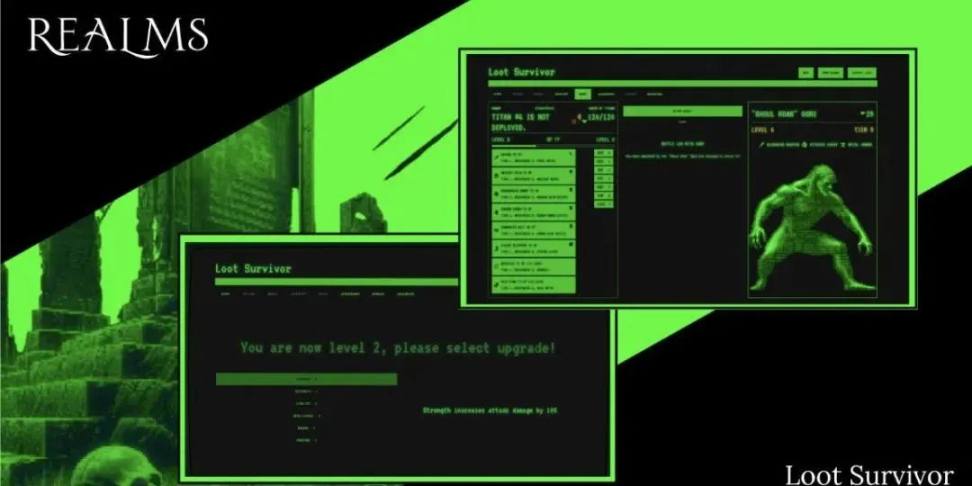
"Loot Survivor" is an adventure experimental game based on the Loot style, providing players with a unique gaming experience through the Play2Die economic model. The game is deployed on StarkNet for testing and developed by team members of Bibliotheca DAO, DoJo, and Guildly.
Game Introduction
The core gameplay of the game involves exploration, combat, leveling up, and trading. Players need to create a wallet and connect it, then begin their adventure. In the game, players will face various challenges and enemies, requiring them to use strategy and skill to survive and emerge victorious. Players can explore various locations, defeat bosses, collect rare items and equipment, and trade with other players to enhance their character's abilities.
Development Team
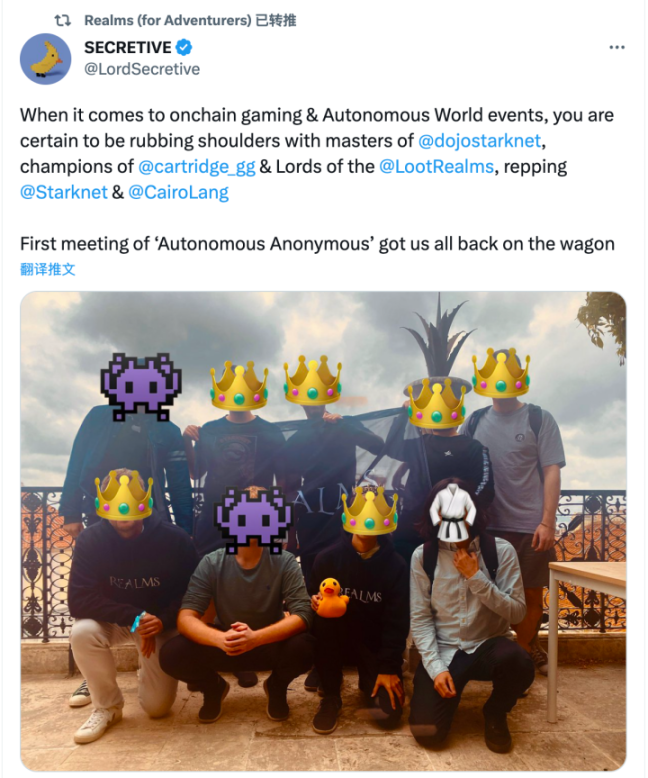
Loot Realms has revealed some of the developers involved in Survivor. A quick look at their Twitter backgrounds reveals that they come from Dojo Engine, Guildly (a decentralized protocol for managing shared accounts and user assets in Web3), and Bibliotheca DAO.
Project Background
Loot Survivor is a project developed from the Loot Realms ecosystem and has received support from Bibliotheca DAO. Bibliotheca DAO is a decentralized game studio and development lab. They are actively involved in the development of the DoJo game engine and have deployed their own full-chain games on Ethereum and StarkNet.
Loot Realms is the home of Realm Lords, serving as the core of governance and a venue for game competitions. They support the Survivor project through activities such as hosting AMAs on their Discord channel.
Team members from Dojo Engine, Guildly, and Bibliotheca DAO possess extensive game development and decentralized protocol skills. This collaboration aims to create an immersive and composable gaming experience in the Loot Survivor project.
Full Chain Technology
The game is deployed on the StarkNet test network, which is a second-layer scaling solution for Ethereum, providing feasibility for computationally intensive gameplay.
Another important technology is the Cairo programming language, used as a tool for building smart contracts. Cairo is considered one of the best languages for Rollup technology and, when fully utilized, can achieve high-performance and secure game logic.
Additionally, the game also uses the DoJo on-chain game engine, an open-source and verifiable engine that provides developers with a wide range of toolkits and features. The DoJo engine aims to address the complexity of on-chain game development and encourages developers to focus on the creativity and content of the game without needing to focus too much on infrastructure setup.
Economic Model
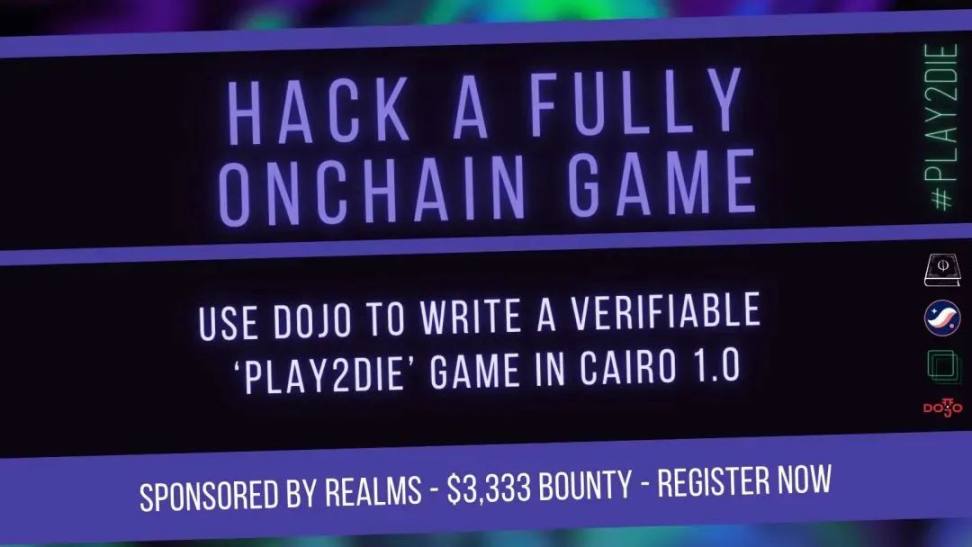
Loot Survivor's economic model is based on the Play2Die mechanism. In this game, the $Lords tokens carried by players hold significant value and are dropped when a character is injured or killed. Other players can pick up these tokens, gaining wealth and loot.
To survive and protect their $Lords tokens, players need to devise careful strategies. They can choose to explore the map, complete quests, and attack monsters to acquire $Lords tokens, while trying to avoid getting injured or defeated by other players.
Through ranking and tribute mechanisms, Loot Survivor encourages players to compete and strive for excellence. If players successfully survive and rank in the top three, other new adventurers in the game will pay tribute to these players after their deaths, acknowledging and honoring their achievements, making competition and achievement an integral part of the game.
Additionally, the game features a trading market where players can freely buy and sell items. This means they can earn additional $Lords tokens by selling rare equipment and items, or enhance their own strength by purchasing items provided by other players.
03 Treaty
- Game type: 4X core multi-resource competitive strategy game
- Twitter followers: 4815
- Chain: Curio custom chain
- Official website: https://blog.curio.gg/
- Development team: Curio
- Project background: $2.9 million seed round financing
- Full chain technology: ECS game engine, Solidity, unified smart contract wallet layer, delegation mechanism
- Economic model: Resource collection, construction, trade, and treaty signing
Game Introduction
Treaty is a fully on-chain strategy game where players take on the role of a governor, making strategic decisions and engaging in diplomatic negotiations in a virtual world. Set in a completely blockchain-based world, the game offers a unique and stimulating experience.
In Treaty, players need to manage their own country, achieve its development and expansion by allocating resources reasonably, and engage in cooperation or confrontation with other players, establishing treaties to regulate interactions. In this game, diplomatic strategy and political acumen are important factors for achieving victory.
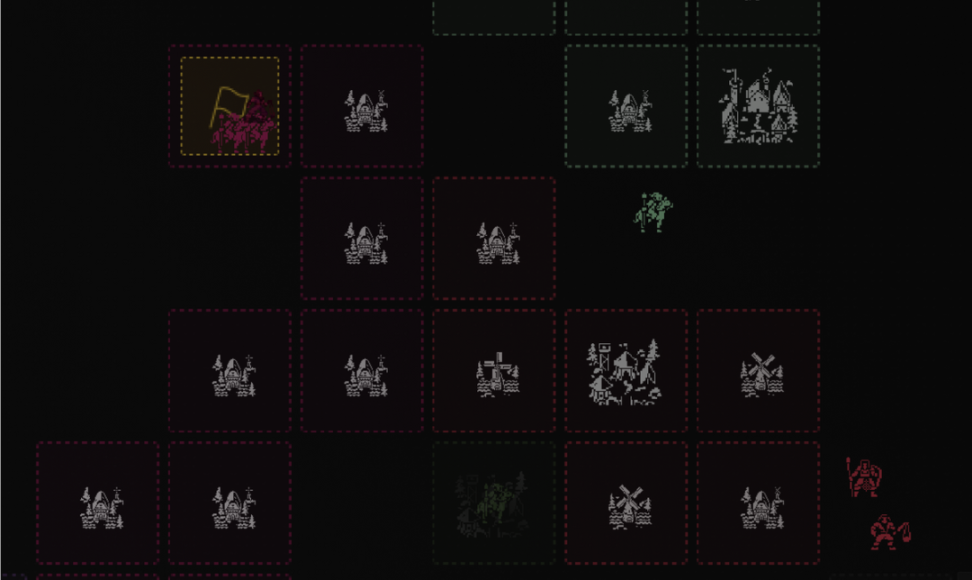
The game world is divided into two layers, and players need to expand and occupy the central grid of the inner layer, requiring careful decision-making and strategic planning. Additionally, elements such as land types, resource collection, and construction actions are important aspects to consider in the game.
Development Team
The Curio development team is composed of creative individuals focused on building games and creating rich and extensive social interactive experiences through the composability of cryptocurrencies and the power of smart contracts. They are passionate about bringing games to people in ways that cannot be achieved in the real world, creating lasting emotional bonds through games.
Over the past year, they have launched multiple products, from naval battle games to the latest Treaty strategy game, where players can sign agreements with other players through smart contracts. In the future, they hope players can freely create and build in the game in more complex ways.
To drive the development of on-chain games, they are committed to building a custom chain designed specifically for on-chain games, with performance that can be 100 times that of a standard EVM chain.
Project Background
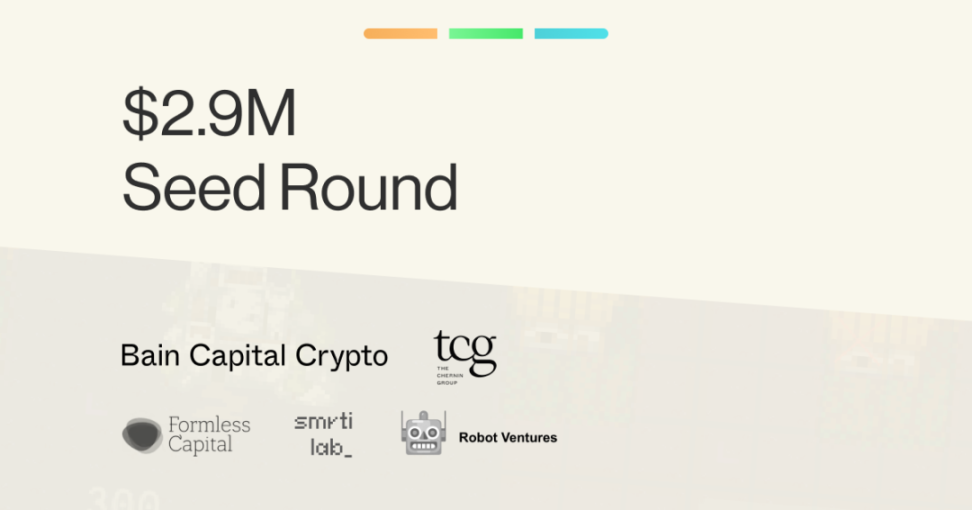
On February 27th of this year, Curio announced a $2.9 million seed round financing led by Bain Capital Crypto, TCG Crypto, Formless Capital, Smrti Labs, Robot Ventures, and other leading companies including Coinbase, Niantic, and Farcaster.
Full Chain Technology
In Treaty, players can choose to join various types of social contracts, such as alliance treaties and profit-sharing agreements. These contracts will either restrict or promote interactions between players, having far-reaching effects in the game. For example, after signing an alliance treaty, players will be protected and not be attacked by other alliance members; and after signing a profit-sharing agreement, guild leaders will tax members' resources and use them to provide more advanced equipment and weapons, ensuring the safety of the entire guild.
To tokenize game resources, Treaty has also established a unified smart contract wallet layer. This means that in-game items such as buildings and armies can exist in the form of tokens and be controlled by players. Players can manage and transfer their resources by exchanging tokens, creating a more flexible and convenient gaming experience.
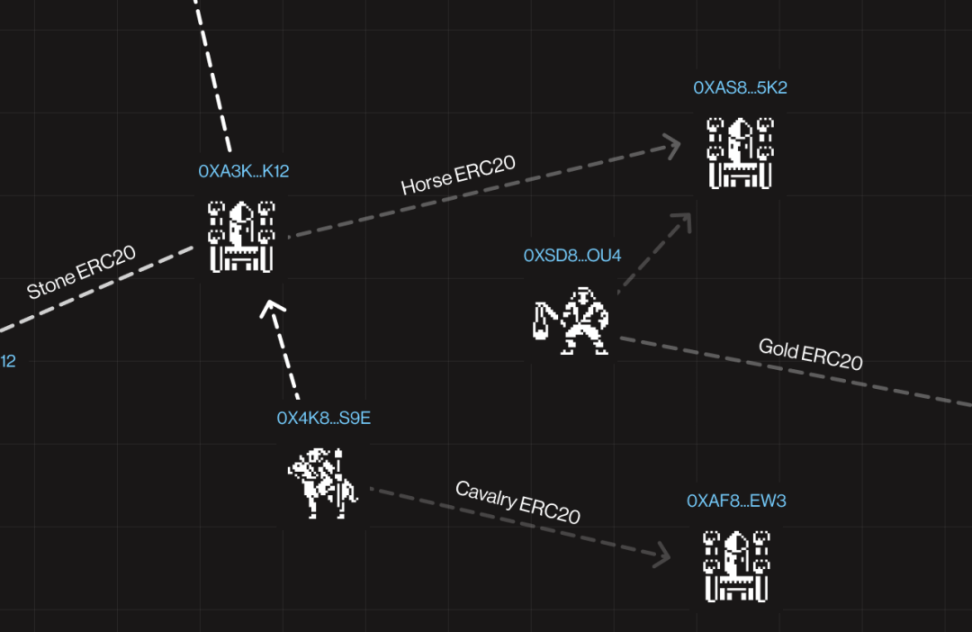
Additionally, Treaty has introduced a delegation mechanism, allowing players to delegate other players or smart contracts to perform game functions on their behalf. This provides players with more freedom and convenience, such as allowing others to manage resources or perform specific actions on their behalf when offline.
The entire game's data structure uses the Entity-Component-System (ECS), a commonly used game development pattern. Through this system, Treaty can automatically synchronize data, reduce the workload of developers, and accelerate the game development process.
Economic Model
In the game, players take on the role of territory expanders and economic planners. The game's economic model involves aspects such as resource collection, construction, trade, and treaty signing. Players need to effectively manage resources, balance economic development and military strength to achieve success in the game.
Resources play a crucial role in Treaty. Players can acquire two main resources: gold and food. Gold is used to upgrade capital and unlock other features, while food is used to nurture armies and expand territory. Players need to acquire resources through various means, including defeating barbarians, harvesting crystal mines and farms, and trading with other players.
Construction and paving operations are also important components of the economic model. Players need to build mines and farms on the game map to harvest resources. Additionally, players can choose to restore or upgrade their paving to enhance territorial defense capabilities. These construction and paving operations require careful planning to ensure the rational use of resources and the stable development of territory.
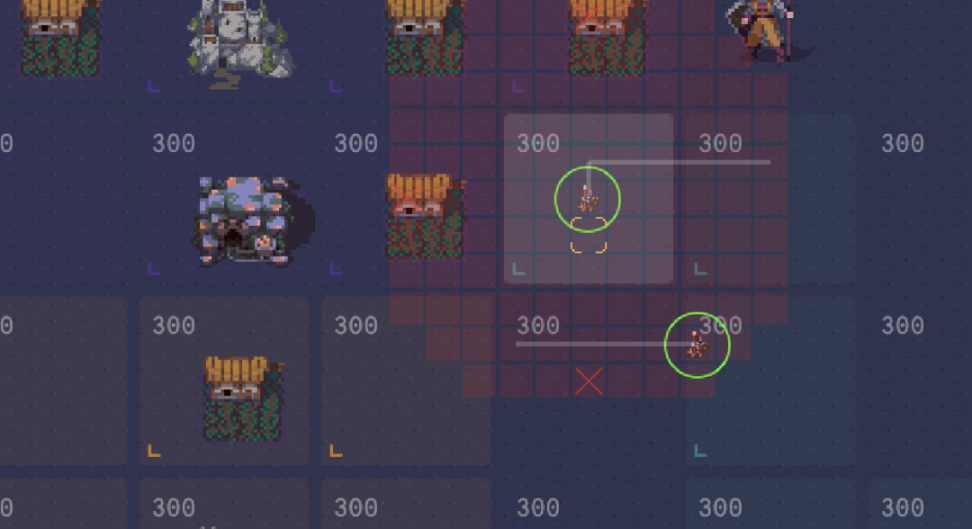
Furthermore, Treaty introduces a treaty signing mechanism, allowing players to engage in diplomacy and restrict the actions of other players. As legislators, players can propose and sign treaties that specify certain actions other players cannot take for a certain period, affecting the game's dynamics and competitiveness. This diplomatic and treaty-making process requires players to flexibly apply strategies and negotiation skills to maximize their interests.
In the next part, we will introduce the four games Isaac, Mithraeum, Influence, and Wolf Game.
Disclaimer: This article represents only the personal views of the author and does not represent the position and views of this platform. This article is for information sharing only and does not constitute any investment advice to anyone. Any disputes between users and authors are unrelated to this platform. If the articles or images on the webpage involve infringement, please provide relevant proof of rights and identity documents and send an email to support@aicoin.com. The relevant staff of this platform will conduct an investigation.