
Polymarket has become a new paradise for crime.
Written by: Maher, Foresight News
"Prediction markets remind me of the feeling of cryptocurrency ten years ago: an emerging asset class is heading towards a scale of trillions of dollars."
When Paradigm co-founder Matt Huang said this, he probably didn't expect Polymarket to get mired in controversy.
In the early hours of March 10, in Jerusalem, Israel Times reporter Emanuel Fabian reported: "Beit Shemesh, Iranian missile warhead landed, not intercepted."
As a result, he soon received a death threat: "Revise your lies immediately, or we will end your life with $900,000." The threats did not come from terrorists, but from gamblers who lost money on Polymarket.
Prior to this, U.S. Army Special Forces officers were prosecuted for insider trading, having made over $400,000, while gamblers rushed to Paris airport to change temperatures with hairdryers. Under these absurd scenarios, it exposed how far Polymarket seemed to be from its proclaimed collective intelligence, gradually turning into a haven for crime.
This $15 billion valuation giant, with monthly transactions exceeding $9.5 billion, which received an additional $600 million investment from ICE, the parent company of the New York Stock Exchange, presents a facade of collective wisdom, yet beneath lies a life-and-death gamble.
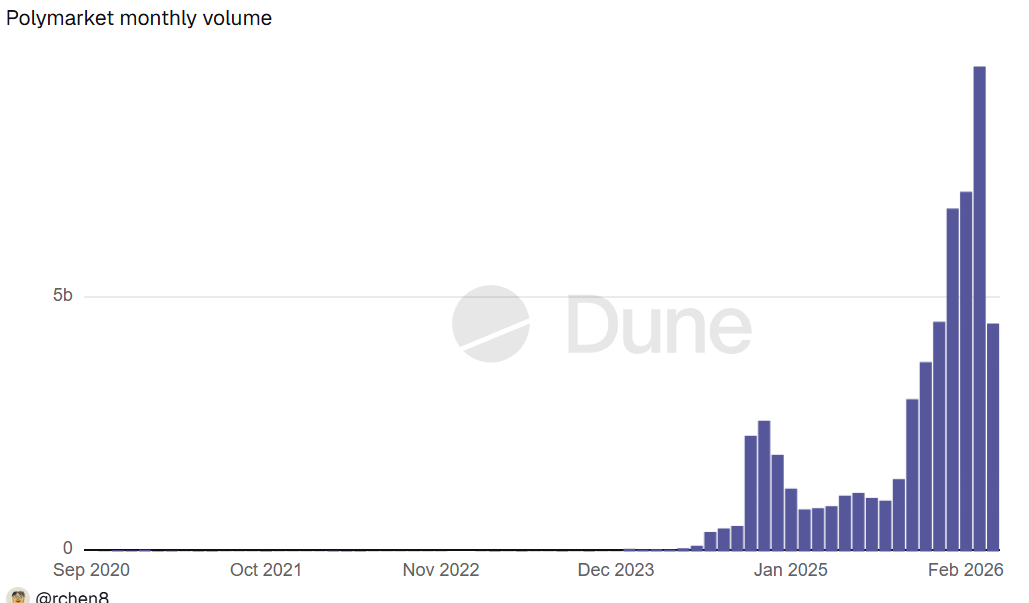
Polymarket is no longer just a "prediction platform," but a giant speculative machine that thoroughly financializes the uncertainties of the real world. It converts wars, election outcomes, and even disaster details into highly liquid bets, allowing participants to price the "future" with real money.
The crypto utopia that once promised to "discover truth through the market" is now starkly revealing its underlying fragility and darkness.
Original Sin: Born for Insider Trading
The first original sin of Polymarket is its incessant insider trading farce, which has even become a breeding ground for encouraging insider trading. The logic is simple: in this market, whoever possesses more accurate information can profit.
Politics, war, finance, technology... these vertical prediction markets are precisely the hotspots for insider trading. They often have extremely high barriers to entry—White House officials, Google executives, active U.S. Army officers treat Polymarket as their own personal printing press. Meanwhile, those still sitting at computers, relying on AI for research, ultimately become "prey on the board."
In December 2025, Google search rankings for people/events instantly turned into a hunting ground.
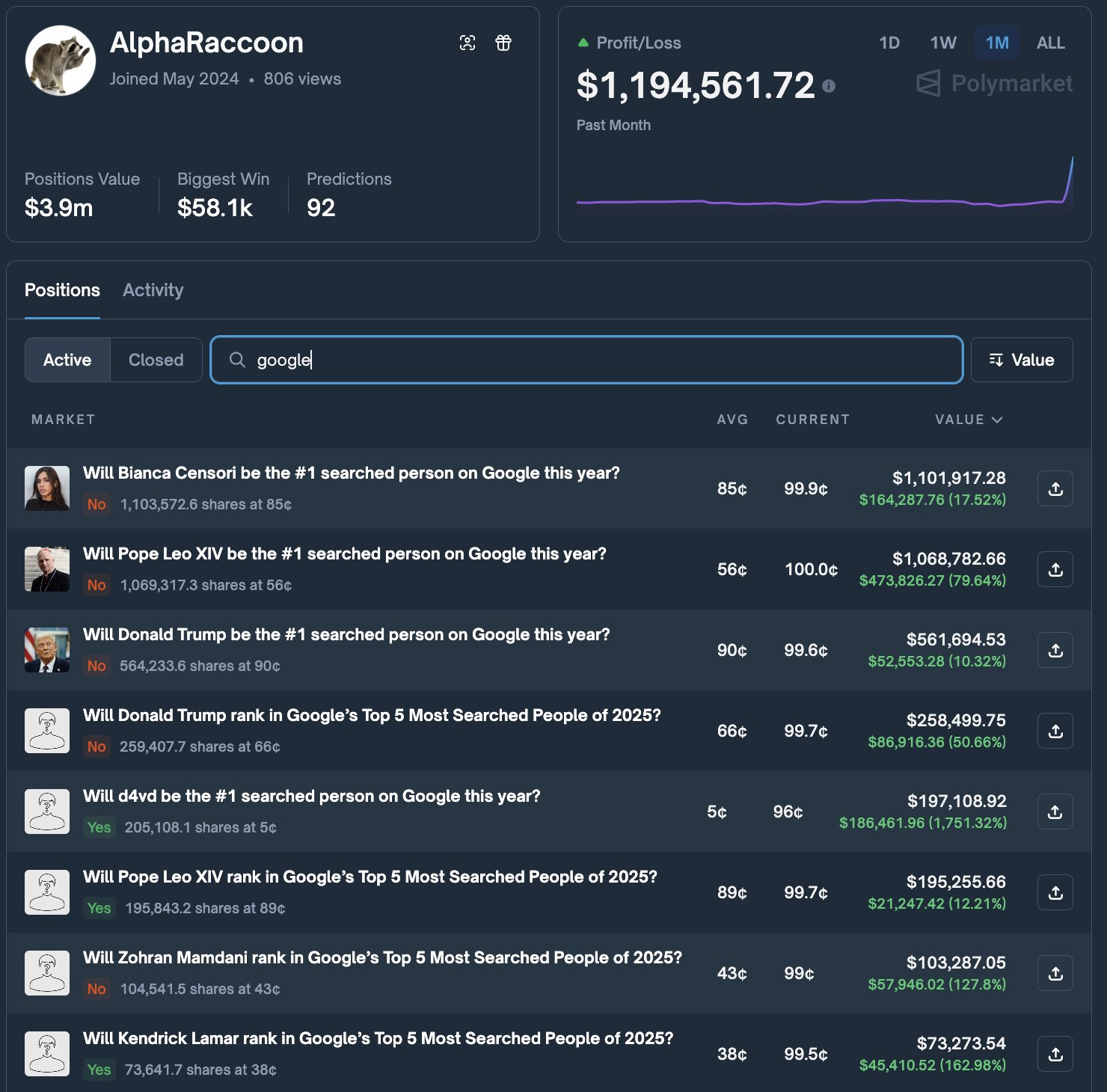
The wallet "AlphaRaccoon" (associated with address 0xafEe) acted like a pre-installed script machine, netting nearly $1 million in a single day. It accurately predicted that singer d4vd (a not particularly mainstream 20-year-old American musician) would become the most searched person on Google in 2025. Additionally, it predicted that Pope Leo XIV would enter the top 5 most searched individuals. The wallet had previously perfectly guessed the release times of Google products—on-chain data showed an unreasonably high win rate, with visibility glaringly concentrated.
Meta engineer Jeong Haeju directly stated that the players behind this address are insiders from Google, shearing off the benefits from Polymarket.
Just one month later, in January 2026, another textbook-level insider trading drama unfolded.
A newly created anonymous account in December 2025 bet between $32,000 to $38,500 on the market "Maduro will resign by the end of January," just hours before the announcement.
With a command from Trump, as news of U.S. military operations broke, this account instantly realized a profit of $400,000 to $485,000, an over ten-fold return.
This account traded almost exclusively in Venezuelan-related markets, with funding sources being singular and newly injected, as if born for this moment.
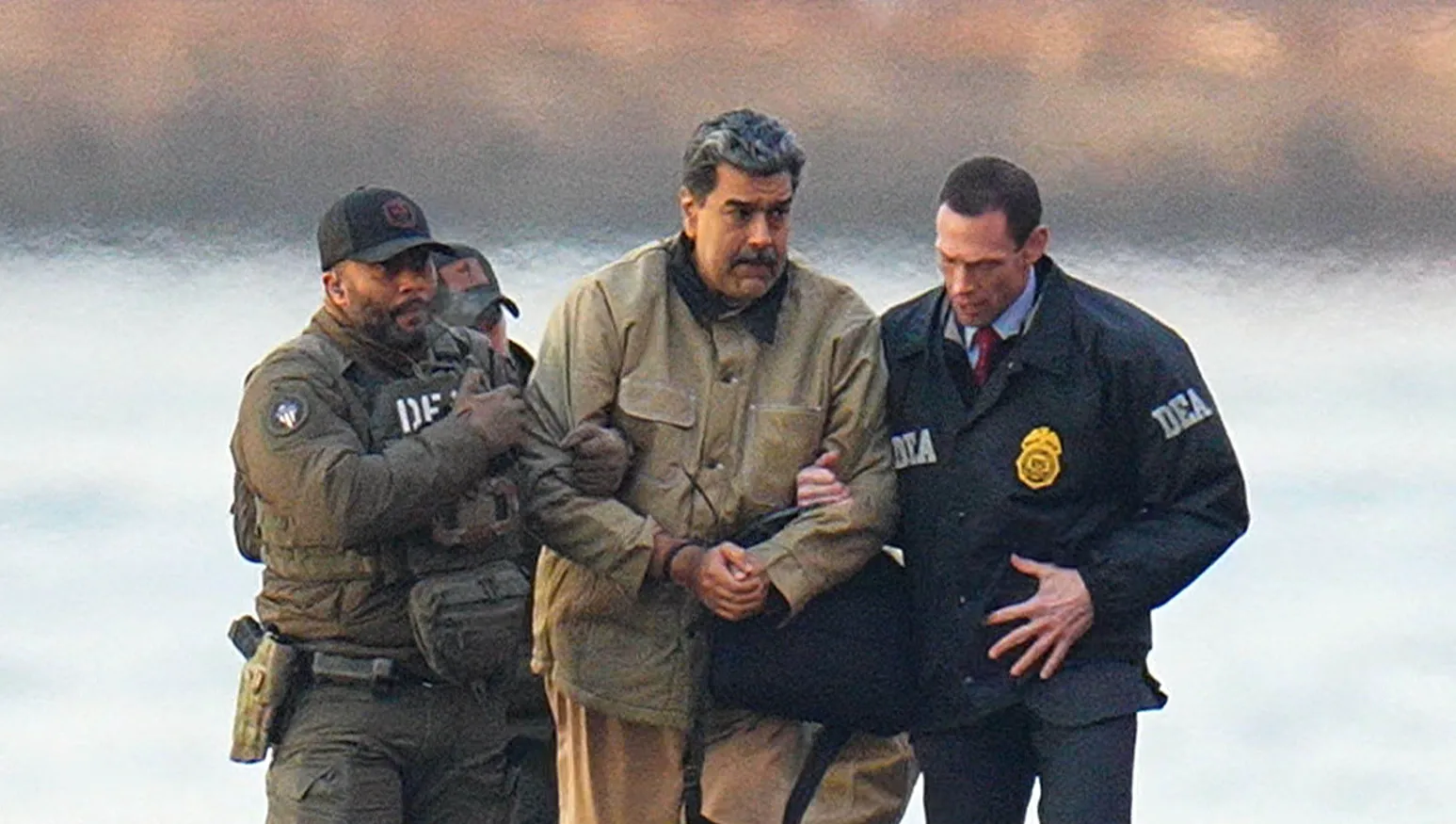
At this moment, the scene froze: Maduro was escorted by DEA agents, hands cuffed, face filled with shock.
Meanwhile, that anonymous account had long since vanished with its tenfold profits.
It wasn't until April 23 that the identity of this insider player was revealed by an indictment made public by the U.S. Department of Justice.
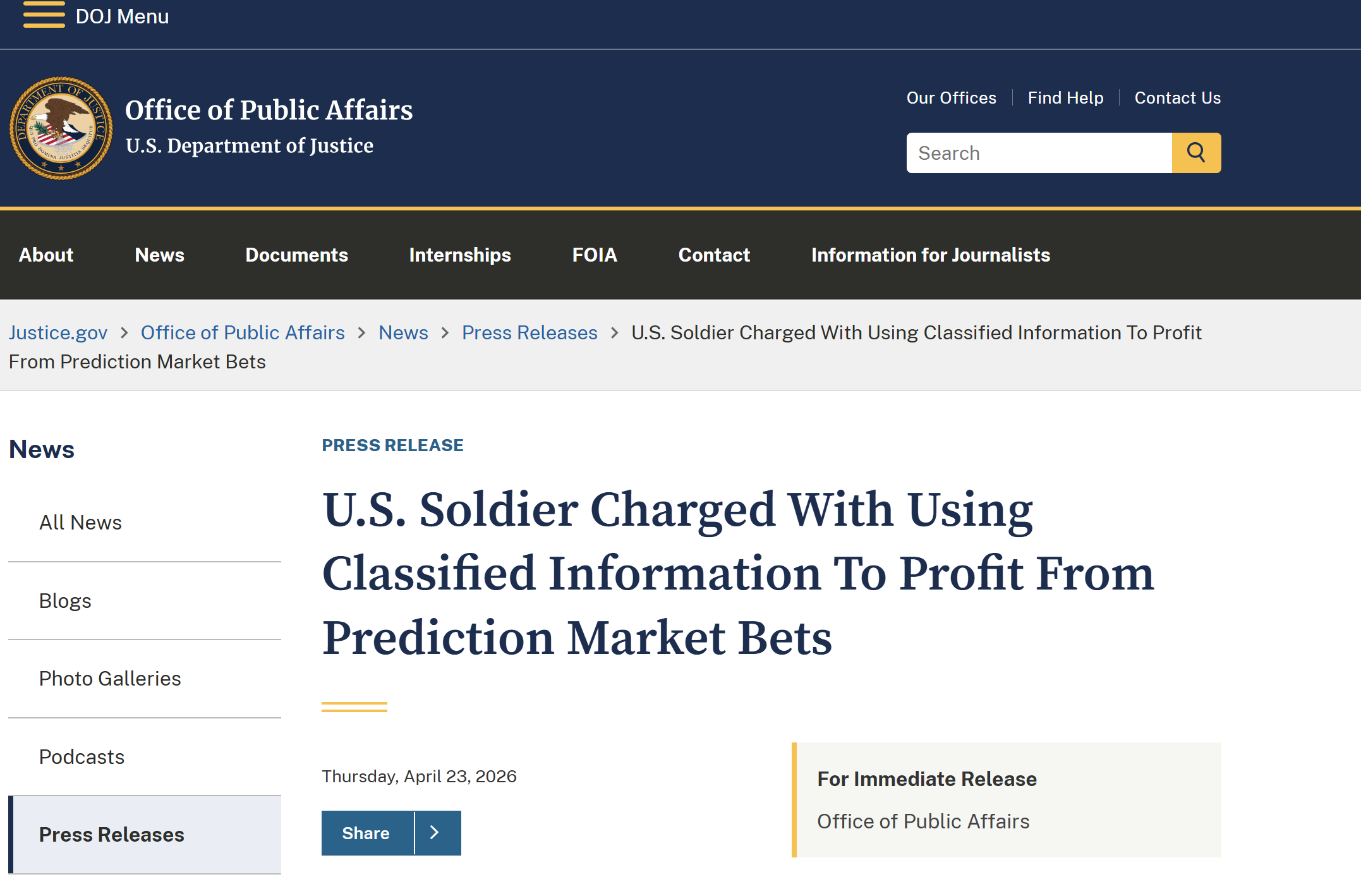
This insider turned out to be U.S. Army Staff Sergeant Gannon Ken Van Dyke, who directly participated in the entire process of capturing Maduro—from early intelligence planning to actual execution. This event also became the first real case in U.S. history where insider trading in prediction markets led to criminal prosecution.
In February of this year, six new Polymarket accounts that had funded within 24 hours heavily bought Yes positions in the "U.S. military strike against Iran before February 28" or "Khamenei resignation" markets (entering the market when prices were as low as 0.10), completing trades just hours before the announcement of strike news. They collectively profited about $1.2 million, with one account turning $61,000 into $493,000 (821% return).
Bubblemaps' on-chain tracking shows these wallets are interconnected, with the same trader previously achieving a win rate of 93% in several Iranian-related markets, netting nearly $1 million in total profits.
A widely held view is that this is the price to pay for "quickly approaching the truth."

George Mason University Professor Robin Hanson
One of the founders of prediction market theory, George Mason University Professor Robin Hanson, believes that insider information is key to prediction markets, and that strictly prohibiting insider trading is a mistake: "You need them to engage in insider trading to get the most accurate prices; that is the purpose of prediction markets, to provide information for decision-making."
However, this view has not gained widespread acceptance.
Traditional financial markets have strict definitions for insider trading: those who possess non-public significant information or violate fiduciary duties cannot trade. However, Polymarket once wandered in a gray area.
Among the platform's users are officials or executives who possess policy information—when a decision is worth millions of dollars in the market, how does "procedural justice" combat human greed? In March 2026, U.S. federal prosecutors (Southern District) met with Polymarket representatives to discuss how existing insider trading laws, anti-money laundering laws, and anti-fraud laws apply to prediction markets. The CFTC simultaneously released guidelines reminding the platform of its responsibility to restrict insider trading.
On March 23, 2026, the "Market Integrity Rules" were updated to explicitly prohibit three types of actions—using stolen confidential information, trading illegal tips, and betting by those in positions that can influence the outcome of events (such as a CEO of a listed company not allowed to bet on keywords in its financial report).
In the same month, in response to increasingly serious bureaucratic insider trading, even the White House publicly warned staff not to use insider information to trade in prediction markets.
However, the questioning is far from over. Critics point out that the on-chain anonymity makes tracing extremely difficult—the wallet address cannot directly correspond to a real identity. Even if the platform strengthens rules, cross-chain arbitrage and the spread of secondhand information still have loopholes.
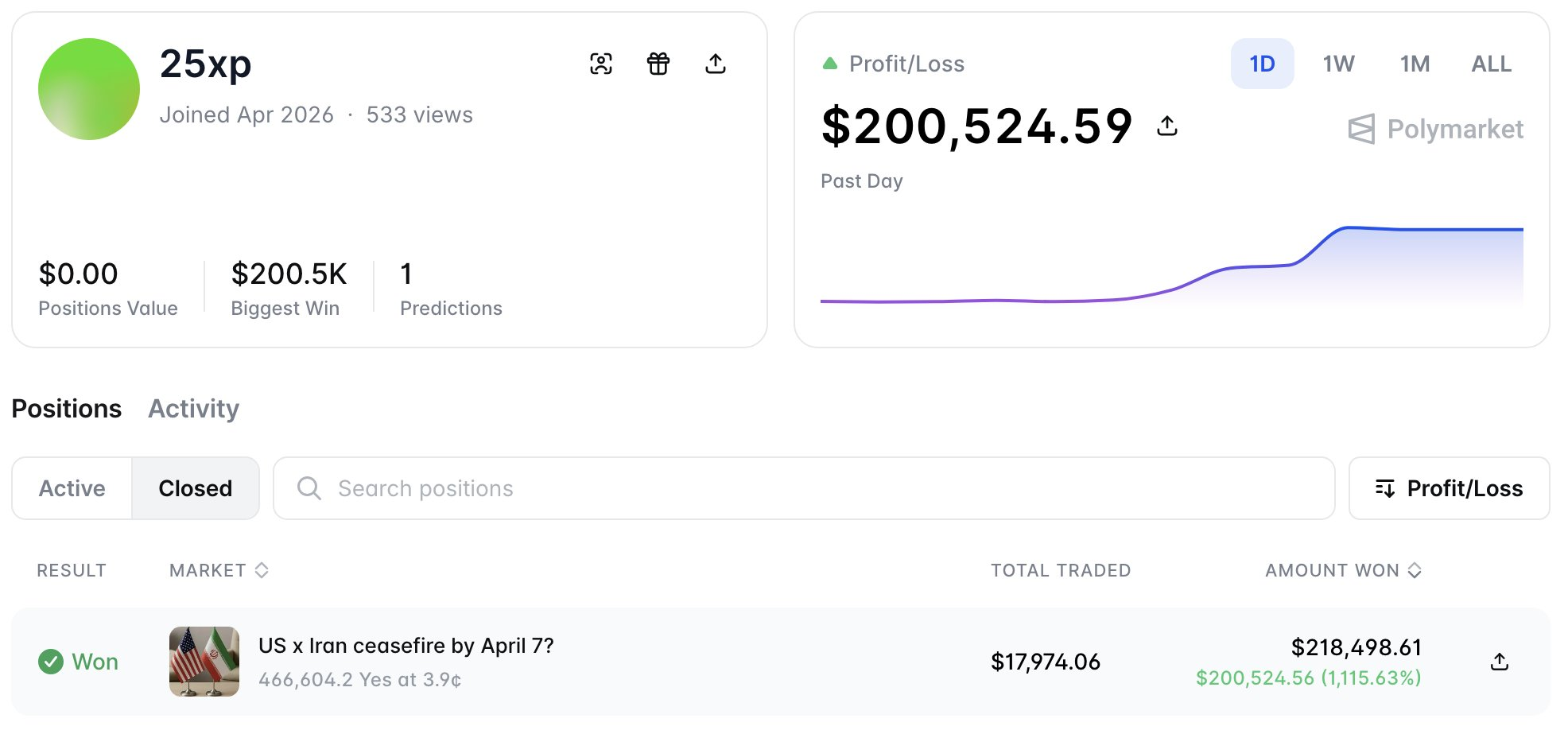
On April 7, 2026, the U.S. and Iran suddenly announced a ceasefire agreement.
Just hours before the announcement, four "phantom wallets" stealthily appeared like pre-rehearsed assassins.
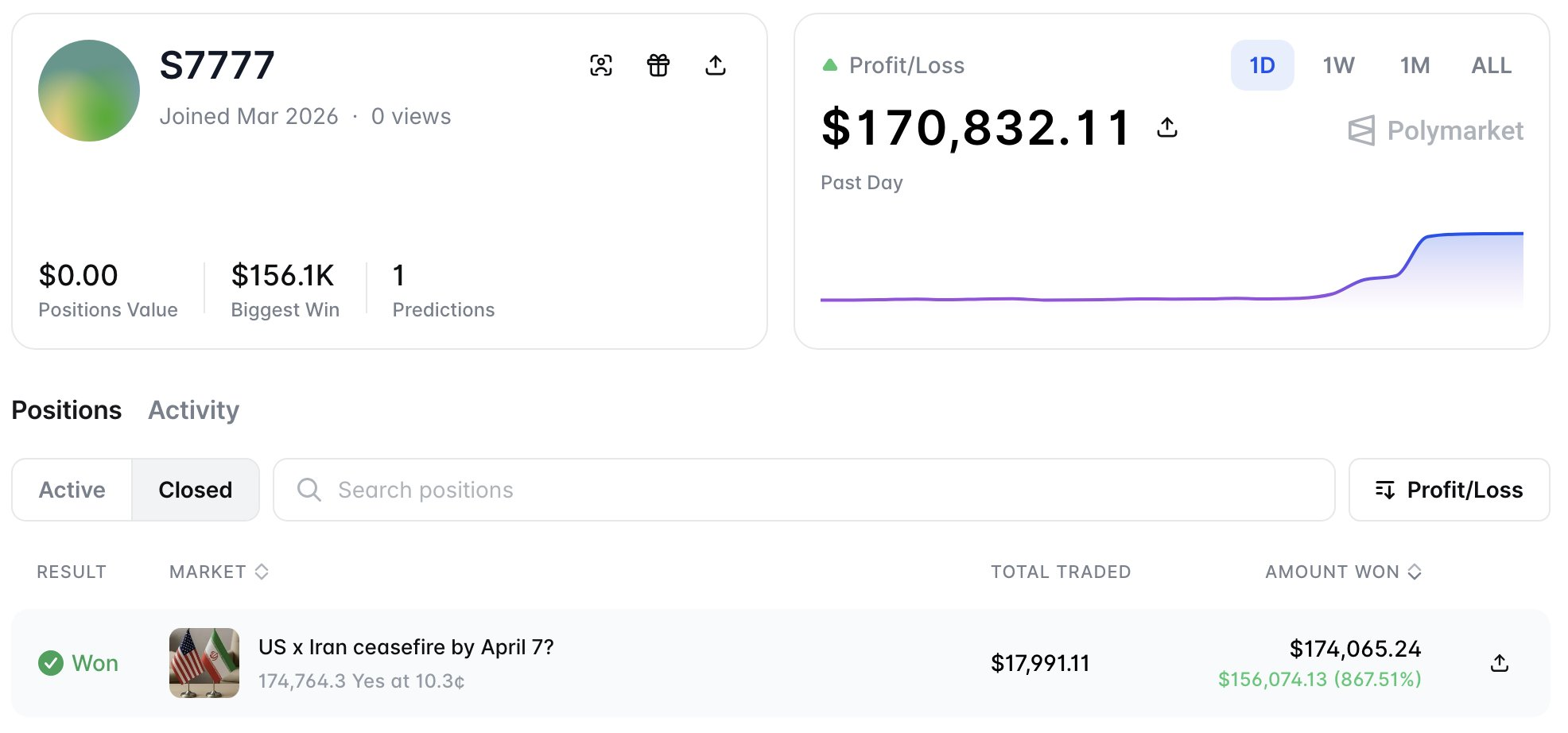
They were all newly created on April 7, with funds instantly injected, followed by precision-heavy buying of the "before April 7 ceasefire" YES option at extremely low odds of 3.9%.
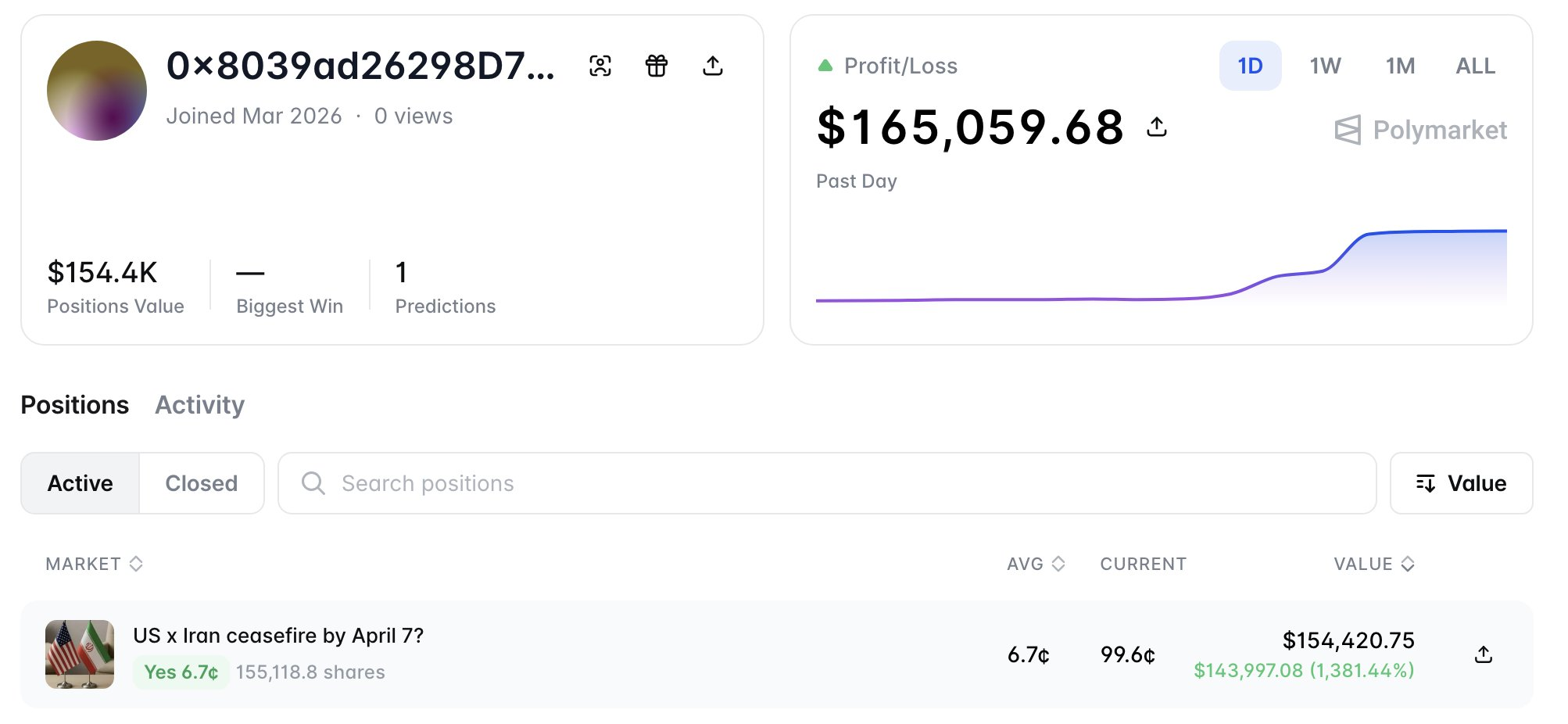
Prior to this, these wallets had no trading history, as if they were born solely for this moment.
Lookonchain data shows: the four addresses collectively swept in $663,000 in profits. One of the wallets, S7777, went from $0 to $170,000 within a day, a curve as clean as a textbook-level insider practice.
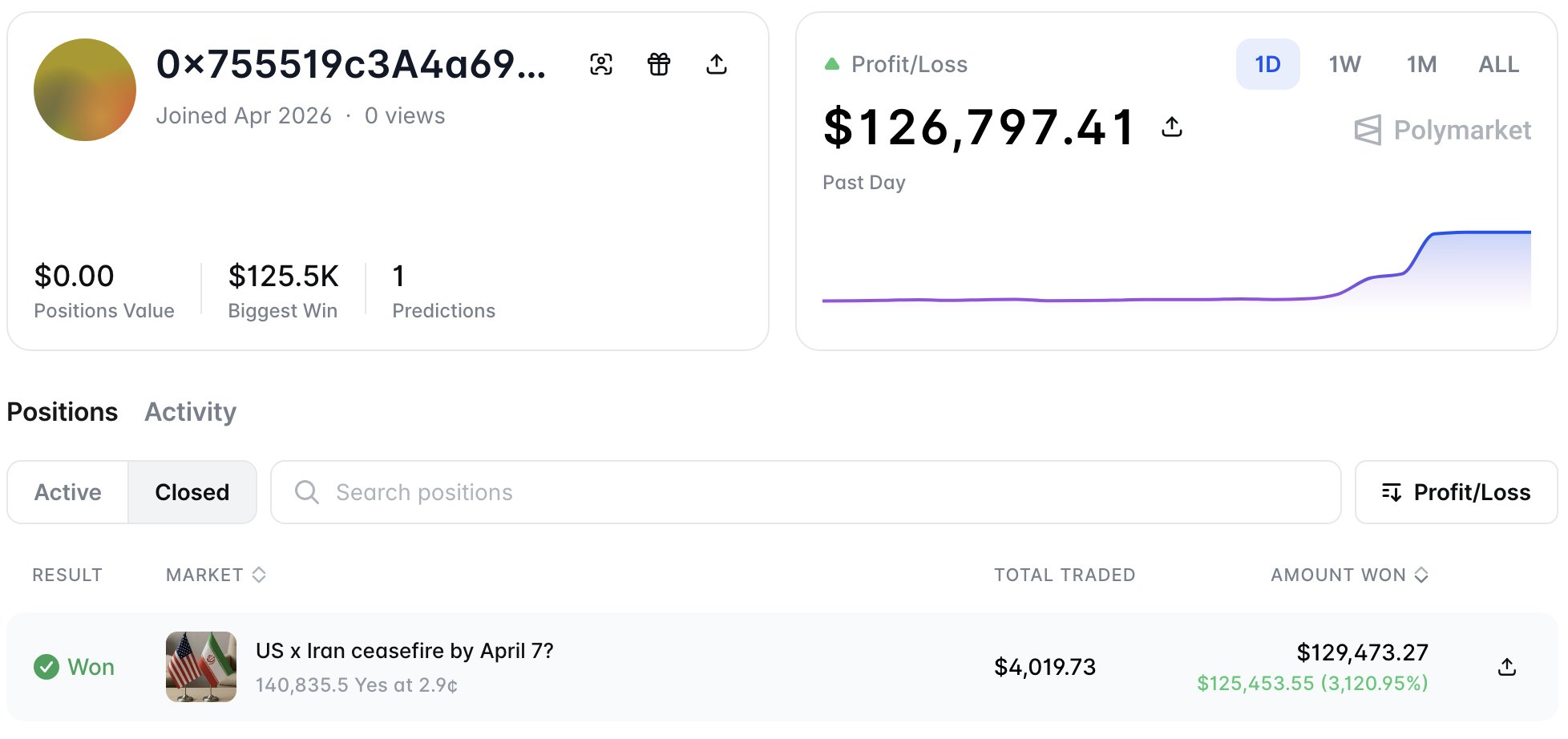
This is not luck. This is blatant insider harvesting. Polymarket, which should be a fair prediction market, has become a cash cow for a few who exploit power and information at the expense of ordinary people. Ordinary participants exit the game having lost their bets, while the platform's proclaimed "collective wisdom" has been reduced to a joke. The deeper issue is that prediction markets, which should reduce decision-making costs and gather wisdom, have profoundly broken the bottom line of fairness in the face of power and status.
The Manhattan federal prosecutor has made it clear that insider trading laws apply to "widely observed activities." The path to regulatory incorporation has already begun: in the future, prediction markets may integrate with traditional securities laws through enhanced KYC, trading surveillance, and "transparent common denominators" for balance. However, defining the boundaries of "non-public information" in a decentralized environment remains an unresolved issue.
On April 14, Polymarket announced it would combat potential market manipulation and audit some startups integrated into its ecosystem, which had previously been accused of identifying and distributing suspected "insider trading accounts," guiding users to engage in follow-on trading.
If insider trading is merely a game involving money, then what happens when the betting pool is large enough that some gamblers are willing to risk their lives for a joke?
Second Sin: Trading Life and Death, Challenging Human Morality
The first sin of Polymarket is abetting insider trading, the second sin is even more blatant—directly trading life and death.
When the betting pool is so large that it can price a human life, the so-called prediction market becomes a breeding ground for crowdfunded violence. Battlefield reporters who report the truth become targets for revenge after gamblers lose; U.S. soldiers shot down in the Iran-U.S. war, amidst uncertainty about their fate, become currency for bets on life and death on the platform. Even the life of the Iranian leader is merely a chip that can be wagered onscreen. When the matter of life and death is reduced to a probability number, and transactions crossin
Disclaimer: This article represents only the personal views of the author and does not represent the position and views of this platform. This article is for information sharing only and does not constitute any investment advice to anyone. Any disputes between users and authors are unrelated to this platform. If the articles or images on the webpage involve infringement, please provide relevant proof of rights and identity documents and send an email to support@aicoin.com. The relevant staff of this platform will conduct an investigation.