
DeSci’s hard part begins where molecule generation ends.
An AI agent reportedly designed a peptide candidate for ADHD-related research in 24 hours, ran computational screening, and selected it for initial wet lab follow-up expected to cost thousands of dollars. BIO traded as the proxy for that narrative.
The important point is the cost compression at the front of the pipeline. Open source protein models, binding tools, public bioactivity databases, and cheaper lab work are making candidate generation faster and more accessible.
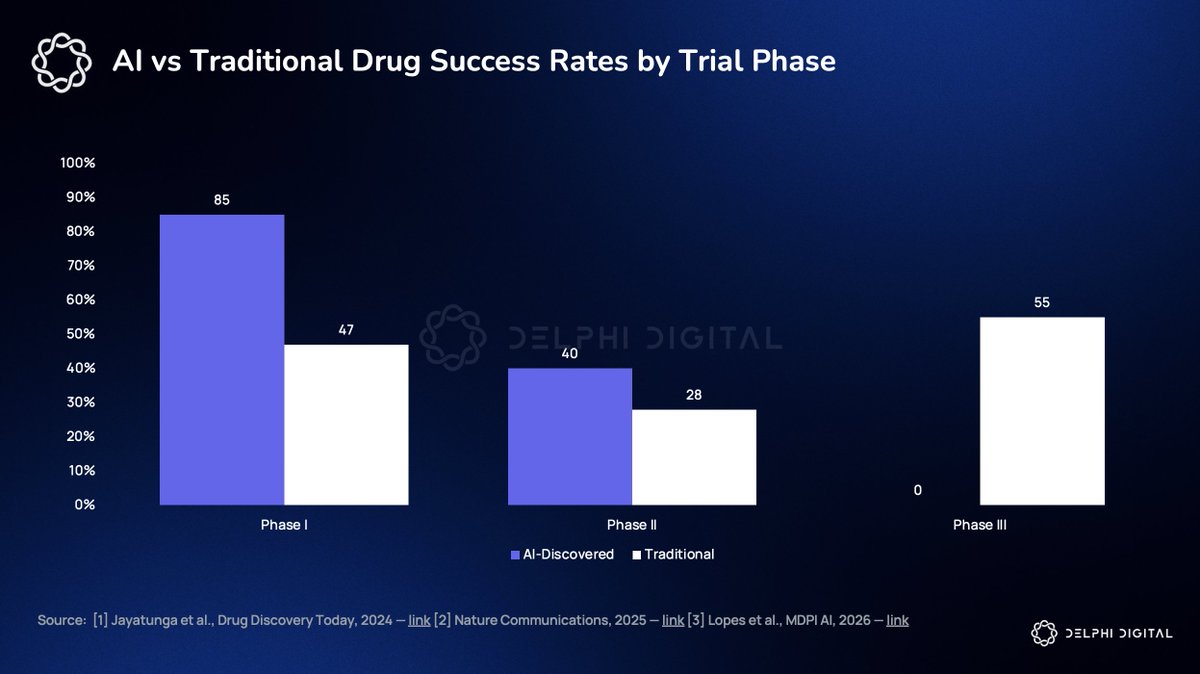
The wall starts immediately after. A candidate still needs preclinical data, dosing work, IP clarity, regulatory review, and human trials. Phase I can show whether a drug is safe enough to keep studying, but efficacy still has to be proven later.
This is where token markets and biotech timelines diverge. Narratives can reprice in hours. Drug programs need years of data before the asset can be valued with confidence.
A durable DeSci model would attach capital to defined experiments, credible rights, technical oversight, and staged funding as validation improves. Most of the category is still short of that bar.
Disclaimer: This article represents only the personal views of the author and does not represent the position and views of this platform. This article is for information sharing only and does not constitute any investment advice to anyone. Any disputes between users and authors are unrelated to this platform. If the articles or images on the webpage involve infringement, please provide relevant proof of rights and identity documents and send an email to support@aicoin.com. The relevant staff of this platform will conduct an investigation.