
When strong competitors emerge, flaws are magnified infinitely.
Written by: Eric, Foresight News
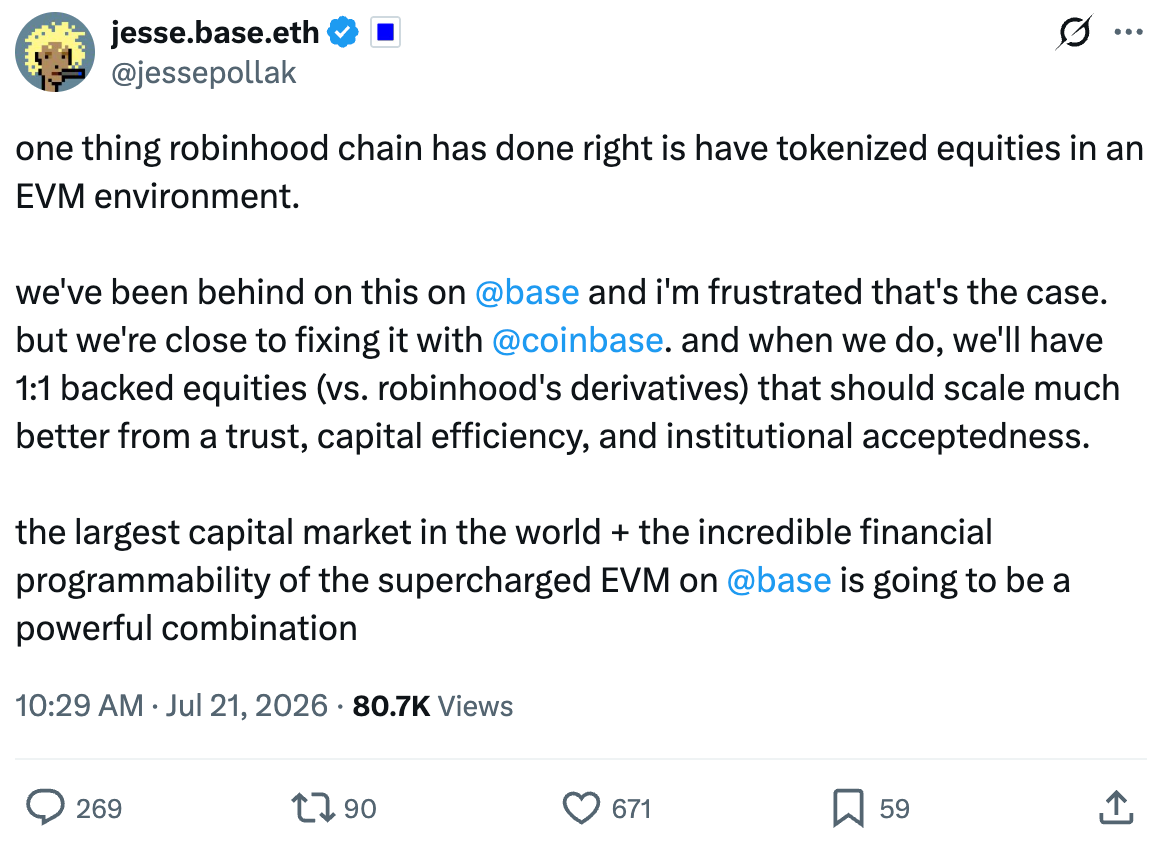
On July 21 at noon Beijing time, Base co-founder Jesse Pollak tweeted that launching tokenized stocks in an EVM environment by Robinhood Chain is the right direction. Base is lagging in this field but is working with Coinbase to advance related products. Base plans to launch tokenized stocks backed 1:1 by real stocks, rather than the derivative model used by Robinhood.
This is Jesse's second public acknowledgment of mistakes recently. On the eve of the mainnet launch of Robinhood Chain, Jesse Pollak publicly admitted that the bet on social and creator tokens over the past year was a strategic error. Attempts surrounding Farcaster, Zora, and content tokens did not lead to sustainable adoption. The related token prices have significantly dropped, and the enthusiasm of early builders has also cooled. Pollak then handed over the leadership of the Base App back to Coinbase, where Cobie took over, allowing him to focus on the core infrastructure of the chain.
In the realm of public chains launched by exchanges, apart from BNB Chain, Base has almost achieved a level where no one can catch up. BNB Chain has years of accumulation, a moat that Base cannot breach in a short time. However, facing L2s like OP Mainnet and Arbitrum, which have accumulated advantages over several years, Base is not at a disadvantage, even showing obvious advantages in areas including meme tokens.
Perhaps it is precisely because of backing from Coinbase that, although Base is on a strong upward trajectory, it lacks sustainable momentum. The issues buried during its rapid ascent have been magnified after the launch of Robinhood Chain.
Cobie, who took over the Base App, acknowledged that Coinbase is drifting away from crypto-native users, and Base's stagnation in decentralization is a typical testament to this. The centralization issues of Base have long been criticized, and the two block production interruption events in late August 2025 and late June 2026 clearly pointed to problems with a single sequencer. The bigger issue, however, is that L2BEAT is preparing to lower Base's level of decentralization from Stage 1 back to Stage 0.
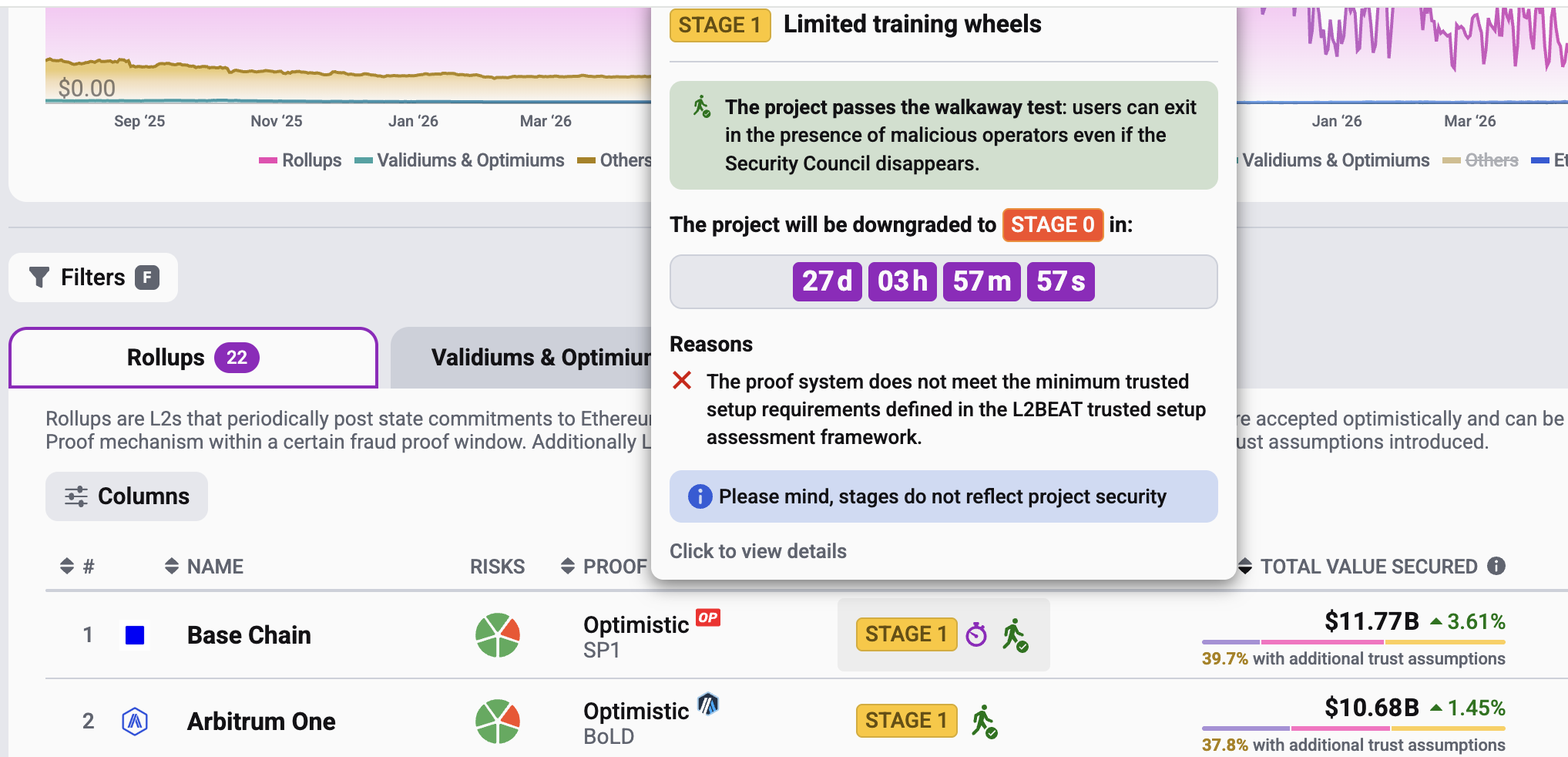
L2BEAT's standards do not equate to security; Base has proven that even if the security committee fails, users' assets remain secure. But the main reason this issue has been mentioned again recently is that as a crypto-native exchange, how can you compete with Robinhood Chain if you have not built any advantages in decentralization over such a long time?
In just over a dozen days after the mainnet launch, the trading volume of Robinhood Chain DEX surged into the top five, with daily transaction counts surpassing Base at one point. Before this, Base could rely on its traffic and data to "play it cool," but the sudden arrival of a strong rival made all "minor issues" appear unacceptable.
After the launch of Robinhood Chain, Robinhood's CEO Vlad Tenev has been continuously watching the developments of the new project, while Coinbase founder Brian Armstrong recently switched to a new avatar that sparked interest in the meme token BRAIN, only to quickly revert to the old avatar, causing BRAIN's market cap to plummet from $37 million to $2 million. The contrast in actions is striking.
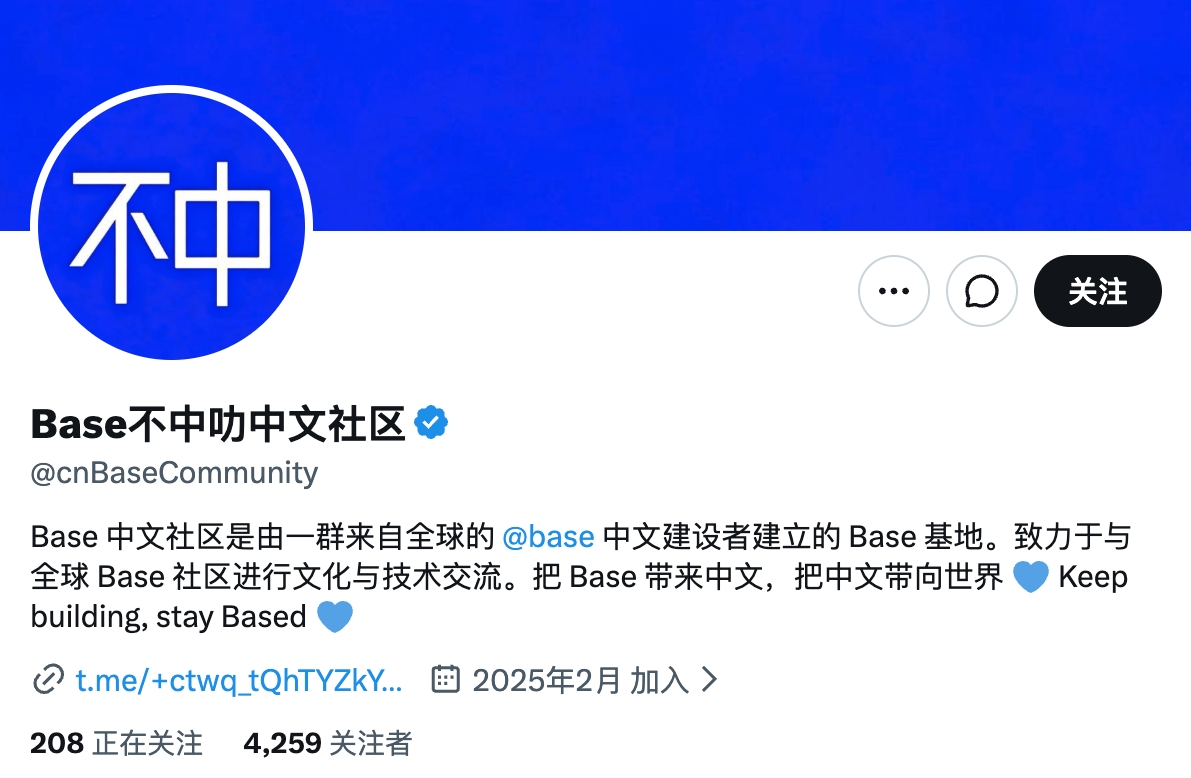
Although Brian Armstrong quickly responded to community feedback on X, stating that his personal account is not an investment signal and will not endorse specific tokens, it is clear that people are not buying it. The unofficial Base Chinese community X account changed its name to "Base Too Bad Chinese Community" after the incident, and today it changed it again to "Base Not Good Chinese Community," filled with sarcasm.
Of course, we cannot say that Base is doing poorly. Base currently still holds the highest TVL of nearly $12 billion in L2, and it holds the standard-setting authority in the machine payment field. Armstrong has repeatedly emphasized that Base's goal is to be a long-term financial infrastructure, not to chase short-term speculation. However, the emergence of Robinhood Chain has indeed accelerated competition and pressured Base to respond faster to users' demands for reliability and support.
For Base, perhaps the most pressing issue now is not to address these gaps, but rather to use this pressure to genuinely resolve the long-standing technical and trust issues. There are countless financial companies on Wall Street that can replicate the path of Robinhood Chain, and Base does not have a sufficiently large advantage in the area of RWA tokenization. If it does not take this opportunity to make changes, the situation will only become more passive.
Disclaimer: This article represents only the personal views of the author and does not represent the position and views of this platform. This article is for information sharing only and does not constitute any investment advice to anyone. Any disputes between users and authors are unrelated to this platform. If the articles or images on the webpage involve infringement, please provide relevant proof of rights and identity documents and send an email to support@aicoin.com. The relevant staff of this platform will conduct an investigation.