
CoinW Research Institute
Abstract: RWA3.0 is driving the digital asset platform to connect with global securities markets
This article examines the new ways of connection that are forming between stablecoins, digital asset account systems, securities markets, and blockchain infrastructure. Unlike traditional RWA that focuses on “how real assets go on-chain,” this article focuses on how standardized securities assets such as stocks, ETFs, etc. enter the digital asset ecosystem and how users can gain exposure to traditional financial market assets through stablecoins and crypto platforms.
From the perspective of user participation, the development of RWA has roughly undergone three evolutionary stages. In the early stage, RWA mainly addressed the issue of “how real assets enter the blockchain.” Its core model is to map real assets such as gold, real estate revenue rights, accounts receivable, etc., as on-chain digital certificates, enabling users to hold corresponding asset exposure through tokens. This stage focuses on asset on-chaining, ownership mapping, and on-chain verifiability. Subsequently, RWA2.0 connected real asset prices more with financial derivatives. Users do not necessarily hold the underlying assets directly but rather gain exposure to price changes of traditional assets such as stocks, indices, commodities, etc., through perpetual contracts, leveraged products, and other forms. These products lower the threshold for users to participate in the traditional market, allowing digital asset platforms to start providing multi-asset trading services, but their core remains price tracking, not the securities assets themselves.
Building on 1.0 and 2.0, RWA3.0 further evolves towards “connecting with the securities market.” The core change is that stablecoins and digital asset platforms begin to serve as a new entry point into the traditional securities market. Users can gain exposure to standardized securities assets such as US stocks and ETFs through the stablecoin funding system in trading platforms, wallets, or on-chain financial applications. This can be achieved through direct connections to securities trading services via brokerage systems, as well as by issuers packaging underlying assets such as stocks and ETFs into tokenized securities products, which are then distributed through trading platforms, wallets, or API channels. This stage changes the roles of stablecoins and digital asset platforms. Stablecoins are no longer just trading mediums within the crypto market, but begin to serve as funding entries connecting different asset markets; digital asset platforms are also no longer limited to crypto asset trading, but are gradually evolving into comprehensive financial asset entries.
The current market mainly forms two development paths. The first type is brokerage access, in which users access traditional securities trading services through stablecoins or digital asset platform accounts, relying on brokers, clearing, settlement, and securities custody systems. The second type is tokenized securities distribution, where issuing entities issue on-chain securities products based on underlying assets such as stocks or ETFs, distributing them through trading platforms, digital wallets, or other cooperative channels. The two models are not mutually exclusive but represent different paths for the integration of real-world securities markets and blockchain, likely to coexist for a long time in the future.
One of the most misunderstood aspects of RWA3.0 is that many products superficially appear to “trade stocks using stablecoins,” but the underlying structures may exhibit significant differences. What users gain may be real securities trading rights, or it may be price tracking products, tokenized securities certificates, or other economic rights. Therefore, assessing RWA3.0 products cannot merely focus on the trading interface; it requires further analysis of the underlying asset support methods, issuing entities, custody structures, user rights, company action handling, and compliance arrangements. The development of RWA3.0 is still constrained by the reality of financial systems and regulatory frameworks. Requirements for securities sales, cross-border investment, investor access, identity verification, and information disclosure dictate that these products cannot achieve global unrestricted circulation like ordinary digital assets. Differences in rights arrangements, custody structures, liquidity mechanisms, and compliance models among different products will continue to affect market trust and the pace of industry development.
The true significance of RWA3.0 is not simply to convert more assets into tokens but to promote the formation of new connections between stablecoins, digital asset account systems, and traditional financial market infrastructure. Future competition will not just revolve around how many assets or how much trading volume is supported, but will gradually shift to competition in asset authenticity, compliance capability, custody systems, liquidity management, and financial infrastructure integration capabilities.
Table of Contents
1. Definition, Boundaries, and Research Framework of RWA3.0
1.1 Track Evolution: From RWA1.0 to RWA3.0
1.2 Definition of RWA3.0 in this article
1.3 What is the difference between RWA3.0 and tokenized stock, synthetic stock, CFD?
1.4 Core model of RWA3.0
2. Market Status and Development Drivers
2.1 Stablecoin Expansion: On-chain USD is forming a new funding pool
2.2 Market Space Comparison: The scale gap between US stocks/securities market and crypto market
2.3 Performance of the US stock market and global allocation attractiveness
2.4 Why now: CEX, multi-asset platforms, and the maturity of embedded brokerage capabilities
2.5 Current Stage Assessment: Demand has been validated, models are diverging, compliance remains crucial
3. Industry Chain and Infrastructure Structure of RWA3.0
3.1 User Entry Layer: Exchanges, wallets, and front-end account systems
3.2 Brokers and dealers: Account opening, order placement, order routing, and market access
3.3 Clearing and securities custody: Who really holds the stock, who is responsible for settlement
3.4 Tokenized issuers: How to package securities rights into on-chain products
3.5 Stablecoins and payment settlement: How on-chain USD enters the securities system
3.6 Data, prices, and reserve proof: How to establish price, endorsement, and transparency
3.7 KYC/AML and regional restrictions: Why RWA3.0 is more compliance-heavy than ordinary crypto products
3.8 Corporate actions and investor rights: How to handle dividends, stock splits, suspensions, voting rights
4. Case Studies
4.1 BIT: A representative sample of stablecoin directly connected to US securities accounts
4.2 Binance: From US stock trading entry to bStocks, the formation of its own securities asset system
4.3 Bitget: From stock trading entry to Reality, the extension of its rTokens system
4.4 Comparative analysis
5. Model Comparison, Core Divisions, and Key Issues
5.1 Two Main Lines: Broker Access Type and Tokenized Distribution Type
5.2 Division One: What exactly did users buy?
5.3 Division Two: 1:1 support, direct shareholding and shareholder rights are not the same thing
5.4 Division Three: The formation of price, liquidity, and trading time
5.5 Division Four: Who is responsible for issuance, execution, custody, and verification behind the scenes
5.6 Division Five: Compliance boundaries and information disclosure determine long-term credibility
6. Major Risks and Challenges
6.1 Cross-border regulation: Securities attributes determine that it is not an ordinary crypto product
6.2 Ownership penetration: Existence of underlying assets does not mean user rights are clear
6.3 Corporate actions: The most difficult“securities details” to standardize
6.4 Liquidity and anchoring: Price risks behind 24/7 trading
6.5 User understanding: The more the interface resembles a spot, the higher the risk of misinterpretation
6.6 Infrastructure dependence: RWA3.0 is multi-party collaboration, not a single-point product
6.7 Current bottleneck: The industry still lacks unified standards
7. Trends and Prospects
8. Conclusion
References
Related Article:https://www.aicoin.com/en/article/548042
4.3 Bitget: From Stock Trading Entry to Reality, Extending Its Own rTokens System
Similar to Binance, Bitget's layout in RWA3.0 first establishes a stock trading entry, then further introduces Reality and rTokens, extending securities assets to the on-chain ecosystem. The former mainly addresses “how to allow crypto users to invest in US stocks on the exchange,” while the latter further explores “how to make securities assets tradable and combinable as digital assets on-chain.”
Reality, as an extension of Bitget's stock business, inherits the existing account system and user entry of the exchange, and on this basis, introduces rTokens, converting some publicly traded stocks and ETFs into on-chain assets, and attempts to combine them with unified accounts, margin, strategy trading, and future yield scenarios. Compared to simply providing stock trading services, Bitget hopes to further enhance the liquidity and capital efficiency of securities assets within the exchange ecosystem.
This layout also aligns with this article's definition of RWA3.0: on one hand, Bitget connects crypto users with traditional securities markets through stock trading services; on the other hand, it tokenizes securities assets through Reality and gradually integrates them into the on-chain financial system. From stock trading within accounts to on-chain rTokens, Bitget shows a development path that gradually extends from securities trading entry to securities assets going on-chain.
4.3.1 Bitget Stock+: Connecting Crypto Users with Traditional Securities Markets
From Crypto Trading Platform to Multi-Asset Investment Entry
Stock+ is the US stock trading service provided by Bitget for qualified users, allowing them to buy, sell, and hold real US stocks and ETFs within the Bitget App. This product is not a chain-based tokenized security nor an rToken, but rather facilitates crypto users' access to the traditional US stock market through sub-accounts for securities and licensed securities partnerships. This business line aligns with Bitget's Universal Exchange (UEX) narrative. The core of UEX is not just trading crypto, but seeking to include crypto assets, traditional financial assets, and future on-chain assets into the same platform experience. Therefore, Stock+ serves more as an account entry connected to the traditional securities market, while Reality/rTokens resemble an exploration of on-chain securities exposure and RWA asset supply layers. The two serve the direction of a “multi-asset platform,” but differ in underlying structures and should not be conflated.
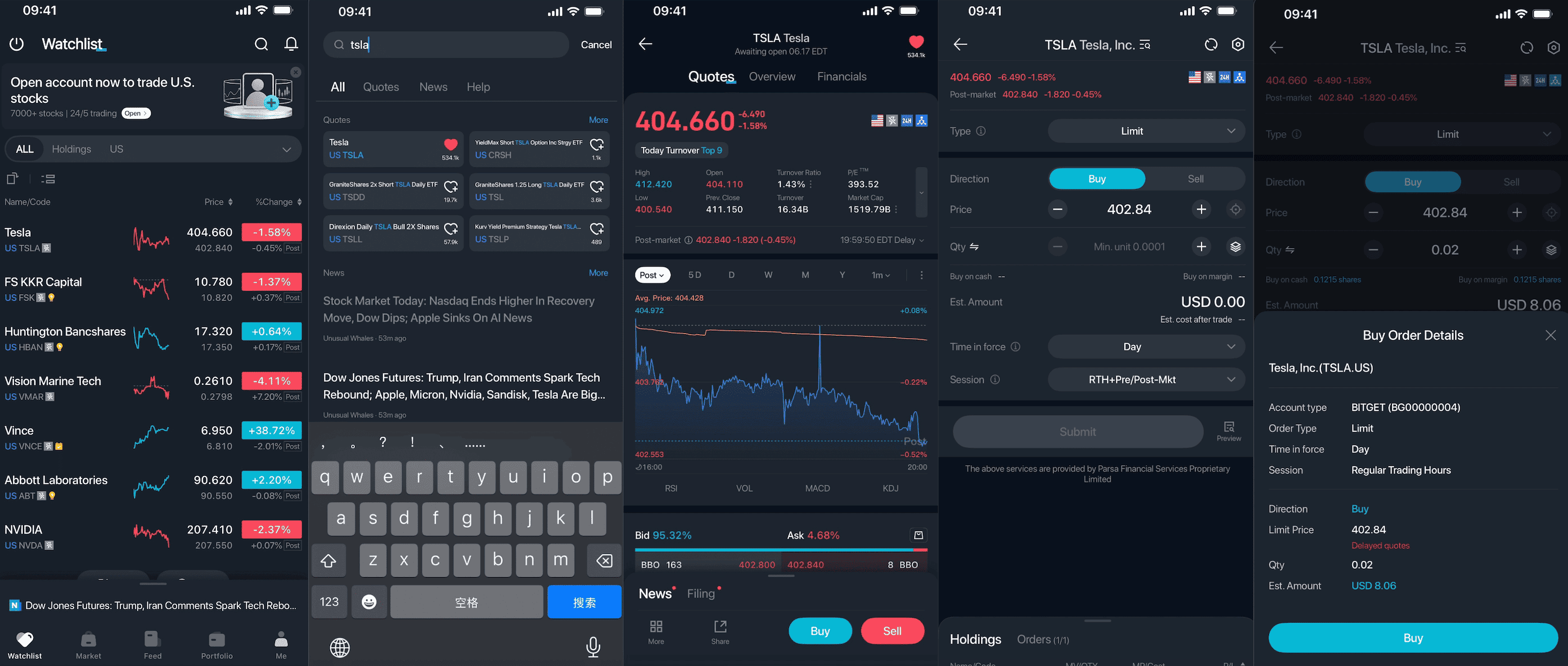
Figure . Source: https://www.bitget.com/support/articles/12560603887182
Product Range: 10,000+ US Stocks and ETFs, Emphasizing Real Stock Trading
Qualified users can trade over 10,000 US listed stocks and ETFs through US licensed securities partners, with support for fractional shares starting at as little as 0.0001 shares. Tradable targets are based on the real-time list on the product page, covering high-interest stocks and ETFs such as Apple, Tesla, NVIDIA, Amazon, Meta, Microsoft, Alphabet, SPY, QQQ, etc. This needs to be distinguished from rTokens in Bitget Stocks 2.0. Stock+ focuses on “real US stock and ETF trading,” while rTokens are on-chain stock exposure products issued by Reality. The former is closer to a brokerage account experience, while the latter is more of a crypto-native tokenized stock exposure.
Trading Experience: Using USDC to Enter Securities Sub-Accounts
The user path for Bitget Stock+ is crypto-native, yet the underlying trading still follows the logic of the securities market. Users need to open a Stock+ securities sub-account within Bitget, and the system can reuse users' completed advanced identity authentication information. Regarding funding, Stock+ supports both USDC and USD conversions bidirectionally; Stock+ accounts use USD as the pricing and settlement currency, with all US stock trading conducted in USD. Users can first recharge or exchange their Bitget main account to USDC, then transfer USDC into Stock+ securities sub-accounts for purchasing US stocks or ETFs. Stock+ supports trading 24/5, covering pre-market, regular trading hours, post-market, and overnight sessions. It also provides free Level 1 real-time quotes, with eligible VIP users able to receive advanced market data such as Nasdaq TotalView Level 2. These designs intend to embed a traditional brokerage experience as much as possible into the Bitget user's familiar App environment.
Underlying Architecture: Bitget Provides the Entry, Parsa, RQD Clearing and Atomic Vaults Securities Handle Securities Connections
Stock+ services are provided by Parsa Financial Services Pty Ltd, a subsidiary of Bitget Group, which is a licensed financial service provider regulated by the South African FSCA, license number FSP 52563. This business operates in cooperation with US licensed brokers RQD Clearing and Atomic Vaults Securities. In trade execution, user orders are routed to Nasdaq, NYSE, and regulated market makers for execution to access US stock market liquidity. For custody and clearing, Bitget officially states that user stock assets are independently held by the US clearing broker RQD Clearing, strictly isolated from Bitget’s own asset. This means that Bitget primarily undertakes the roles of account entry, product front-end, and user experience in Stock+, while execution, clearing, and custody of underlying securities are completed through licensed securities partner institutions.
User Rights: Closer to Real Stock Holdings, but Still Constrained by Product Rules and Regional Restrictions
Bitget officially distinguishes Stock+ from rTokens clearly: Stock+ corresponds to real stocks held in a regulated broker's custody, where users own actual US stock assets and enjoy shareholder-related rights including cash dividends, stock dividends, and voting rights; rTokens represent tokenized beneficial rights, not shares held directly through traditional brokerage accounts. Regarding dividend handling, Stock+ processes cash dividends traditionally and automatically through US clearing broker RQD Clearing, credited to users' available USD balances after applicable tax deductions, while stock dividends automatically increase users’ corresponding holdings. In terms of corporate actions, including splits, reverse splits, and mergers, the official statement indicates automatic adjustments will be made in proportion to the number of shares or value in users' Stock+ accounts. Although Stock+ is closer to actual securities holdings, it is not a completely independent traditional brokerage account but instead a sub-account service opened within the Bitget App. Whether users can open, tradable targets, methods of exercising voting rights, transferring stocks in and out, tax handling, and regional restrictions are still subject to Bitget Stock+ product rules, user’s location regulatory requirements, and subsequent platform notifications.
4.3.2 Extension of Stock Business: Reality and rTokens
If the previous stock trading services resolve the question of "how to invest in US stocks within the Bitget account," then Reality aims to further solve "how to make these securities assets enter the on-chain ecosystem." Reality is more of an extension of Bitget's stock business towards RWA3.0, while rTokens are specific products within this system. Reality is Bitget's tokenized securities platform, responsible for issuing rTokens and converting publicly traded stocks and ETFs into on-chain assets, integrating them into Bitget's trading system. Compared to the stock trading service within accounts, rTokens are no longer just entry points for securities trading but can further enter unified accounts, margin, and future on-chain applications of securities assets.
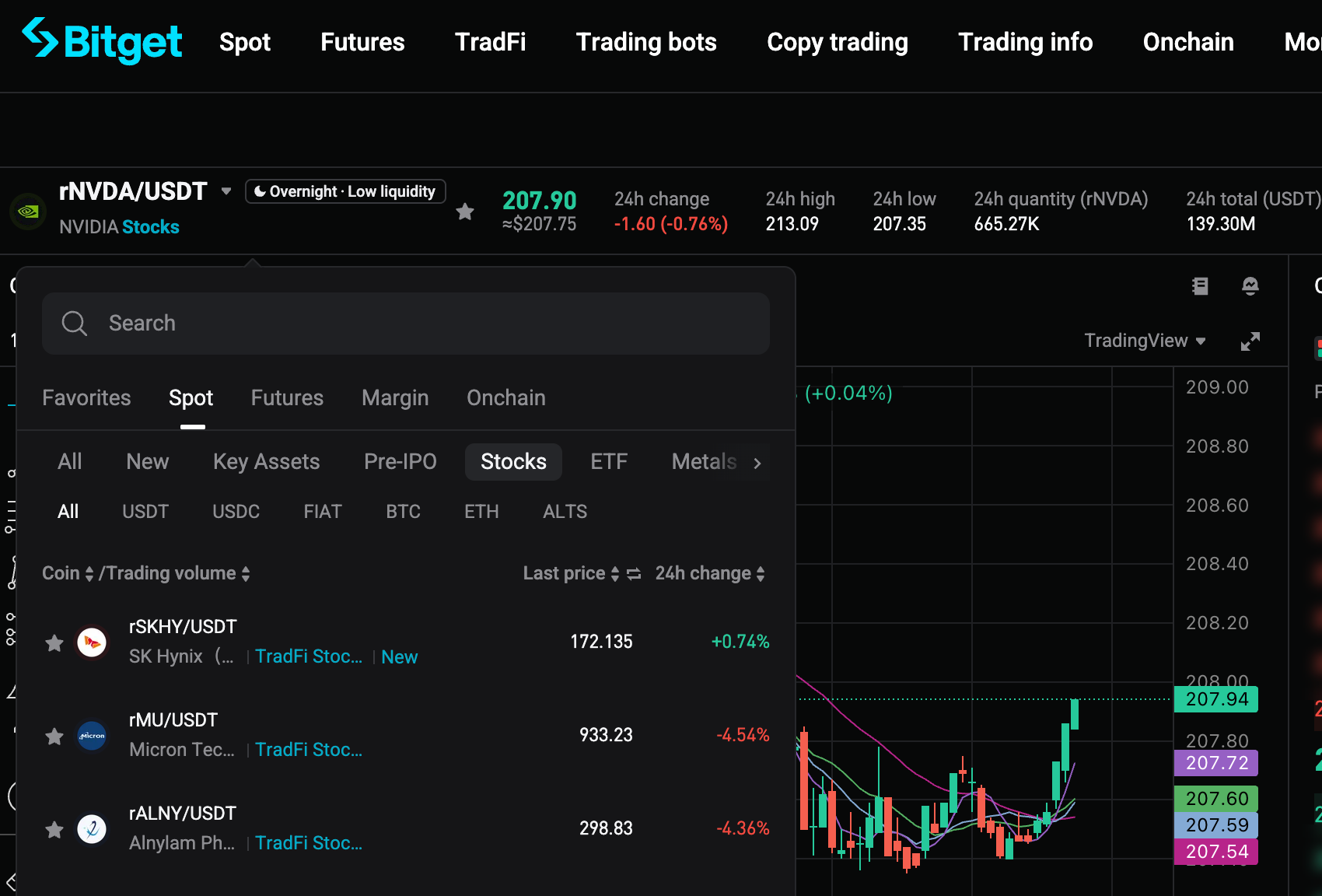
Figure 8. Source: https://www.bitget.com/spot/RNVDAUSDT
What are rTokens: On-chain representation of publicly traded stocks and ETFs
Reality is the issuing platform for rTokens. rTokens are on-chain representations of publicly traded stocks and ETFs, initially focusing on selected US stocks and ETFs, with potential future expansion to more asset classes. Each rToken is supported 1:1 by real stocks, with the underlying stocks held by FINRA registered and SIPC protected US broker-dealers. Reality is not merely creating a stock price contract but aims to establish underlying asset endorsement for rTokens through real stock support, asset proof, and auditing mechanisms. As of now, Bitget has not disclosed the specific broker-dealer responsible for holding the underlying stocks or the detailed custody account structure corresponding to each rToken.
It is essential to draw careful distinctions here: 1:1 support does not equate to users directly holding stocks. It indicates that corresponding underlying asset support exists behind the rToken, but does not automatically imply that users own publicly traded stocks or have complete shareholder rights in traditional brokerage accounts. The specific legal nature of rTokens, redemption rules, rights boundaries, custody account structures, and user rights arrangements should still be based on product terms, legal documents, and Proof of Asset disclosures. Both rTokens and Binance bStocks are attempting to translate traditional securities exposure into on-chain assets. However, they are not the same product, differing in issuing entities, regulatory frameworks, underlying service providers, on-chain designs, and disclosure methods, hence should not be simply equated.
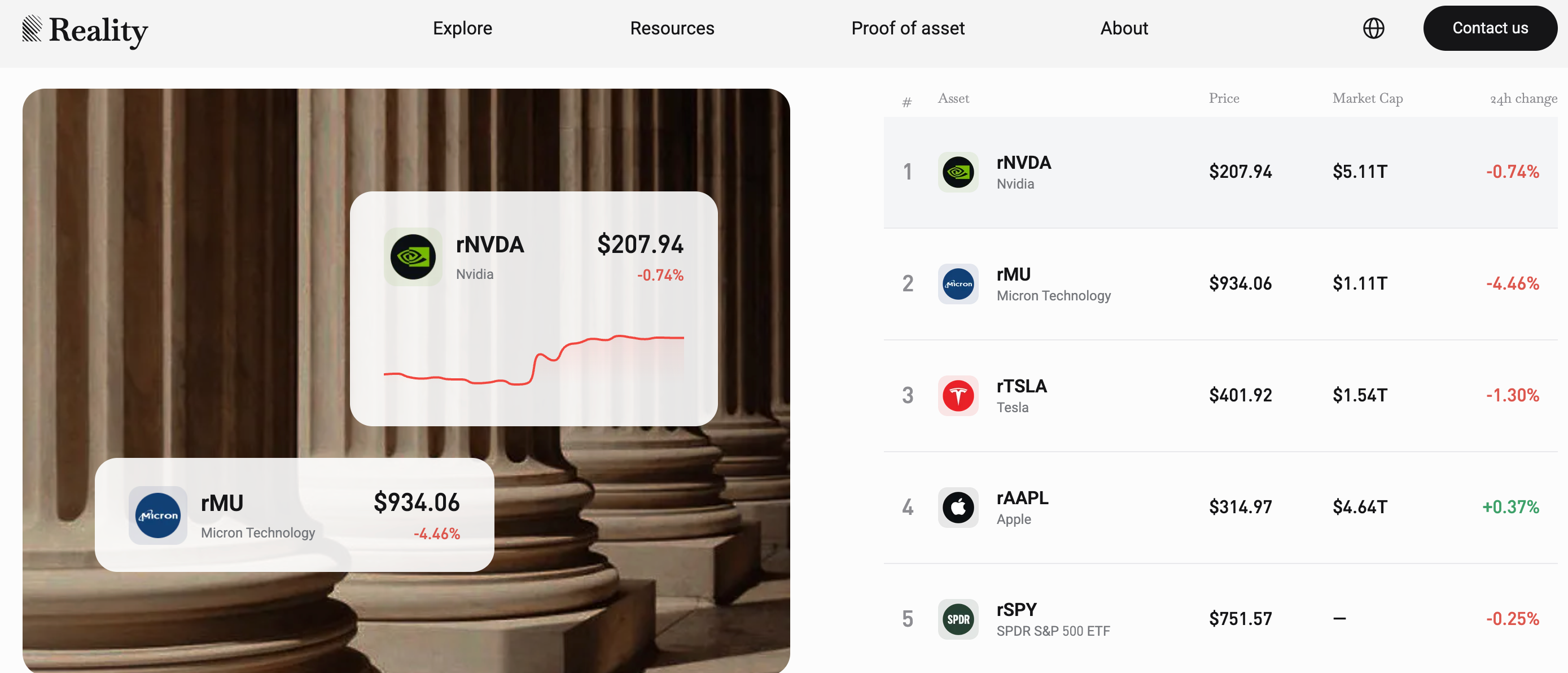
Figure 9. Source: https://realityfinance.xyz/
User Experience: RWA Assets Entering Trading Platform's Funding Efficiency System
The focus of Bitget Reality is not just to let users buy and hold tokenized US stocks and ETFs but also to integrate these RWA assets into Bitget's existing trading and capital efficiency system. Reality's RWA products will be inherently integrated into the Bitget exchange. In the future, tokenized equities can serve as unified account margin, supporting algorithmic grid, copy trading, and integrating into Bitget's native staking and lending products. Bitget does not want users to just open an isolated RWA page but intends for RWA assets to enter the existing trading, margin, strategy, and yield systems of the exchange. For users, the tokenized exposure to stocks and ETFs will no longer just be an asset to “buy and hold” but may become part of the margin, strategy trading, copy trading, borrowing, and yield products in the account. This also distinguishes the Reality case from simple distribution cases of tokenized stocks. It emphasizes the usability and capital efficiency of RWA assets within the exchange, not just whether the asset itself goes on-chain. However, some of these functionalities still belong to the product roadmap or planning in Bitget announcements. The specific rTokens that can be used for margin, which can interface with grid, copy trading, staking, or lending, the regions and risk parameters for use will still depend on subsequent announcements and product rules.
Underlying Structure: Reality, US broker-dealers, Proof of Asset, and Auditing
The underlying structure of Reality can be viewed in several layers. The first layer is Reality itself. It serves as Bitget's dedicated RWA provider, responsible for the tokenization of traditional financial assets and the issuance of rTokens. The second layer is rTokens. rTokens are the on-chain representation of publicly traded stocks and ETFs, aiming to transform traditional securities asset exposure into an asset form accessible and usable by crypto users. The third layer is the underlying real stocks. Each rToken is 1:1 backed by actual stocks, held by FINRA registered and SIPC protected US broker-dealers. Reality emphasizes that it is not merely price mapping but seeks to stress the underlying securities asset support. The fourth layer involves verification and auditing. Bitget's announcement mentions a live Proof of Asset dashboard and CPA-level audit reports to showcase and verify the support status of underlying assets. The role of such mechanisms is to enhance transparency between rTokens and the underlying real stocks. However, Bitget Reality's currently disclosed institutional names remain incomplete, although it mentions US broker-dealers, SIPC, Proof of Asset, and CPA audits, it does not specify the exact broker-dealer names and auditing agencies in the announcement. Therefore, Reality's structure appears more substantial than ordinary price contracts, but public disclosures still require complementing. For users, the focus should be on: who the specific broker-dealer is, who the auditing agency is, how Proof of Asset updates occur, how the underlying stocks are held, whether users can redeem, and how to address situations involving bankruptcy of the issuer or custodian.
Corporate Actions Handling: One-to-One Deterministic Rights Mapping Mechanism
RWA3.0 products must not only address “price tracking” and “trading” issues, but also manage corporate actions in traditional securities markets. Stocks and ETFs can undergo dividends, cash distributions, stock splits, reverse splits, trading suspensions, delistings, and may involve voting, tax withholding, and other corporate actions. In the traditional brokerage system, these processes are handled through the securities account and registration systems; however, in on-chain assets like rTokens, they need to be converted into rules that the token system can recognize and execute. Reality matches corporate actions through a 1:1 deterministic mapping engine, involving dividends, cash distributions, and stock splits. When underlying stocks experience dividends, cash distributions, or stock splits, Reality needs to map these events into the rToken system, enabling the rTokens held by users to reflect the associated economic impacts. This relates to the earlier mentioned multiplication mechanism of Binance bStocks. They both solve the same problem: how to translate traditional securities events into rules that can be processed by on-chain assets or tokenized securities. However, Bitget's announcement did not elaborate on the specific calculation methods of this mapping engine, execution timing, tax handling, user balance change rules, and how to manage exceptional circumstances. Therefore, while Reality has disclosed its attention to corporate action mapping, detailed execution specifics still need subsequent product documents.
rTokens' Ecological Expansion: From Trading Assets to Capital Efficiency Tools
Based on publicly available information since July 2026, Reality/rTokens are no longer limited to mere tokenized stock trading, but are gradually being integrated into Bitget's capital efficiency system under the Unified Trading Account (UTA). Users currently can trade Reality spot stock/rToken products in the unified trading account and achieve shared asset utilization through a cross-margin model. Concurrently, qualified rTokens can be used as collateral in futures multi-asset modes and unified trading accounts, allowing users to use some rTokens as collateral to borrow assets such as USDT, USDC, with the currently supported crypto lending function accommodating 93 stock tokens as collateral. Moreover, Bitget launched the rToken Copy Trading feature on July 21, 2026, enabling qualified users to follow elite traders supporting rToken trading pairs through the UTA spot elite trading system.
Disclaimer: This article represents only the personal views of the author and does not represent the position and views of this platform. This article is for information sharing only and does not constitute any investment advice to anyone. Any disputes between users and authors are unrelated to this platform. If the articles or images on the webpage involve infringement, please provide relevant proof of rights and identity documents and send an email to support@aicoin.com. The relevant staff of this platform will conduct an investigation.