
The more people know, the less there is to share.
After finishing this article, I plan to pour myself a cup of tea. Dear readers, please don't read this while drinking tea—it's not that the content is so explosive, but I fear you might choke on the water.
Yesterday, BTC rose by 7%. In friends' circles, Twitter, and crypto groups, the trumpet of "the bull is here" sounded almost simultaneously. I've heard this sound countless times—2017, 2021, 2025—each round of "opening" comes with someone loudly telling you: this time is different.
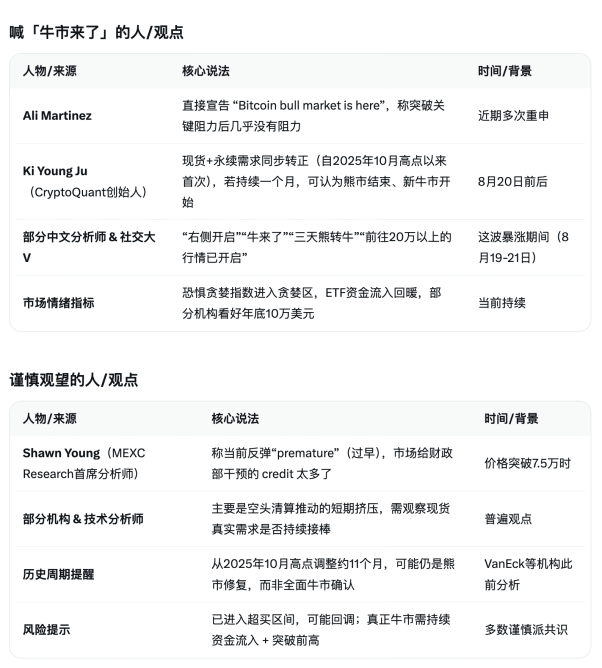
But those who truly make money in this industry never look up and ask "is the bull here or not?".
They only ask three questions: who is the offering now? Am I in the next batch? When it really becomes necessary to move, then they will act.
If you don't have an account yet, get one ready and listen to what I have to say:
👉 https://jump.do/zh-Hans/xlink-proxy?id=3
(Invitation code: aicoin668, enjoy a 10% rebate)
Now, let me unfold the data for you.
1. Data doesn't lie, but data can become outdated
2026—the "bull year" that has been repeatedly prophesied and repeatedly postponed—the price finally touched the high wall once again.
Last night, the entire network saw a liquidation of 3.3 billion dollars. Shorts exploded 3.05 billion, while longs only exploded 650 million, with a discrepancy close to 5:1. In some platforms' statistics, shorts account for more than 90%. CoinGlass recorded this as the most intense single-day short liquidation recently; K33 Research more directly called it the "graveyard of shorts".
(Let me add: numbers have timeliness, the more specific they are, the more fragile they are. When writing numbers down to the unit, the one compiling can compile, but it's hard for the right person to get it right. Therefore, the principle of this article is: give the position, not the point.)
At the same moment, on-chain data tells another story:
-
Retail investor long-short ratio is 2.22 (two longs for one short)
-
Whale long-short ratio is 1.47
Retail investors are betting on a rise during the carnival, while smart money maintains a disturbing restraint. The funding rate has surged to 20-month highs—the last time it was at this position was in early January 2025, when Bitcoin hit a peak near 102,000 dollars that has yet to be broken. History doesn't simply repeat itself, but it does like to rhyme.
A more hidden signal comes from exchanges: about 43,000 BTC were shoved into trading platforms by short-term holders. These people built their positions below 60,000 dollars, endured three months of sideways movement, and finally chose to cash out during the bullish candle at 73,000. They are not genius top-tippers; they just don't want to become the next offering.
Keynes said the market is governed by animal spirits. I think it's closer to Soros's reflexivity—retail sentiment and price support each other, forming a self-reinforcing loop. Every "the bull is back" tweet attracts more buying, which pushes up prices, validating beliefs, and the beliefs generate more leverage. Until a tiny reverse event—an unexpected ETF inflow, a hawkish statement from a Fed official, an unexpected escalation of a geopolitical conflict—shatters this carefully blown bubble.
The cruelty of reflexivity lies in the fact that the more enchanting it is when it rises, the more violently it shatters.
2. Firewood and Gunpowder
Let's strip away the emotions and look at the gears of this machine.
BTC surged about 15% over seven days, climbing from 63,000 in mid-August to above 73,000. However, a significant part of this 15% isn't due to "value discovery," but ratherforced buying—mechanical replenishment after the shorts were liquidated. Open Interest of derivatives soared to 126.7 billion dollars, setting a new six-month high. Leverage is being rebuilt, and it is being built quickly.
The spot market is not without support. The U.S. Bitcoin ETF recorded a one-day net inflow of about 600 million dollars, the highest in over three months. But this 600 million in spot buying is met with billions in derivatives leverage reset.
The spot is firewood, the derivatives are gunpowder. The amount of gunpowder now clearly exceeds the supply of firewood.
The funding rate is another alarm. When the rate stands at a 20-month high, it conveys not "market health," but rather "bears are paying a suffocating premium to maintain positions." Twenty months ago, the same rate level appeared at the peak of 102,000 dollars—resulting in a crash caused by excessive crowding of bulls. The difference today is that the previous peak was bullish against bullish, while this time it is themomentum released after the shorts are squeezed. But the physical outcome may be remarkably similar: when the forced liquidation buying runs out, if the spot cannot hold, the price will plummet just as rapidly.
The positional scissors gap between retail and whales (2.22 vs 1.47) reveals a classic structure: emotions have overheated on the retail side, while players controlling larger stakes remain relatively calm. The Fear and Greed Index jumped from 30 range to over 60, officially entering the greed zone.
This is not a signal for the start of a bull market. This is asignal for the late stage of a bull market.
3. The Carnival of Small Coins and the Retreat of Big Funds
ADA rose about 14% in 24 hours, DOGE rose about 10%. Broadening the time window, ETH rose about 20%, PEPE rose by over 20%, and HYPE surged nearly 28%.
The smaller the market cap, the fiercer the rise.
This isn't funds making "value allocations" based on fundamentals; this is a textbook scenario ofliquidity spilling over to high beta assets. When Bitcoin's rise makes those who missed out anxious, funds instinctively flow toward "those that can rise more." This is a chemical variant of FOMO—unable to chase BTC, they chase "cheap" altcoins.
However, history repeatedly proves that the explosive rise of small-cap coins during the late squeeze phase is not a confirmation of a bull market, but rather abull market's dying glow. When Bitcoin begins to consolidate or retrace, these tokens lacking depth in spot support typically see their losses amplifying.
Capital rotation is real, and perilous rotation is also real.
4. Prophets and Offerings
Every prophesied bull year makes some people prophets and others offerings.
Among the 3.3 billion dollars in liquidations, shorts made up the vast majority. These shorts may have been "rationally bearish" just days ago—with U.S. Treasury yields still high, ETF outflows for several weeks, regulatory uncertainties hanging in the balance, and global liquidity not having substantively loosened. Their logic is coherent, but the market does not reward logic; it rewardsthose whose positioning direction is aligned with short-term capital flows.
The shorts' "correctness" was crushed by a bullish candle. Their margin became fuel for the bulls; their liquidated orders became the stairs for prices to continue rising. This is the oldest mechanism in the market: punishing the correct but premature, rewarding the incorrect but timely.
However, this mechanism is bidirectional.
Retail investors chasing longs today, those who opened longs above 70,000 dollars, increased positions at the peak funding rate, and pressed buy after seeing the "100,000 is in sight" slogan on social media, may be repeating the fate of the shorts yesterday. When ETF inflows slow down, when on-chain data shows long-term holders starting to move their funds, when a macro event breaks the narrative—reflexivity can operate in reverse:
Prices fall → bulls close positions → rates collapse → beliefs crumble → more people sell.
The inflow of 43,000 BTC from short-term holders into exchanges is the first loosened rivet in this reverse chain. Early-profit-taking has already begun, rather than continuing to cling to faith.
5. Staying in the Market
The more people know, the less there is to share. This phrase has another interpretation in the crypto market: when a narrative becomes loud enough, it often reaches the stage where most people can be harvested.
"BTC rose by 7%"—— headlines say this. But headlines won't tell you how much of this 7% was forced buying from short liquidations; they won't tell you that the funding rate has dangerously approached historical extremes; they won't tell you that the positions of retail and whales are diverging; they won't tell you that short-term holders are quietly handing their chips to exchanges.
Peeling back the truth is better than looking at promotional clips. Because promotional clips are prepared for the next round of entrants, while the truth is reserved for those who still want to stay in the market.
But just stating the truth is not enough. After the truth, coordinates are needed.
If you are currently on the sidelines, in the market, or trapped at the peak, here are the most genuine and straightforward words I can offer:
If you are out of positions:
Don't short, and don't chase. Shorting at the top is a death wish because the end of a squeeze is the most ferocious; chasing longs is also a death wish because you are using spot money to help the dealer take on derivatives positions. The best strategy is towait. Wait for a 10%-15% pullback, wait for the selling pressure from short-term holders to be absorbed, and wait for the rate to return to neutral. If a bull market truly comes, it won't be short of this 10,000 dollar pullback space.
If you are trapped at a high position (for example, around 100,000):
This is a window for reducing losses, not for fantasies about breaking even. The 43,000 short-term holders built their positions below 60,000 and cashed out at 73,000— they are using the emotional peak to reduce their positions. What about you? If your cost is at a high level, now is not the time to wait for a "bull to save me," but ratherto use the greed index over 60's frenzy to lower your position to a level where you can sleep peacefully. It's counterintuitive, but it's correct.
If you are heavily involved:
Hold firm, butdon't add more. Adding leverage when the rate is extreme is like lighting a cigarette next to a powder keg. You can enjoy the remaining upside, but set amechanical stop loss in your mind—not "I think it will fall," but "if it falls to this price, I must exit." Faith without discipline is called gambling.
If you plan to chase small coins to "make up" for the BTC miss:
Be more awake. The surges of ETH, ADA, and DOGE are not value discovery; they arehigh beta recoveries. When BTC goes sideways, their declines will usually be magnified.
The "bull year" of 2026 may indeed come.
But before it truly arrives, behind every shout of "the bull market is here," someone is quietly becoming an offering. The market is never short of prophets; it lacksthose who survive to the next cycle and still hold chips.
The more people know, the less there is to share.
Data is as of August 21, 2026. The market carries risks; this article does not constitute investment advice.
If you don't have a Binance account yet, you can register one in advance, so you won't have to scramble when the market really takes off.
👉 https://jump.do/zh-Hans/xlink-proxy?id=3
(Invitation code: aicoin668, enjoy a 10% rebate)
Join our community, let's discuss and become stronger together!
Official Telegram community: t.me/aicoincn
AiCoin Chinese Twitter: https://x.com/AiCoinzh
Binance Benefits Group:
https://www.aicoin.com/link/chat?cid=gmLgwvKD1
Risk disclaimer: The content is only a market observation sharing and does not constitute investment advice. The crypto market is highly volatile, please participate within your risk tolerance.
Disclaimer: This article represents only the personal views of the author and does not represent the position and views of this platform. This article is for information sharing only and does not constitute any investment advice to anyone. Any disputes between users and authors are unrelated to this platform. If the articles or images on the webpage involve infringement, please provide relevant proof of rights and identity documents and send an email to support@aicoin.com. The relevant staff of this platform will conduct an investigation.