As the November 2026 U.S. midterm elections approach, the political engine in Washington is intertwining with the global economy at an unprecedented intensity.
A clear logic of "Trump's political economy" has been fully activated: its core lies in systematically pressuring and reshaping personnel to redefine the Federal Reserve's monetary policy independence; this aims to create a loose financial environment to serve the political survival goals of the midterm elections; and ultimately transform political momentum into concrete manifestations in the financial markets. This complex game surrounding interest rates, votes, and asset prices is redefining the operational rules of the U.S. and even global markets.
1. Political Core
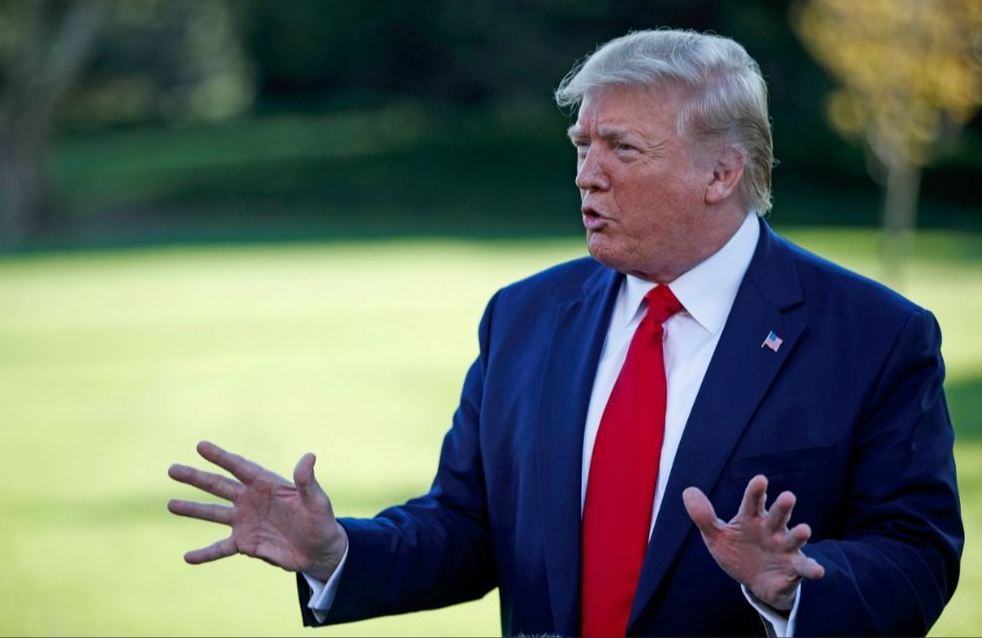
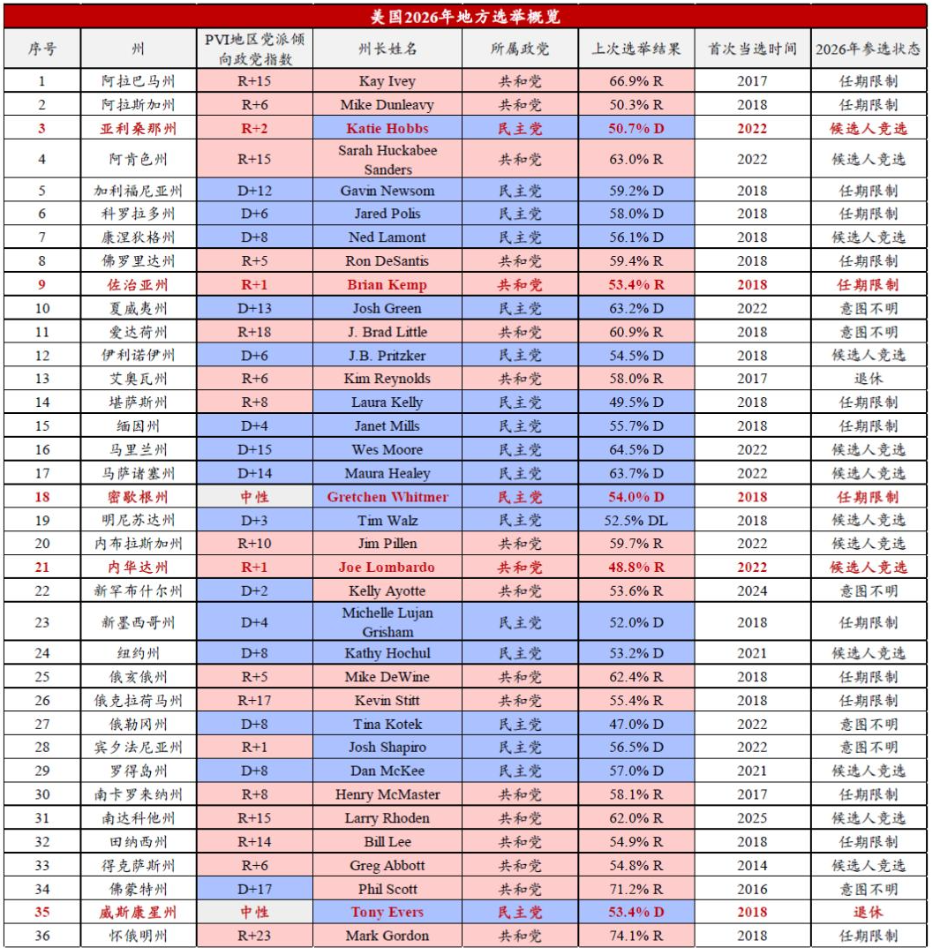
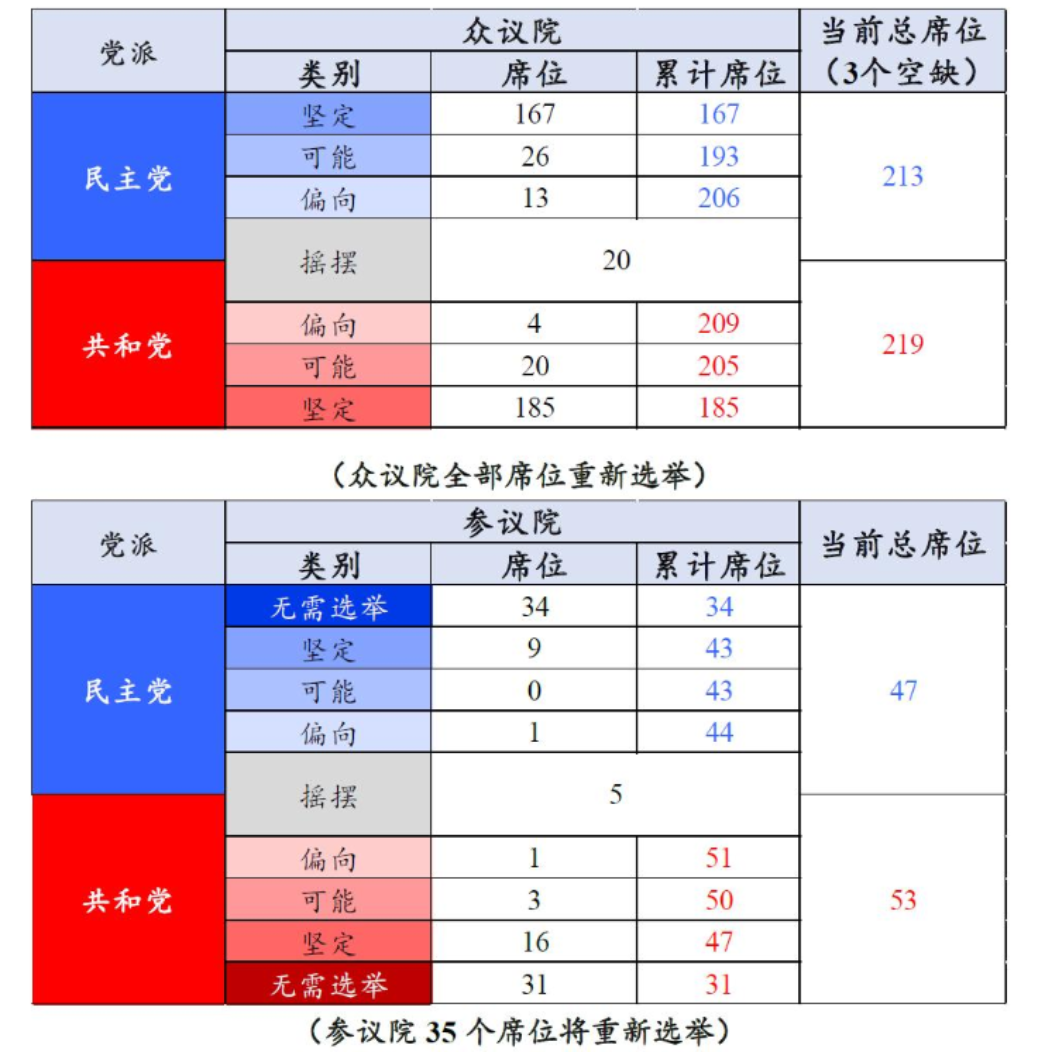
● For Trump and the Republican Party, the 2026 midterm elections are far from an ordinary midterm test; they represent a "survival battle" concerning the foundation of governance for the next two years and even personal political fate.
● The current political landscape poses severe challenges for the Republican Party. The Democrats not only hope to regain control of the House of Representatives but may also pave the way for subsequent political agendas. To avoid falling into a governance deadlock, Trump must win this election.
● The core of the election will revolve around the voters' most pressing concern: the "affordability crisis," namely the cost of living issues under high prices and high interest rates. Trump will make addressing this crisis his most central electoral promise, and all policy tools—especially monetary policy—will serve this purpose.
2. Key Battlegrounds
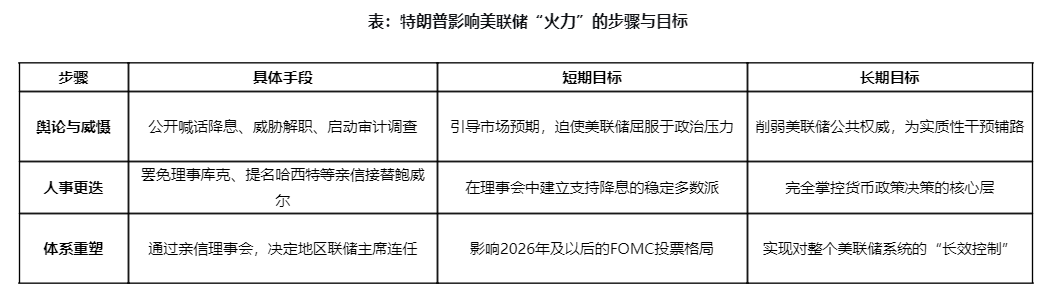
Controlling the "tap" of monetary policy is the most direct tool to alleviate livelihood pressures, stimulate short-term economic growth, and thus win votes. To achieve this goal, the Trump administration has launched a systematic, multi-layered "siege" against the Federal Reserve, aiming to fundamentally weaken its independence.
● Public Pressure and Extreme Deterrence: The president himself continues to act as the "chief commentator" and "high-pressure supervisor" of Federal Reserve policy.
He has repeatedly called for significant interest rate cuts, even releasing handwritten charts pointing to a so-called "reasonable interest rate" of 1%.
His pressure has gone beyond verbal criticism, escalating to threats of dismissal and institutional investigations.
In July 2025, Trump made the first official visit to the Federal Reserve by a U.S. president in nearly 20 years, widely seen as a dramatic escalation of pressure. His administration also initiated an audit under the pretext of "cost overruns" in the Federal Reserve building renovation, interpreted by outsiders as seeking a "justifiable reason" to dismiss Fed Chair Powell.
● Personnel "Cleansing" and Seat Control: This is the most substantive step. Trump's long-term goal is to place enough loyalists on the seven-member Board of Governors of the Federal Reserve to form a stable majority. Currently, he is advancing on two fronts:
○ Replacing the Chair: Powell's term as chair will end in May 2026. Kevin Hassett, the director of the White House National Economic Council, has become the frontrunner to succeed him. Hassett, a close economic advisor to Trump, has publicly called for further interest rate cuts.
○ Cleansing Dissenters: Trump and his allies are vigorously pushing to remove Federal Reserve Governor Lisa Cook, appointed by former President Biden, and have raised accusations against her. This move is clear: if successful, Trump will gain a critical appointment opportunity, thus forming a stable majority of 4 votes on the board.
● Influencing Future Decision-Makers: The power of controlling a majority of board seats far exceeds individual votes.
By law, the reappointment of all 12 regional Federal Reserve Bank presidents requires board approval, and their terms will all expire at the end of February 2026.
A board dominated by Trump's allies would theoretically have the ability to determine the fate of these important voting members, thereby fundamentally and permanently altering the composition and policy orientation of the Federal Reserve's highest decision-making body—the Federal Open Market Committee (FOMC).
3. Economic Logic
Driven by political goals, the economic policy in the U.S. in 2026 will exhibit highly instrumental and rhythmic characteristics, with its core logic walking a tightrope between stimulating the economy and curbing inflation.
● "Preliminary Stimulus, Deferred Consequences" Fiscal Rhythm: To maximize economic benefits before the election, policy design tends to prioritize popular measures such as tax cuts and subsidies.
For example, a $2,000 "tariff dividend" potentially benefiting millions of families is under discussion.
At the same time, difficult decisions like deficit reduction are postponed until after the election. This design aims to exchange short-term gains for votes, even at the potential cost of long-term fiscal health.
● "Politicization" Window of Monetary Policy: Market analysis generally believes that the second and third quarters of 2026 will be critical windows for policy action.
By then, Powell's term will end, a new chair may take office, and with the election approaching, the political motivation for the White House to push for aggressive interest rate cuts (e.g., a 50 basis point cut) will peak.
ING Bank predicts that under political influence, the likelihood of the federal funds rate falling below 3% in 2026 is increasing.

● Inevitability of Policy Contradictions: This logic contains fundamental conflicts.
On one hand, the government demands interest rate cuts to stimulate the economy;
On the other hand, its tariff policies continue to drive up import costs and domestic inflation. The Federal Reserve thus finds itself in a dilemma: cutting rates may fuel inflation, while maintaining rates faces political backlash. This contradiction causes the economy to oscillate between "stagnation" and "inflation," increasing the risk of a resurgence of "stagflation."
4. Market Mapping
The collision of political intentions and economic logic is stirring complex and profound reactions in the financial markets, giving rise to a unique "Trump trade" and pushing asset prices to form a new paradigm.
● U.S. Stocks' "Dual Engines" and "K-shaped" Consumption:
U.S. stocks are caught in a tug-of-war between dual narratives. Expectations of easing and investments in the AI industry (such as the "Genesis Plan") provide upward momentum; while cost pressures from tariffs and economic growth uncertainties create downward pressure.
This divergence is also reflected in the economic fundamentals: high-income groups are seeing wealth growth due to rising stock markets, continuing to support high-end consumption; while middle- and low-income groups rely on potential fiscal subsidies (like the "tariff dividend") to maintain consumption. If this "K-shaped" recovery continues, it will further tear society apart and exacerbate economic volatility.
● Cryptocurrency's "Policy Dividend" and "Institutional Hedging" Attributes: The Trump administration's friendly policies towards cryptocurrencies (such as signing the "Genius Act" and establishing strategic Bitcoin reserves) have brought direct "policy dividends," eliminating regulatory uncertainties and attracting significant capital inflows from publicly traded companies like MicroStrategy and traditional asset management firms.
On a deeper level, the attack on the Federal Reserve's independence has, in fact, reinforced Bitcoin's narrative as an "institutional hedge." When the credibility of central banks and the long-term value of fiat currencies are questioned due to political interference, decentralized crypto assets are viewed by some investors as "hard assets" to hedge against risks in the traditional financial system.
This has driven the phenomenon of "coin-stock convergence" between Bitcoin and U.S. stocks (especially the Nasdaq) since August 2025, with both reaching historical highs under easing expectations.
● Shadow of the "Ultimate Weapon" in the Bond Market: If significant interest rate cuts and fiscal expansion lead to a surge in government debt, the market may demand higher risk premiums, thus pushing up long-term Treasury yields. In response, a more compliant Federal Reserve may resort to the "ultimate weapon"—restarting asset purchase programs or even implementing yield curve control to directly lower long-term rates.
This scenario of "fiscal dominance over monetary policy" would lead to a significant weakening of the dollar and could trigger more severe inflation, but its short-term effect would be to further push up stock prices and other risk asset prices.
5. Ultimate Risk: Erosion of Independence and Unknown Costs
Trump's political economic strategy is essentially a high-risk gamble, with potential costs far exceeding short-term electoral gains.
The core risk lies in the permanent damage to the Federal Reserve's independence. The value of central bank independence is its ability to transcend political cycles and focus on price stability and financial stability. Historical lessons show that when governments frequently intervene in monetary policy for short-term political gains, it can easily lead to uncontrolled inflation and "stagflation" crises. Currently, the market has begun to reprice for "policy risk," manifested in the erosion of dollar credibility and increased volatility in long-term interest rates.
Ultimately, the 2026 midterm elections will serve as a nationwide referendum on this complex strategy. The market is preemptively trading two possible futures: one where short-term prosperity and an asset boom are achieved under precise political "control"; the other where the erosion of independent institutions leads to a collapse of long-term trust and macroeconomic disorder. Regardless of the outcome, the penetration of political power into monetary policy and market pricing has reached unprecedented heights in decades, ushering in a new global market cycle deeply stirred by Washington's tweets and executive orders.
Join our community to discuss and grow stronger together!
Official Telegram community: https://t.me/aicoincn
AiCoin Chinese Twitter: https://x.com/AiCoinzh
OKX benefits group: https://aicoin.com/link/chat?cid=l61eM4owQ
Binance benefits group: https://aicoin.com/link/chat?cid=ynr7d1P6Z
Disclaimer: This article represents only the personal views of the author and does not represent the position and views of this platform. This article is for information sharing only and does not constitute any investment advice to anyone. Any disputes between users and authors are unrelated to this platform. If the articles or images on the webpage involve infringement, please provide relevant proof of rights and identity documents and send an email to support@aicoin.com. The relevant staff of this platform will conduct an investigation.