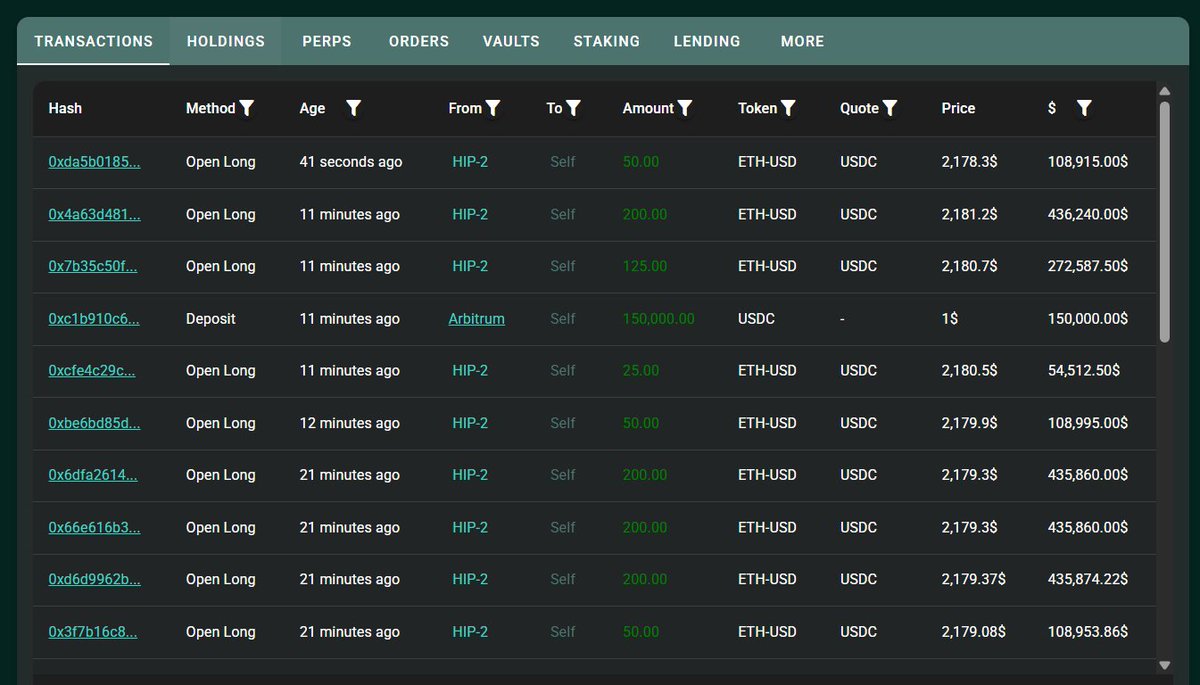
According to Onchain Lens monitoring, a certain whale has experienced 4 partial short positions in BTC within 24 hours, with a total of 97.99 BTC worth 6.18 million US dollars, resulting in a loss of 298750 US dollars; The trader still holds a 40 fold short position of 67.98 BTC, worth $4.26 million, with a floating loss of $179220 and a liquidation price only $902 higher than the current BTC price.
Kraken allows eligible users to use some tokenized stocks and ETFs as collateral for futures and margin trading, with the first batch supporting 10 assets including Apple, Nvidia, Tesla, Strategy, SPDR S&P 500 ETF, and Invesco QQQ Trust. This feature is currently only open to eligible users outside of the United States. Kraken has set collateral value limits, with a cap of $1 million for large cap ETFs, $250000 for most individual stocks, and $100000 for tokenized gold and Circle stocks.
Thomas Sy, the head of New York Life Investment Management, stated that the core application of tokenization in the next stage is to achieve personalized investment portfolio construction, rather than just improving settlement efficiency. The management scale of New York Life Investment Management Company is approximately $807 billion, of which approximately $11 billion is managed by Thomas Sy's team. Thomas Sy pointed out that blockchain technology is expected to enable asset management institutions to customize complex portfolio strategies for different investors at a large scale, and embed customized logic into the assets themselves. In addition, Thomas Sy stated that the scale of stablecoins has exceeded $300 billion and is being used for cross-border payments and fund management, driving the growth of demand for on chain income assets among institutions. In terms of DeFi, New York Life Investment Management is still researching related applications, and institutional level participation requires more mature infrastructure.
The size of the US treasury bond rose to about 39 trillion US dollars, and the annual interest expenditure reached about 1 trillion US dollars, exceeding the defense budget. The U.S. national debt system was established by Alexander Hamilton in 1790 to support the reserve currency status of the United States dollar. The Wharton Budget Model PWBM at the University of Pennsylvania shows that when the debt to GDP ratio exceeds about 210%, the fiscal system faces unsustainable risks. At present, the proportion in the United States is about 100%, and the Congressional Budget Office expects it to rise to 175% by 2056.