Loading...
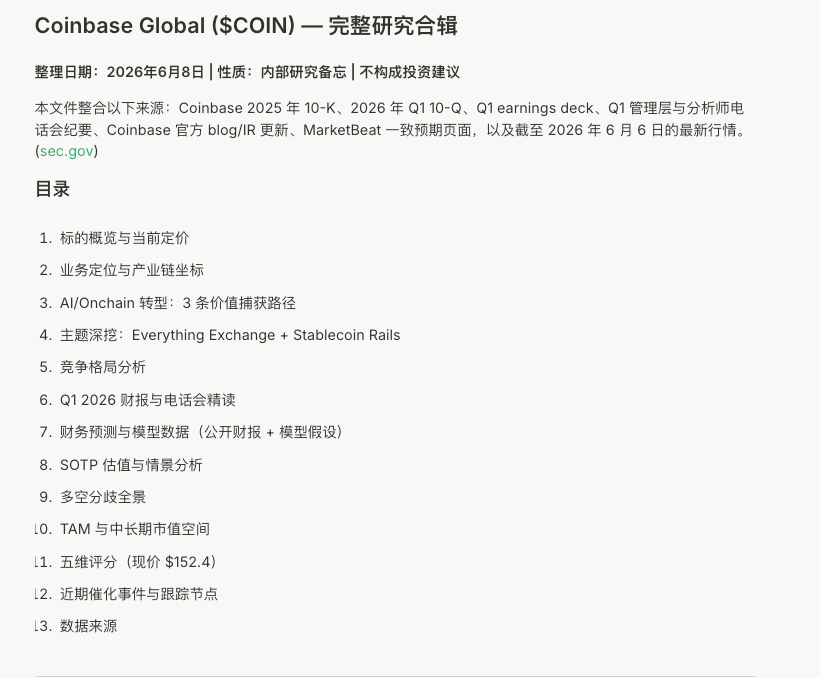
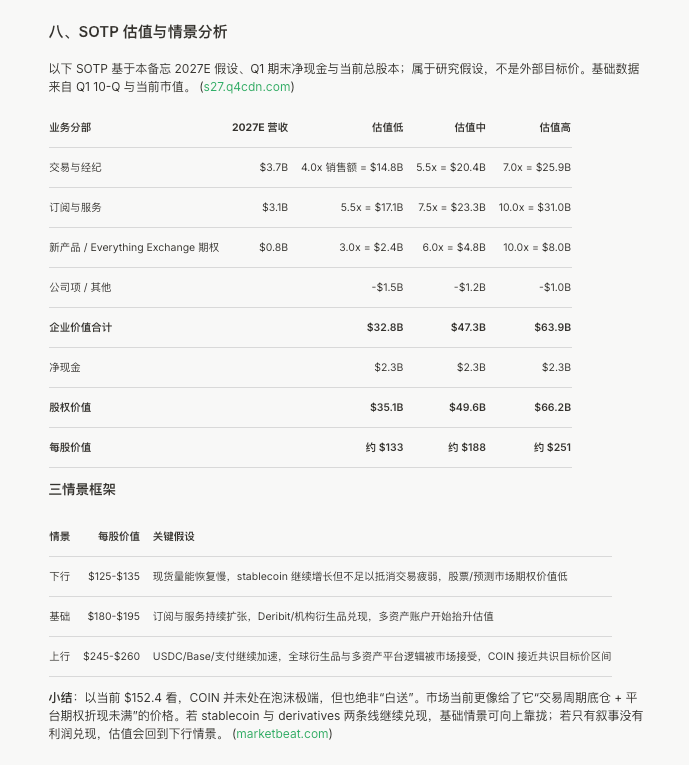
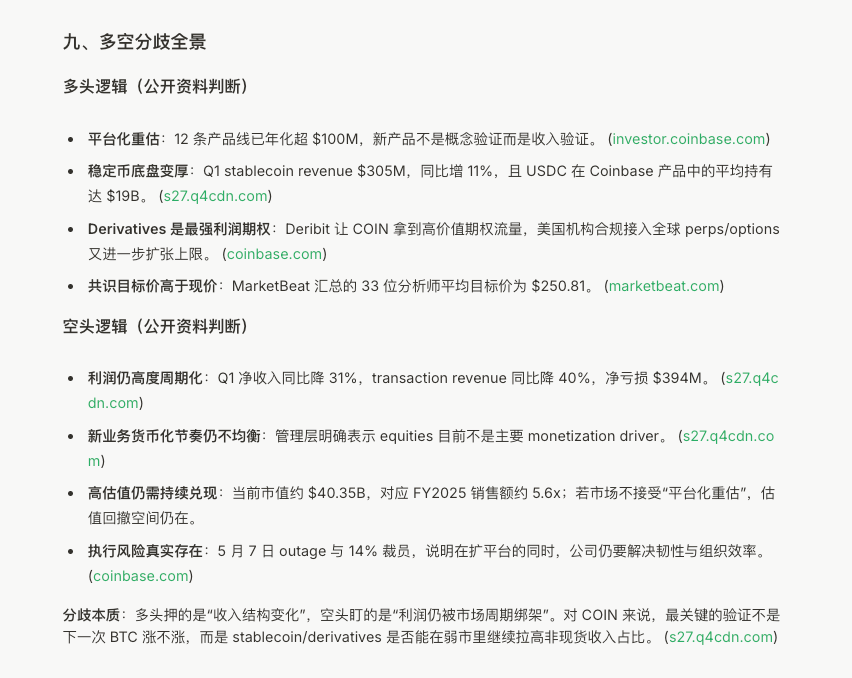
Given the current market situation, if we continue to adhere to the principle of "not listening to the US stock market and focusing solely on building Ethereum", it is somewhat out of touch with the market. Binance and OKX have also launched spot trading functions for the US stock market, shifting from cryptocurrency to the US stock market, which is no longer an attempt by a few people and has become a recognized direction by mainstream exchanges. I have also been studying the US stock market seriously for some time. To put it simply, nothing is as simple as buying and waiting to make a profit. I have been doing encryption for a long time, and I have some intuition about on chain data, token economics, and community sentiment. But when it comes to the US stock market, it's a completely different language. SEC documents, earnings conference calls, SOTP valuation, management guidance. These are the research frameworks established by institutional analysts over the past decade. As retail investors, we usually only have access to news summaries and second-hand interpretations from others. For me as a novice, information acquisition is not a problem, the problem lies in the depth of understanding the information. So recently I have been thinking about a question, is there a way to compress the workflow of institutional researchers into a form that ordinary people can quickly understand? Once again, with a trial and error mindset, I sought help from @ dappOS_com's AI @ xUbble_ai to help me invest in the COIN project. I have also tried to ask other AI to help me research the US stock market before, and the results are basically like this: I will provide you with a bunch of background information, tell you what this company does, what recent news is, and whether analysts are generally bullish or bearish. The amount of information is not small, but after reading it, I don't know how to use it. And what xUbble gave me was more like a research memorandum organized according to the institutional research framework. Later on, I specifically went back and compared several SEC documents and financial report materials, and at least I could find the corresponding sources for the key data I randomly checked. It didn't just pile up information, but first made a core judgment: what is the market currently debating? Previously, when I looked at Coinbase, what I was most concerned about was whether BTC was rising or not, and whether the trading volume was good. But after reading that part of the analysis, I realized for the first time that the core of the debate between bulls and bears may not be these at all. The bulls are betting that Coinbase is gradually moving away from a pure exchange model and its revenue structure is becoming increasingly diversified; The bear bet is that no matter how many new stories are told, it will ultimately not escape the crypto cycle. So a lot of data later on is actually verifying this matter. For example, I didn't pay much attention to indicators such as stablecoin revenue, the proportion of derivative revenue, and USDC holdings before. But now looking at the financial report, I know what to look at first. Another page that left a deep impression on me was its SOTP valuation and three scenario analysis. When I used to look at US stocks, I often saw different institutions offering completely different target prices. Some people are looking at $250, while others are looking at over $100. I have always thought that this matter is quite mystical. Later, upon seeing the analysis on that page, it was discovered that many professional investors were not actually guessing prices, but rather conducting scenario simulations. What will happen with optimism, what will happen with neutrality, and what will happen with pessimism. Different assumptions correspond to different results, and the price is actually the final inference. This idea has been quite helpful to me. Additionally, there is one more detail. It separately lists the catalysts worth tracking in the following quarters. I used to think that when the next financial report comes out, it's just about whether BTC rises or not. But after reading it, it was found that the data worth continuously tracking are actually USDC holdings, stablecoin income, and institutional derivative business. Because these indicators determine whether the market will consider Coinbase as an exchange or a financial infrastructure platform in the future. What's even more interesting is that this research framework itself is not a fixed template. Bubble Engine will continue to test iterations and upgrade it to stronger versions. If you have more specific needs, such as focusing only on semiconductors, high dividend targets, or following your usual research framework, it can also generate a more exclusive set of US stock SOPs for you. So what I received was not just a report, but a set of research methods that would continue to evolve according to my needs. It's not that I learned how to invest in US stocks after reading this research report. But it was the first time I knew that there is a path to understanding a stock, it's just that no one has ever helped me organize this path. For me, this may be the greatest value. Not just giving me the answer directly, but letting me know what to study next.