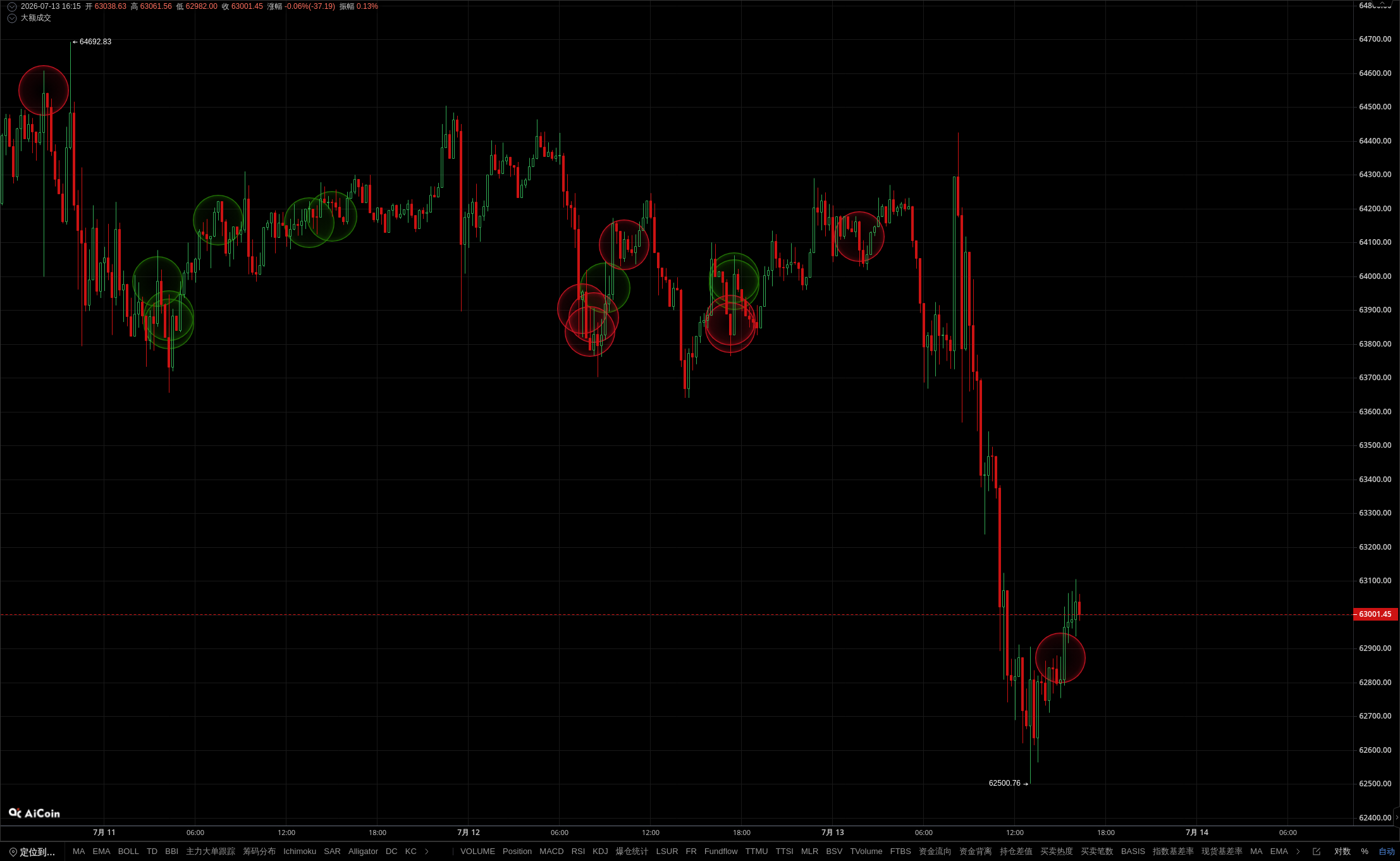
BTC spot main traded 7 large orders with a total amount of 14.08 million US dollars!
--
15: 56-16:12, Binance BTC/USDT spot trading is active, with a total of 7 large market buy orders completed within 16 minutes, with a total transaction volume of 14.08 million US dollars and an average buy price of 63025.32. The concentrated trading of main funds in the same direction within a short period of time is usually a clear action to accelerate the trend or prepare for a reversal. Please pay close attention to market changes. The data is sourced from the PRO "Large Transaction" indicator and is for reference only.