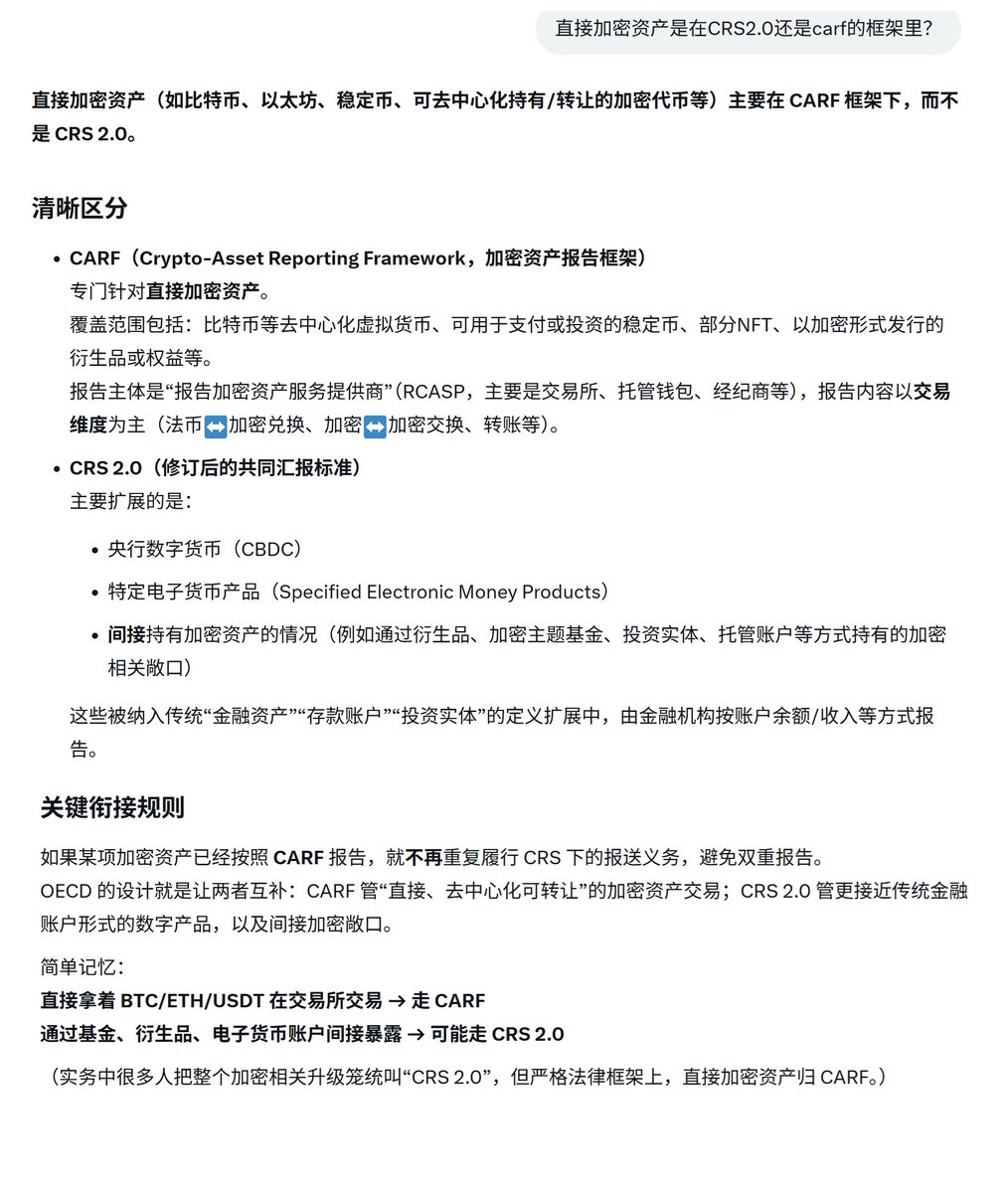
Here’s something to clarify: direct crypto assets (like Bitcoin, Ethereum, stablecoins, decentralized tokens for holding/transferring, etc.) mainly fall under the CARF framework, not CRS 2.0. CRS 1.0: Primarily covers traditional financial accounts (banks, securities, insurance, etc.). Offshore bank/brokerage account information of mainland tax residents is automatically exchanged back. CRS 2.0: The 2023 OECD revision expands the scope to include certain digital financial products (CBDCs, specific electronic money, crypto assets indirectly held via derivatives/funds, etc.) under CRS reporting. CARF: Specifically targets direct crypto assets (Bitcoin, stablecoins, certain NFTs, crypto derivatives trading, etc.) reporting framework. Exchanges and other “Reporting Crypto-Asset Service Providers” (RCASP) are required to report user transactions, exchanges, transfers, and other details. In practice, people often refer to “crypto-related upgrades” collectively as CRS 2.0, but the framework that truly covers exchange users’ crypto transactions is CARF. Assets reported under CARF are typically not reported again under CRS.