Loading...
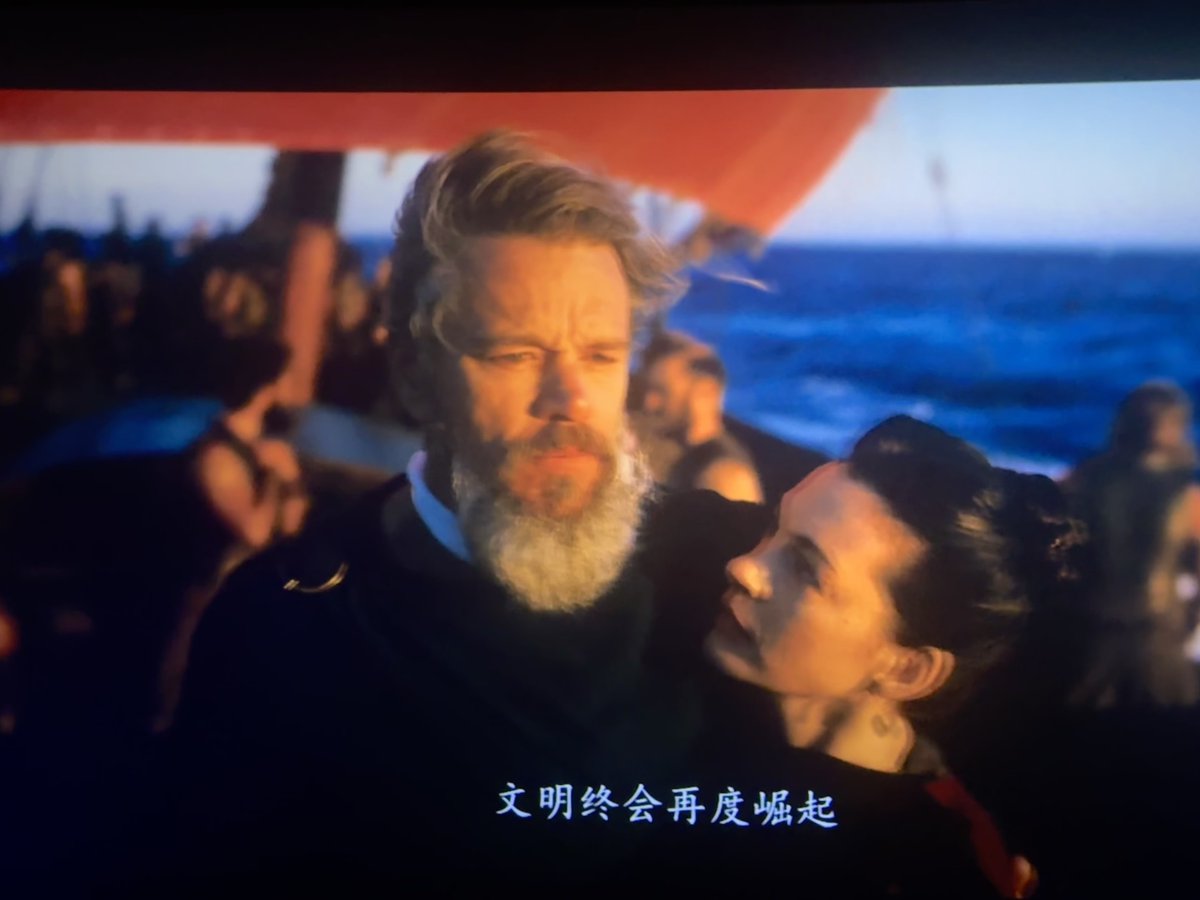
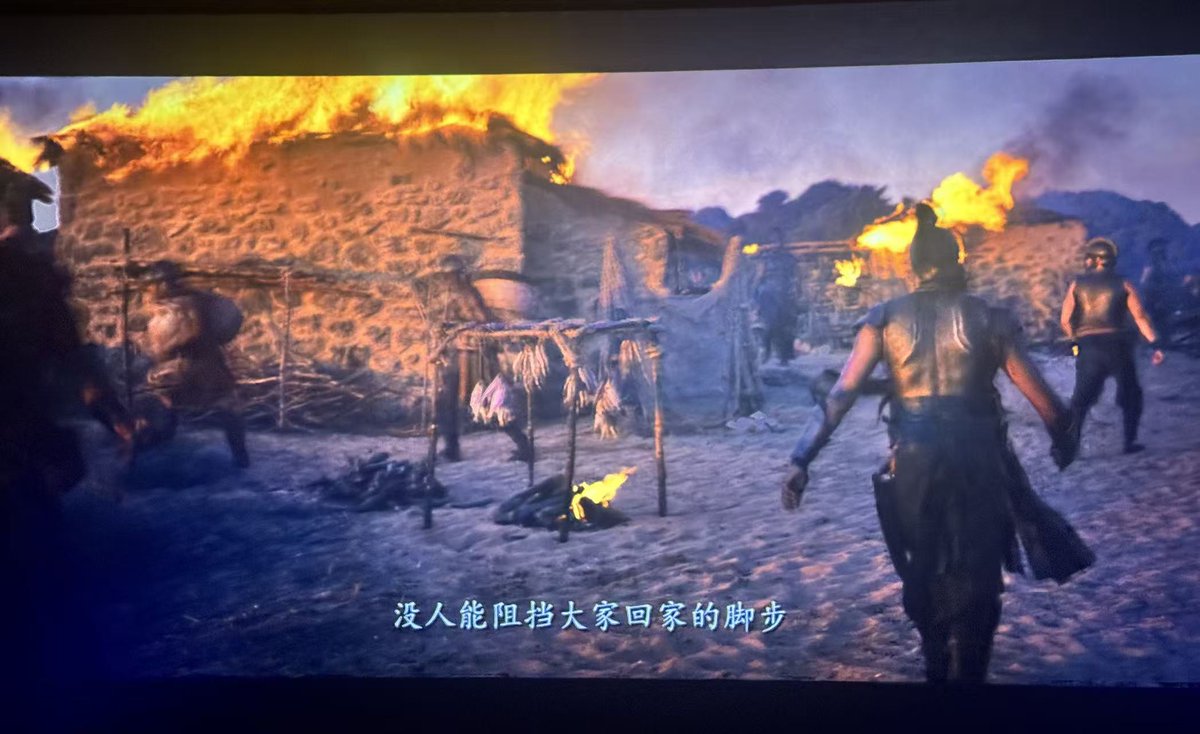
Just returned home from the cinema, my mind was still buzzing. Nolan's Odyssey has many thought-provoking aspects, full of metaphors, philosophy, and reflections on human nature. It can be called the best movie of the year, without a doubt! Can't wait, lie on the sofa, turn on the computer, and write down your feelings after watching! Firstly, let's talk about the metaphorical part. In the original work, Helen is the daughter of Zeus, the god of gods, who descended to earth and transformed into a swan, and was born to Queen Leda of Sparta. She hatched from a swan egg and possesses stunning beauty and noble temperament. But in Nolan's film, she is black with a cold scar on her face, which, to be honest, is far from the original work. Helen in Homer's epic is the ultimate temptation that triggers the thousand sails to race. But in Nolan's lens, what he wanted to express was the coldest fact, that Helen was not the cause of the war at all, she was just a cover for Agamemnon's embellishment of aggression. This is in line with the logic of Western hegemony for thousands of years, which has been disguised as "saving beauty" in order to compete for the trade lifeline of the key Mediterranean waterway. In the movie, Agamemnon sacrificed his young daughter in cold blood, further removing the hypocritical mask of the ruler. This inevitably reminds people of various coincidences in modern history, such as the 2003 Iraq War, in which the United States launched a war on the grounds of "weapons of mass destruction" and spent eight years without finding anything. The uglier and less persuasive Helen is, the more piercing the film's questioning of "just excuses" becomes. The ancient Greek civilization was once built on the "Zeus hospitality rule", relying on mutual trust and reverence to maintain order of survival. However, the Trojan horse tricked open the city gates, Agamemnon bloodied the city-state, and Odysseus plundered the villages on his way back, completely breaking this rule. The most shocking scene in the film is undoubtedly the prophecy repeatedly heard by Odysseus on his return journey, 'A group of people from the sea will destroy the Greek city states'. When he thought it was an invasion from a foreign enemy, his wife revealed the truth in one sentence: "Aren't you yourself a person from the sea From the plundering of the Age of Discovery, to the opening of the country's borders with strong ships and cannons in modern times, and to the ruins left behind in the name of "universal values" in modern times, one cannot help but ask, what is ultimately left behind? It's ruins, refugees, and hatred. Isn't the current division and internal conflict among immigrants in Europe and America the real retribution of those who came by sea for the local order? The expansion gene of maritime civilization ultimately devoured its own foundation. Next, let's talk about the philosophical part. Personally, I think Nolan should be very fond of Eastern Buddhism, especially the Diamond Sutra. Inside, there are multiple reflections of the five poisons of human nature, greed, anger, ignorance, slowness, and doubt. For example, Cyclops, Witches, Sirens, and Forget Worry Lotus, each of them is a reflection of the Five Poisons of Buddhism: Cyclops: represents rage and violence; Witch: Alienating human greed into beasts; The Siren's song: It sings about the deepest longing and self attachment in your heart; Forget Worry Lotus: It is an escape from reality Whatever you fight against, exists; Whatever you accept, disappear. All storm curses are ultimately demons of the heart. This resonates with the core of the Diamond Sutra, which states that 'all forms are illusory' and 'one should have no dwelling place and be born of their heart'. Odysseus, on his way home, has been battling storms and obsessed with controlling his fate, which has led him to be obsessed with it and unable to get the "home" he wants for a long time. Only when he understands that he cannot control everything, learns to let go of his obsession with himself, surrenders to the storm, surrenders to Zeus, surrenders to Poseidon, and surrenders to fate, can he truly gain the power of rebirth. The road back home is the process of constantly losing, letting go, and finally recognizing oneself and accepting the world in the scars all over one's body. There is nothing outside of the heart, and the path back is the path of the heart. Finally, some thoughts on men's search for partners. Buffett once said that a partner is the most important investment in life, and a good woman can benefit three generations. This was directly applied in the movie. One is Penelope's 20-year faithful waiting for Odysseus, and the other is Helen's sisters's murder of Agamemnon after her triumph. A contrast between two sides, a vivid contrast! When Odysseus left, Penelope was still a young queen. Twenty years later, her husband's life and death were unknown, the kingdom was invaded, and over a hundred men forced her to remarry. But she didn't collapse. She used a weaving scam to delay for many years, weaving during the day and dismantling at night. What she is waiting for is not an abstract 'king', but the person she believes will not disappear. The most exciting thing is that after Odysseus returned, she did not blindly embrace him, but still tested him. She used a secret that only the two of them knew to confirm her husband. Their wedding bed, the bed with pillars directly rooted in the living olive tree. This is not a simple romance, it is the code for twenty years of married life together. A truly wise woman does not only believe in appearance and sweet words. For Odysseus, this is also the ultimate test of 'perseverance'. On the island of the fairy Calypso, he faced eternal youth, immortality, a life without pain, and a daily life like a fairyland. If it were an ordinary person, they might have already chosen to stay. But Odysseus refused. Because Calypso offers a perfect cage and a life without pain; And Odysseus wanted a meaningful life. He would rather return to Ithaca, become an aging mortal, face the difficulties of reality, experience limited life with his wife, than become numb in the illusory eternal life. The true maturity of a man is not determined by how many territories he can conquer, but by whether he can recognize his inner anchor when facing extreme temptation. In the face of his wise, patient, and loyal wife, he also persevered through the temptations of time and divine power, completing a two-way journey towards this great relationship. I think this is Nolan's most praised beauty of humanity in this movie! The Odyssey may seem like an epic about adventure, striving to return home and reunite with family, but in my opinion, it is the ultimate metaphor of human life. From birth to death, we all sail on the ocean of destiny. We will encounter Cyclops (fury), Witches (greed), Sirens (desire). Can we ultimately return to that 'home'? This home is not Ithaca Island, but our true heart: In Buddhism, it is called 'Clear Mind and Insight into Nature' Taoism calls it 'returning to simplicity' Jung called it "self actualization" When God is dead and the lights are extinguished, can we still find our true selves? The journey home is also the path of the heart. This is the words that kept flooding my mind as I typed for over an hour!