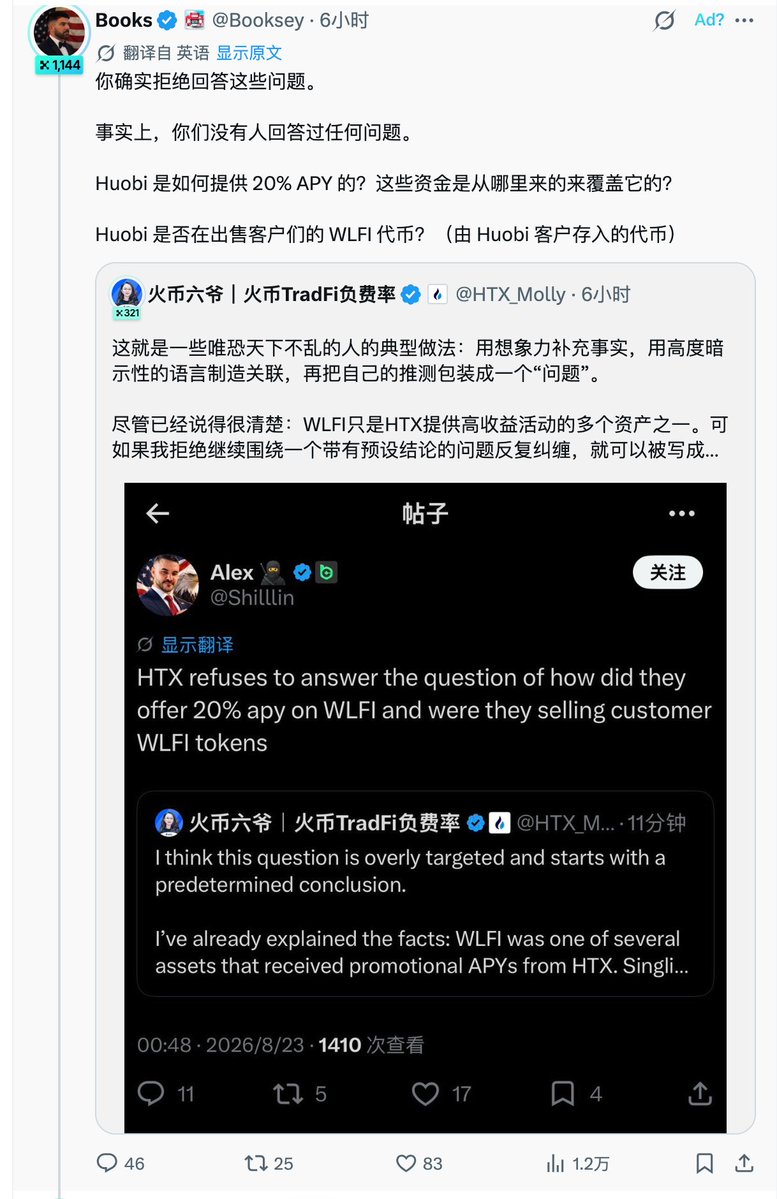
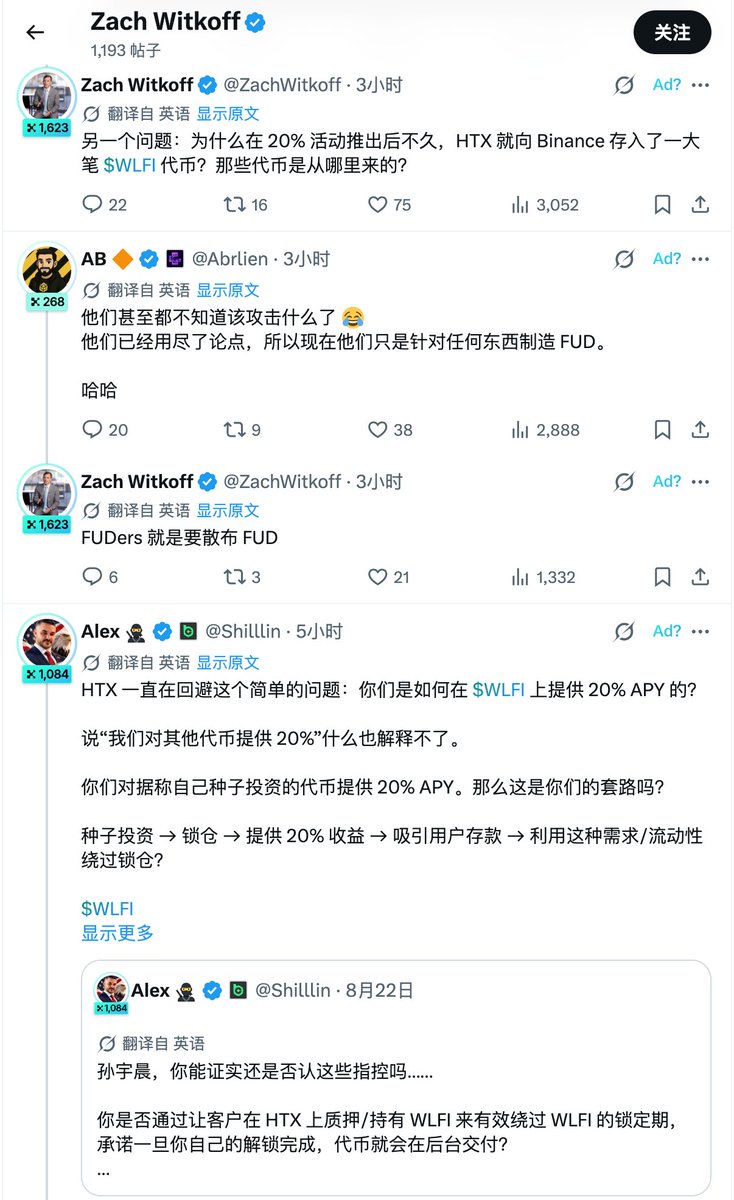
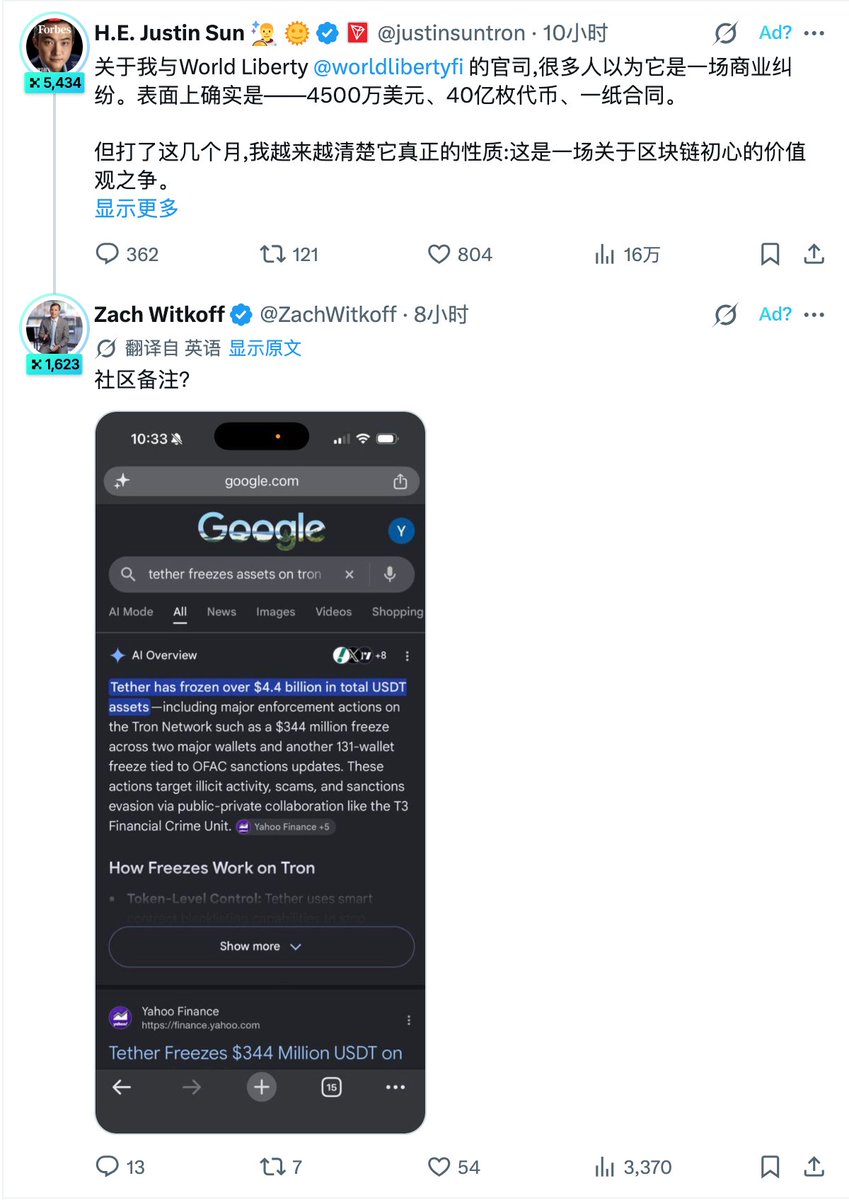
Sun Ge and WLFI have really fallen out this time. A $45 million dispute involving 4 billion WLFI tokens has escalated into what Sun Ge is calling a 'battle for the original spirit of blockchain.' Justin Sun’s latest response has taken the conflict straight to the core of the industry's values: He said the essence of blockchain’s creation is to allow everyone to truly own their assets. Private keys equal ownership. But if a project team can freeze user assets without transparent governance or public procedures, then what’s the difference between blockchain and traditional finance? WLFI’s CEO fired back just as strongly: They claim the outside world is spreading FUD, and that WLFI’s freezing of assets was a security measure, not an arbitrary confiscation. Another point that’s got the community in an uproar is HTX’s 20% APY promotion. People are questioning: After attracting users to deposit WLFI with high returns, where exactly did those tokens go? Why did a large amount of WLFI get transferred to Binance after the promotion ended? If an exchange uses high APY to gather liquidity and then profits by selling on the market, is this user incentivization or liquidity arbitrage? So now, this war isn’t just a personal feud between Justin Sun and WLFI. It’s touching on the most sensitive nerve in the crypto industry: On-chain assets—do they belong to the token holders, or to those with backend control? People used to say: 'Code is law,' but this controversy is showing everyone that the real power might still lie with those who can change the rules.