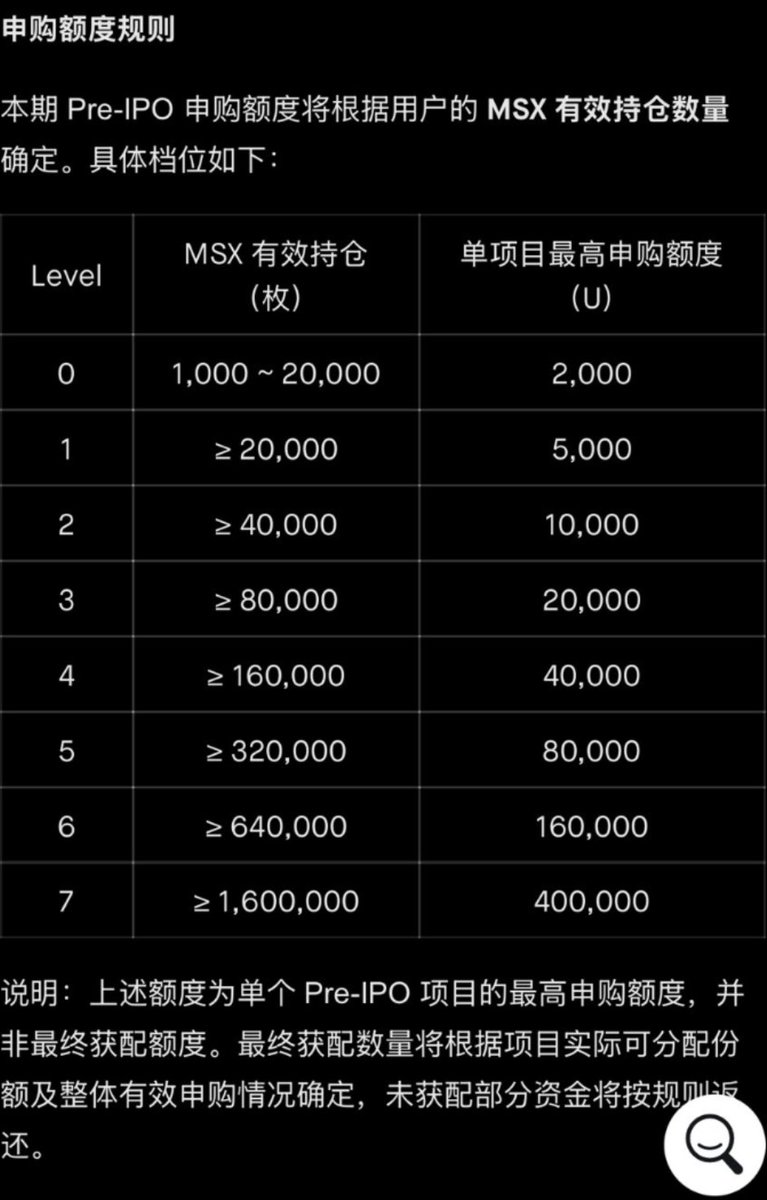
The third phase of MSX Pre IPO has arrived. I think this two projects are more interesting than the previous two: Neuralink + Anduril。 One is Musk's brain computer interface, and the other is a representative of the new generation of AI defense companies in the United States. But before we talk about the project, I think we need to talk about something more important first: Making a Pre IPO, whether the project is good or not is one thing, but whether you can really hand over the quota to you in the end is another matter. MSX has actually undergone a good stress test before - SpaceX IPO. At that time, SpaceX's primary market quota was very tight, and many Pre IPO channels in the market could only refund or reduce quotas because they could not obtain enough real market share. MSX is one of the few channels that truly completes the entire process. From Pre IPO subscription and share delivery, to SpaceX listing, and to post listing spot liquidity, the entire closed-loop has been completed. At that time, SpaceX's early subscription cost for MSX was approximately $119, with an IPO price of $135 and a peak of around $176 on the first day of listing. The previous Cerebras is even more exaggerated, with an early subscription price of about $100.35. Based on the high point on the first day of listing, the interim comprehensive income exceeds 300%. That is to say, MSX has completed the Pre IPO project for listing and realization, and the results have been good. So when I look at MSX Pre IPO now, I won't just focus on 'how much this project can increase in the future'. The most important first thing in the primary market is whether assets and quotas can be realized. SpaceX has already verified this matter once in that round. —————————— The first project this time: Neuralink Neuralink should be familiar to everyone. The truly noteworthy aspect of Musk's brain computer interface company, founded in 2016, is that it has now crossed a very important threshold: Something has really been implanted into the human brain. Neuralink's N1 Implant has entered human clinical research, and its Telepathy system currently aims to enable paralyzed patients to directly control computers, phones, and even robotic arms through neural signals. By 2026, Neuralink has publicly demonstrated practical applications such as subjects controlling computers, playing games, creating, and controlling assistive robotic arms through their minds. So I think Neuralink's imagination space cannot be simply viewed as a medical device company. In the short term, of course, it's still medical: Spinal cord injury, paralysis, and neurological disorders. But the truly big story in the long run is the Human Computer Interface. In the past few decades, the gateway between humans and computers has evolved from keyboards and mice, to touchscreens, to voice and AI agents. If the brain computer interface eventually matures, theoretically it has the opportunity to become the next generation of human-computer interaction portal. This is also the most expensive part of Neuralink—— What the market is buying may not be a medical device, but a new way of interaction. The second one is Anduril If Neuralink is buying imaginative space for the next decade, That Anduril is more like something that has already started large-scale commercial realization. Anduril is essentially an AI+Autonomous Systems+Defense company. It is no longer just about drones, but a complete set of autonomous combat systems: Drones, unmanned underwater vehicles, anti drone systems, battlefield perception, and the core Lattice AI command and control platform. The US Air Force has issued a production contract for Anduril's collaborative combat drone project by 2026; The US Navy has also chosen Anduril's large autonomous unmanned underwater vehicle program. Australia previously invested approximately $1.1 billion in the procurement and development of the Ghost Shark underwater unmanned system. That's also why I have always felt that Anduril is very representative. The increasingly obvious route for the upgrading of the US defense industry in this round is: Truly integrate AI, software, and autonomous systems into weapon platforms. Previously, the core of the military industry was traditional Prime Contractors such as Lockheed Martin, RTX, and Northrop Grumman. Now Anduril seems more like trying to create a new Defense Tech Stack. And the orders have gradually moved from demos and testing to real production contracts. —————————————— There is a significant change in this MSX Pre IPO issue: The subscription limit is now directly linked to MSX holdings. The rules are actually quite simple: Firstly, participating in Pre IPO requires holding MSX, with a minimum threshold of 1000 pieces, and the overall threshold is not high. Secondly, the more positions held, the higher the corresponding subscription limit. That is to say, MSX is no longer just a platform asset, but directly corresponds to the participation rights and quotas of the primary market. Thirdly, and also the most important point to note: The limit is calculated based on the daily average position for 7 consecutive days. So it's not like waiting until the day of the subscription opening to buy temporarily and get the highest limit directly. To participate in a higher quota, it is necessary to configure the corresponding position in advance. Simply put, the logic of this issue is already clear: Holding MSX → obtaining Pre IPO qualification; Increase holdings → Increase the available subscription limit; Continuously hold → determine the final limit level. The minimum order quantity is 1000 pieces, and the specific subscription limit corresponding to different positions is as follows: