Scientists can now rent access to an automated lab without owning any of the equipment.
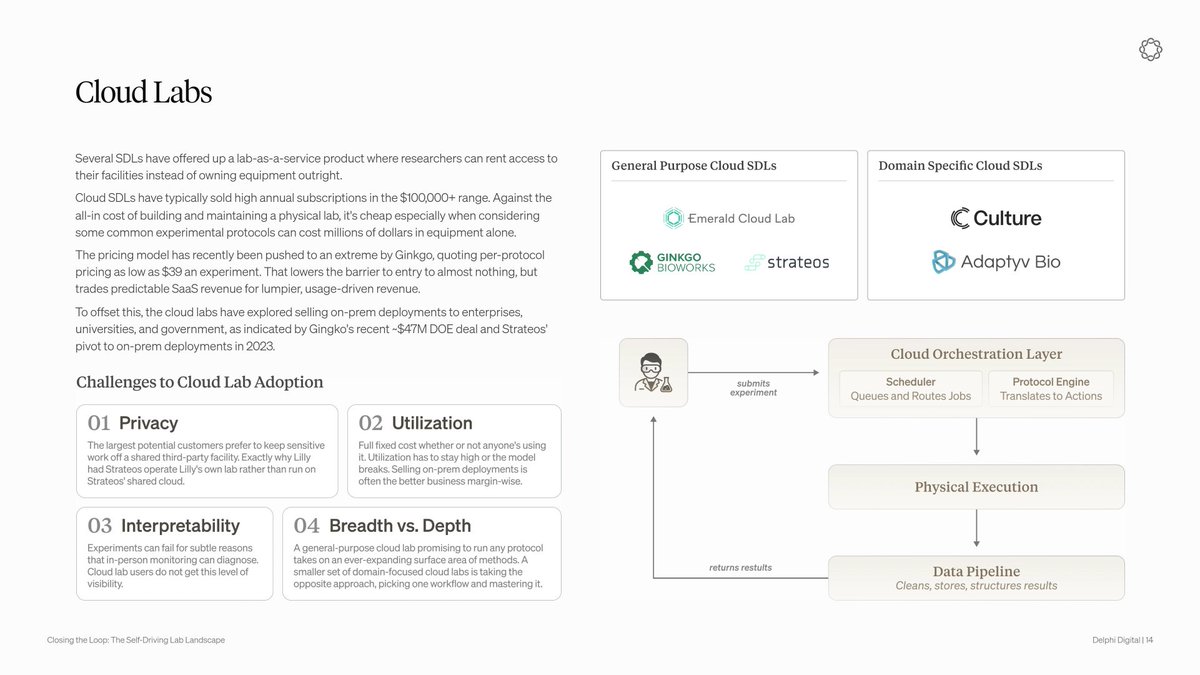
Instead of building a facility, a researcher can submit a protocol remotely. Software schedules the equipment and translates the protocol into actions, then returns the results through a structured data pipeline.
For experiments that require millions of dollars in specialized equipment, rented access can be significantly cheaper. Cloud labs have traditionally charged annual subscriptions above $100k. Ginkgo has pushed the model further by quoting individual experiments for as little as $39.
Lower prices open the lab to more researchers but shift more risk onto the operator. The equipment costs the same whether it is being used or sitting idle. Usage-based pricing therefore depends on enough demand to keep the facility busy.
Not all research can be sent to a shared remote lab. Some experiments need highly specialized equipment. Others involve sensitive IP that companies want to keep in house. Providers are responding by focusing on narrower workflows or deploying their automation on site.
Cloud labs could make advanced experimentation available to far more researchers. The real test is whether they can keep expensive equipment in use while supporting the work customers need.