Loading...
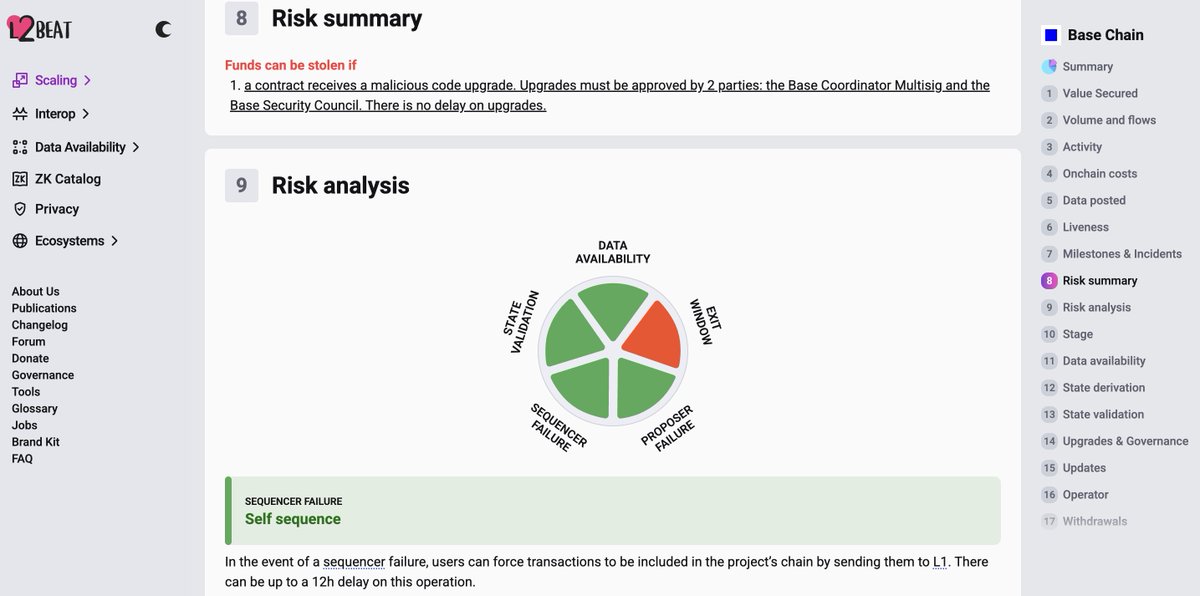
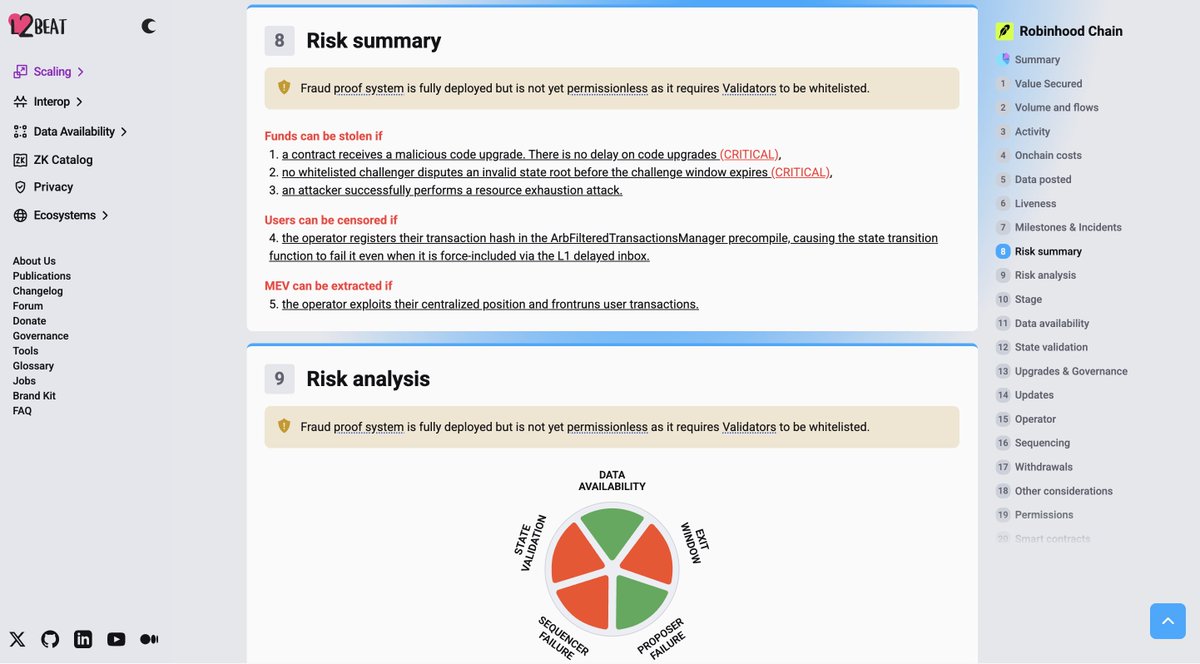
Why do I think, purely from a technical perspective, that @base completely outperforms @RobinhoodApp Chain? Let’s assume the worst-case scenarios and compare the risk management mechanisms between the two: 1/ Malicious contract upgrades by the team, aiming to freeze or transfer assets on the L2 chain: Robinhood Chain: Controlled by 3 team-managed multisigs, requiring 2 signatures to pass; (2/3) Base: Controlled by 6 team-managed multisigs, requiring at least 3 signatures + an external Security Council (SC) with 12 multisigs, requiring at least 8 signatures; both conditions must be met; (3/6 + 8/12) 2/ The official sequencer operated by the team acts maliciously or goes offline, causing L2 transactions to fail and funds to be locked: Robinhood Chain: Nothing can be done; Base: Any user can bypass the sequencer and directly submit transactions to Ethereum L1, enabling the withdrawal of funds from L2; 3/ A hacker forges an incorrect state root and sends it to L1, attempting to deceive challengers and steal funds from the L2 chain: Robinhood Chain: Only 2 officially authorized whitelisted EOA accounts have the right to challenge, leaving very little room for error; Base: The challenger role is permissionless, meaning anyone can challenge. Alright, that’s it. If I say more, people will start spreading rumors that I’ve been paid by Base for advertising again. #Crypto #Blockchain