Loading...
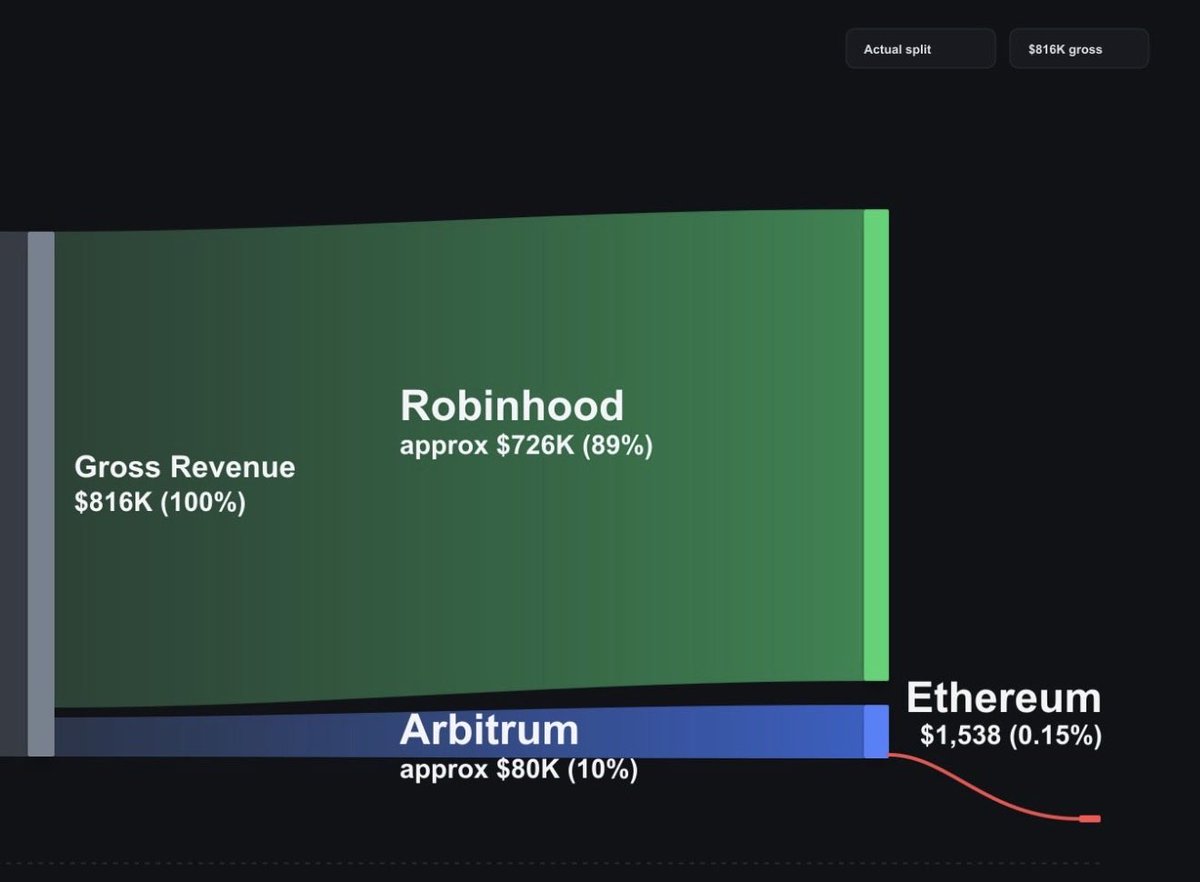
If in the future we see dozens or even hundreds of L2s similar to the Robinhood chain, with massive user and application activity on L2s, it will significantly increase the demand for ETH (gas, bridging, staking, liquidity, etc.). In this way, the narrative of 'ETH as money' could truly succeed. In other words, the ultimate value of ETH doesn’t primarily depend on the fee scale that L2s leave for L1, but rather on how much ETH these L2s collectively consume and lock up. That said, the current fee allocation for a single L2 (like Robinhood) shows that Ethereum L1 captures less than 1% of the value—this is indeed too low. Generally speaking, as the foundational infrastructure, L1 capturing at least 10-20% of the economic value would be more reasonable. ETH’s security budget shouldn’t be this 'cheap.' @aerugoettinea @ethlabs_org @fundstrat @VitalikButerin @ethereumfndn @sassal0x @barnabemonnot