Loading...
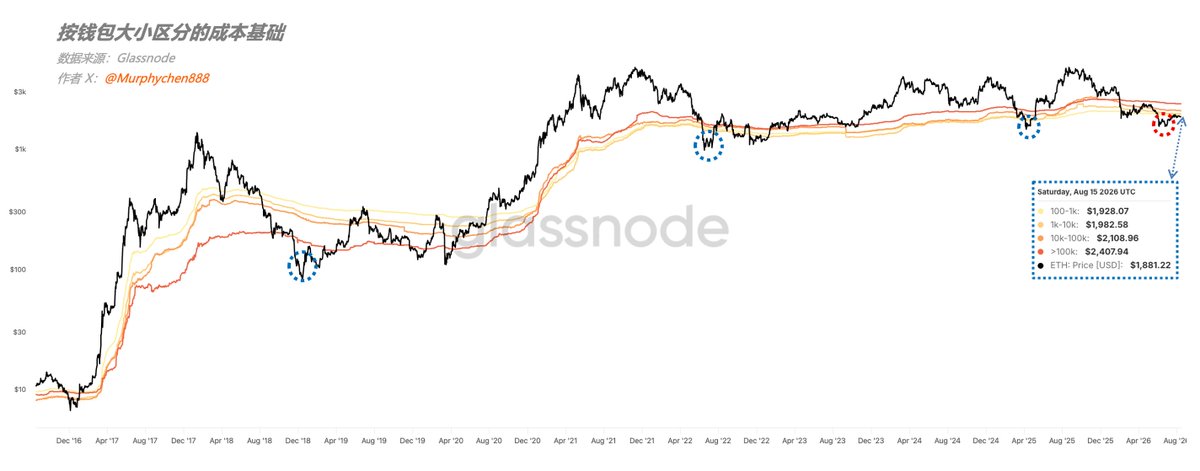
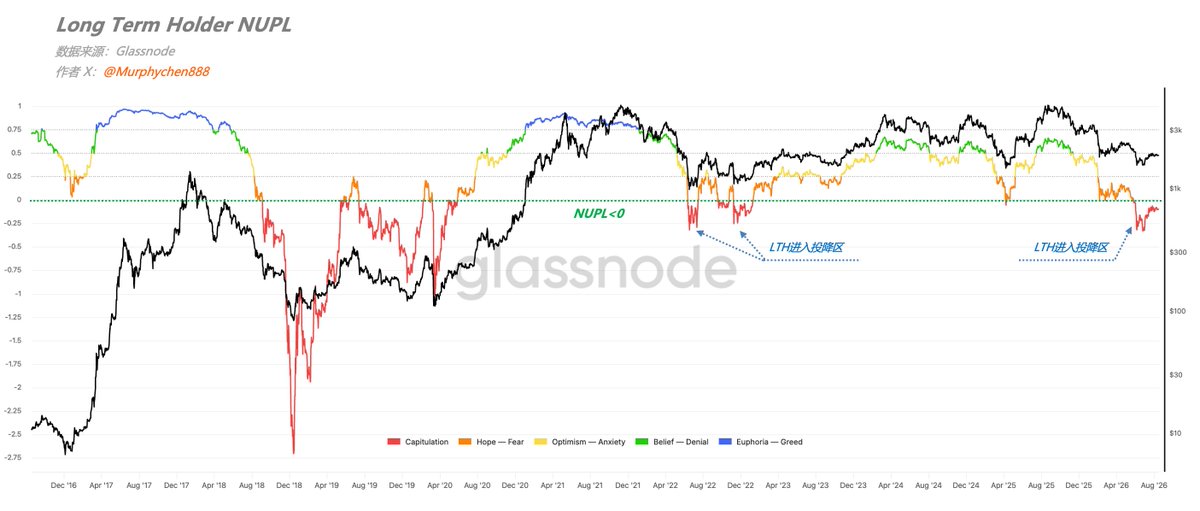
ETH Data Part 3: The Cost of Large Accounts In the first post, we analyzed investor behavior. In the second, we broke down the token distribution structure. But for a mainstream cryptocurrency, that's still not enough. Today, let’s talk about—'cost.' I pulled data on groups holding more than 100 ETH, and their average costs are as follows: 1. Holding 100-1k: $1,900 2. Holding 1k-10k: $2,000 3. Holding 10k-100k: $2,100 4. Holding >100k: $2,400 In other words, high-net-worth individuals and whale groups in ETH form a cost range between $1,900 and $2,400. During a bull market, prices tend to deviate positively from this cost range; conversely, in a bear market, they deviate negatively. The more severe the deviation, the stronger the need for mean reversion. So, if we start dollar-cost averaging (DCA) when ETH prices fall below this cost range and stop when they return to it, we can ensure we don’t miss out on the cycle’s gains while keeping risks under control. Now, if we combine this with the LTH-NUPL indicator—when the metric enters the red signal zone (LTH-NUPL < 0), it means LTH sentiment has reached extreme despair. Looking at data from the past 10 years, this strategy’s success rate is almost 99.99%. Yesterday in the comments, someone asked: 'Can ETH go back to $2,700?' I couldn’t help but laugh when I saw it... Truly, the deeper the love, the deeper the pain! This cycle of Ethereum, for various reasons, has indeed left too many people disappointed. There’s no certainty about its future. But it’s not all that bleak, especially now. $7,200 ETH might be hard to imagine, but $2,700 ETH? I have no doubt.