Loading...
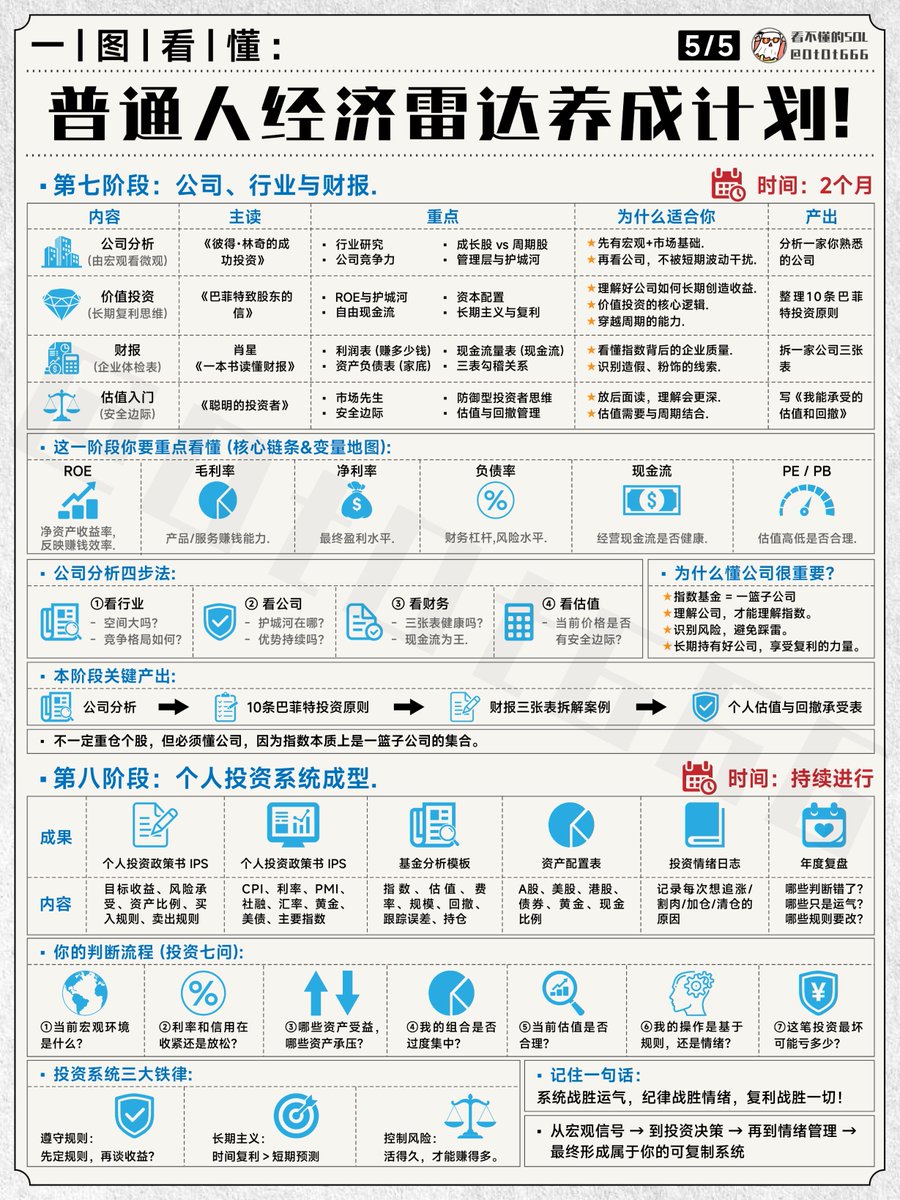
Ordinary people learning to invest must eventually return to one thing: Can you form your own system. Studying macroeconomics, interest rates, inflation, and asset allocation earlier is to let you know why the market is moving; But in the end, it still depends on the company, industry, financial reports, and one's own investment decisions. Otherwise, it is easy to become a state: I have looked at many macro perspectives, but still don't know what to buy; Knowing many concepts, but still unable to secure a position; I read the news every day, but in the end, I am still led by emotions. So the last two steps of radar are crucial: Firstly, understand the company. Don't chase hot topics right away, first ask four questions: Is there still a lot of space in this industry? Does this company have a moat? Is the revenue, profit, and cash flow in the financial report healthy? Is the current valuation expensive or not? Where is it expensive and where is it cheap? The true long-term investment is not about who rises sharply today, but about who can continue to make money, expand advantages, and cross cycles. Index funds are essentially a basket of companies. You don't have to heavily invest in individual stocks, but you must understand the company. Because only by understanding the company can you understand why the index has been rising for a long time, and also know whether a certain decline is a risk release or a logical breakdown. Secondly, establish your own investment system. The most feared thing for ordinary people is not to make a mistake once, but to have a sudden idea every time. When it rises, I want to chase; when it falls, I want to cut; Others become anxious when they share their profits, and the market becomes suspicious when it retreats; The bull market thinks it has understood, while the bear market thinks investing is meaningless. So in the end, the rules must be written down: What is my profit goal? How much drawdown can I withstand? What assets are long-term bottom positions? When will you place your investment, when will you increase your position, and when will you decrease your position? If my judgment is wrong, what are my stop loss or adjustment rules? This system doesn't need to be complex, but it must be stable. In the end, the competition is not about who has the most news, but about who can make fewer mistakes, live longer, and not act recklessly in critical moments. Macro determines direction, asset allocation determines winning rate, company research determines quality, and investment system determines whether you can truly retain money.