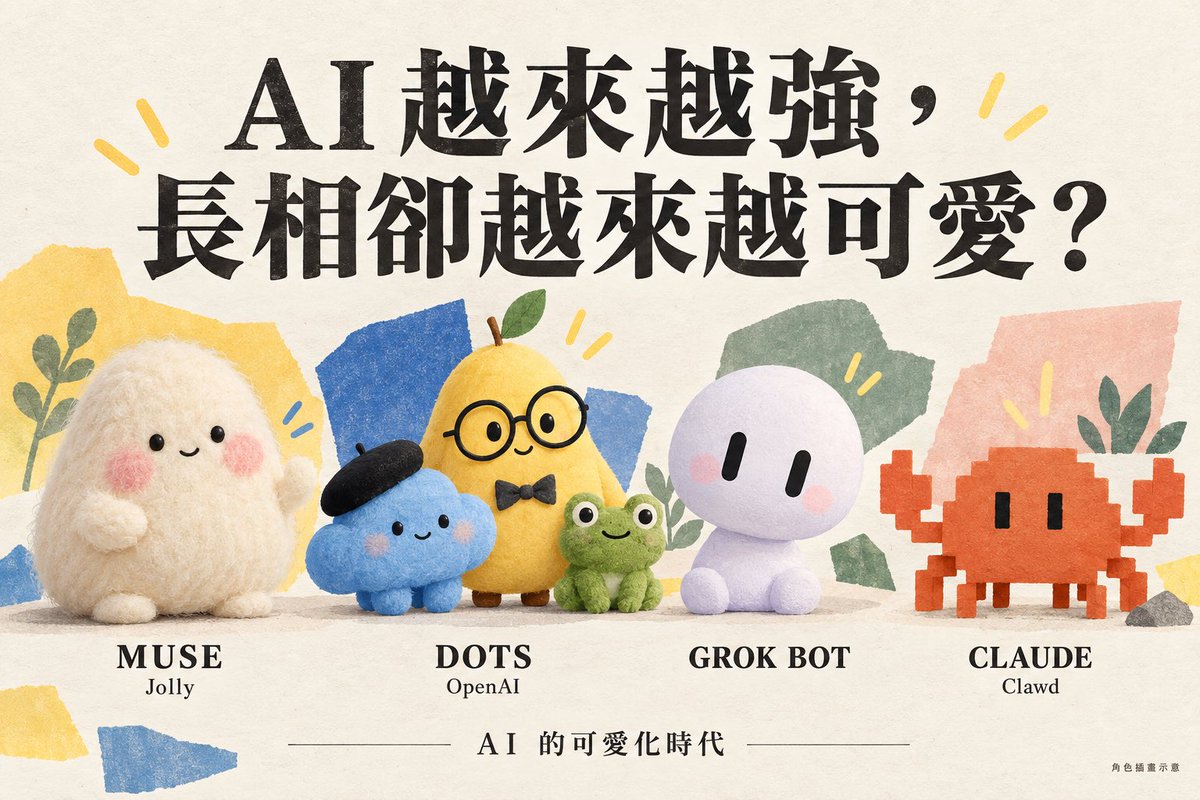
Have you noticed that as AI gets more powerful, it’s starting to look more like a pet? Meta’s Muse comes with a fluffy mascot with rosy cheeks. Behind it is increasingly advanced AI, but what you see is a little guy that looks like it needs to be cared for. (http://axios.com) I think this design direction is worth studying, especially for those working on AI products. ⚡️ Actually, 100 years ago, power companies did something similar. In 1926, Alabama Power in the U.S. introduced Reddy Kilowatt, turning invisible, untouchable electricity into a smiling cartoon character to encourage people to use electricity in a more approachable way. (http://si.edu) There’s a concept in psychology called the "baby schema." Features like big eyes, round faces, and small noses tend to make things look cute and trigger a desire to care for them. This is backed by experimental research, but it doesn’t mean we can directly conclude that "cute AI is automatically more trustworthy." (http://pmc.ncbi.nlm.nih.gov) When applied to AI agents, my understanding is: a cute appearance might make people more willing to approach, try, or even delegate tasks to it. In the past, using a chatbot meant you asked a question, and it answered. The next generation of agents might need to read your emails, check your schedule, or operate your computer. The real barrier for these products becomes: "How much of your life are you willing to let it be involved in?" Imagine the same phrase, "Let me handle that for you," coming from a cold system window versus a blinking little pet—it feels completely different. That’s why I think the future of AI competition won’t just focus on capability, speed, and price, but also on personality, appearance, and how it feels to interact with it. That said, while cuteness can make people willing to start using something, earning long-term trust still depends on consistently getting things done right and knowing when to ask for your input first.