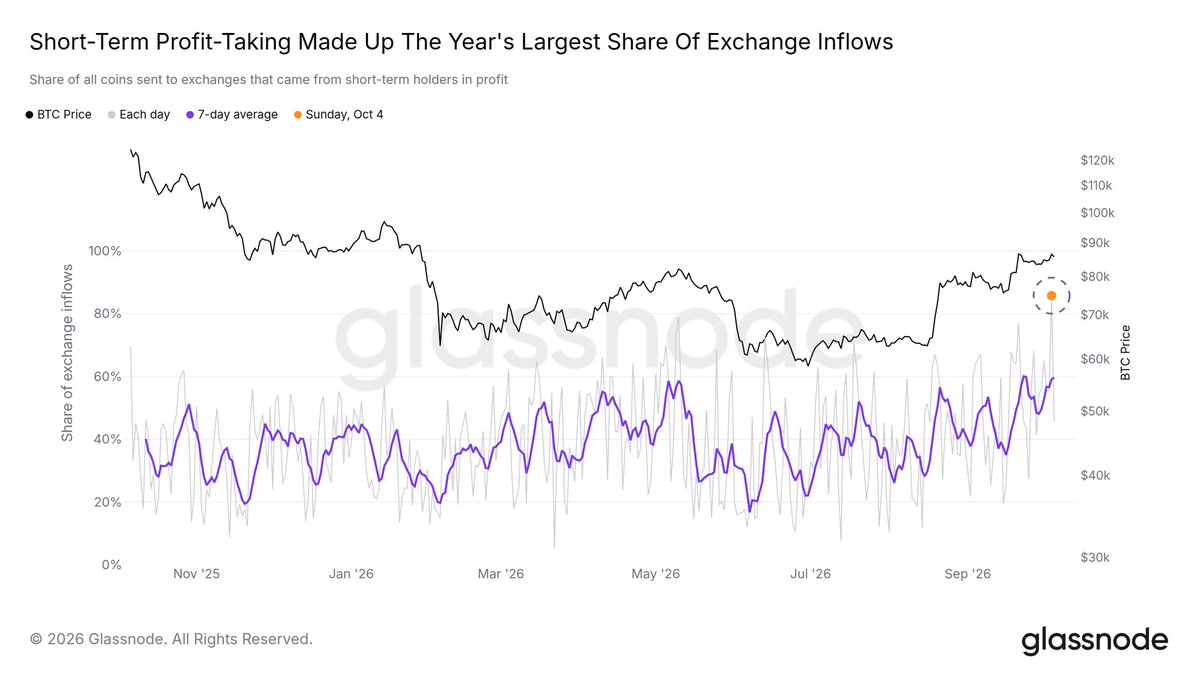
When BTC breaks out, the first ones to think about selling are often those who just bought in the past few months. As BTC moves upward, selling pressure doesn’t automatically disappear. Sometimes, it’s the opposite—the closer the price gets to previous highs, the more likely it is to “wake up” a batch of holders who originally didn’t plan to move their coins. On October 4th, as BTC continued to climb, about 86% of the BTC flowing into exchanges came from short-term holders who were in a profitable position. This percentage hit its highest level of the year. Short-term holders are easy to understand—they’re people who bought BTC relatively recently. These holders haven’t been holding for long, and they’re usually more sensitive to price changes. Imagine buying BTC, watching it fluctuate for a few months, and now it’s finally making money. For many people, the thought process is simple: sell a bit first and lock in some profits. So when the price breaks through an important level, the market faces pressure not just from the “resistance line” on the chart. There’s also real pressure from cost lines, breakeven lines, and take-profit lines. Once the price enters their comfortable profit zone, those previously dormant coins might start flowing back to exchanges. This is why, when watching a rally, it’s not just about whether the price breaks out. You also need to watch: after the breakout, who starts sending their coins to exchanges. The orange dot on the right side of this chart makes it clear. BTC is at a high price, and short-term holders in profit are starting to cash out noticeably. Sometimes, the ones who lock in profits first aren’t the long-term holders who’ve been holding for years. Instead, it’s the people who just made money and want to secure their gains right away.